

📱 Social Media Age Limits in 2026: Mapping a Digital Turning Point
In 2026, the question is no longer whether children should be protected online — but how.
Around the world, governments are quietly redrawing the boundaries of digital childhood. Some impose strict minimum-age mandates. Others rely on parental consent. A few push responsibility onto platforms themselves.
We mapped the global landscape of social media age limits 2026 to see where regulation is strongest — and where digital childhood remains largely unregulated.
🇬🇧 United Kingdom: Age Checks and Regional Impact
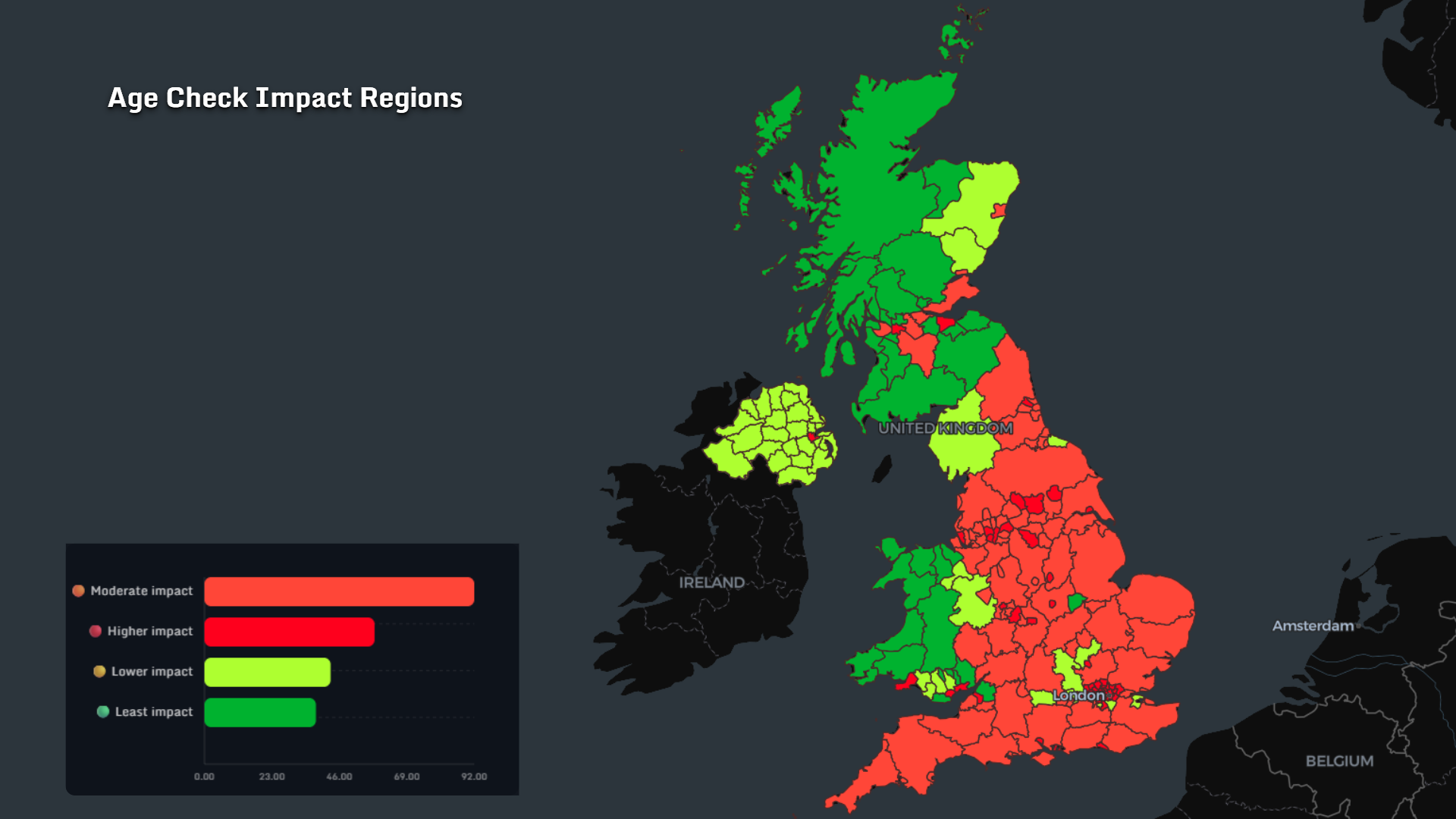
The UK’s regulatory push focuses on age verification enforcement.
The map reveals clear geographic asymmetry:
- Southern England shows higher enforcement impact
- Scotland and parts of Wales show lower impact regions
- Urban density correlates with stronger implementation
Under-16 Accounts Blocked in the UK
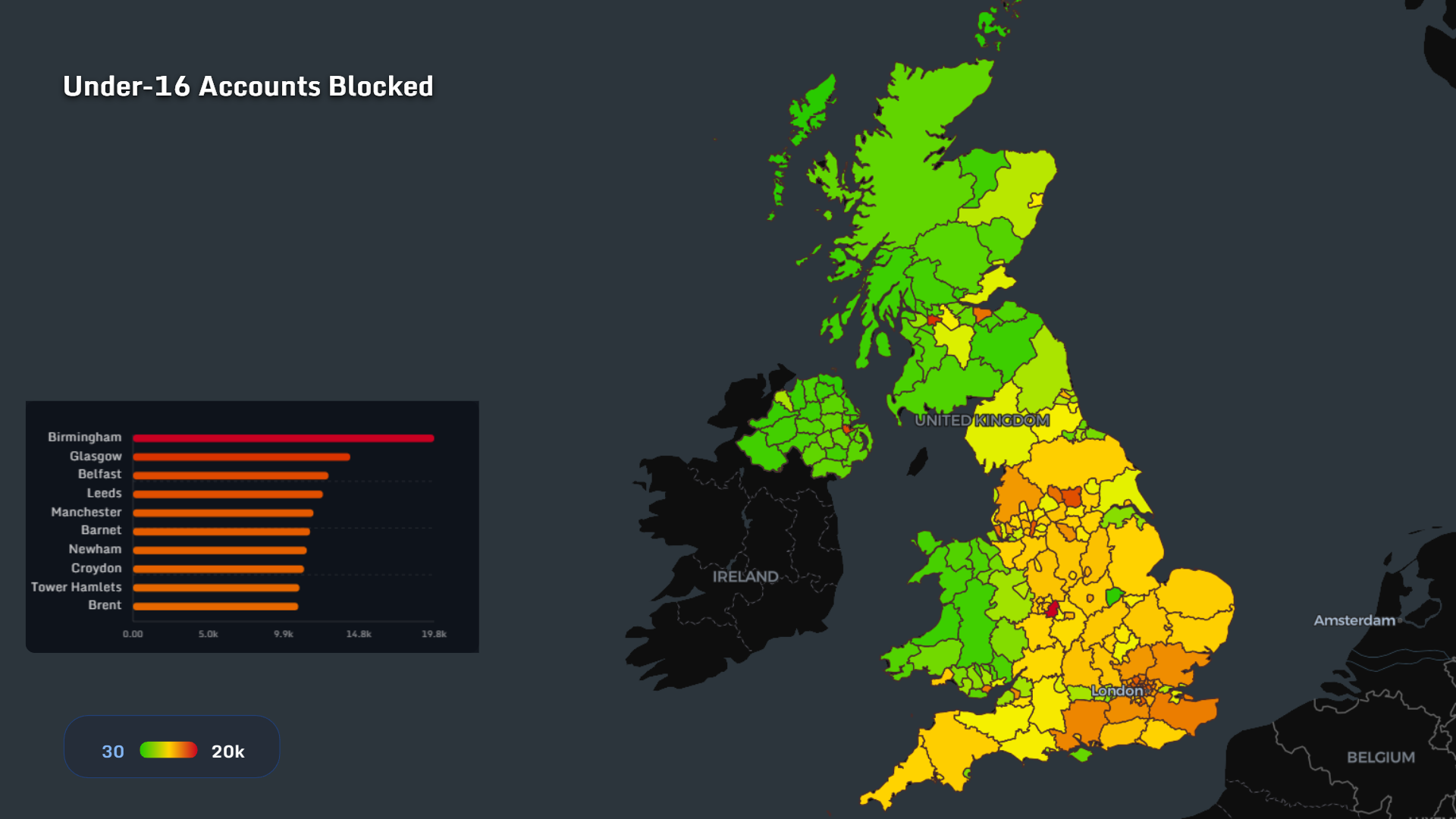
Cities like:
- Birmingham
- Glasgow
- Belfast
- Leeds
This pattern mirrors population centers — but also highlights where enforcement tools are most actively deployed.
🇦🇺 Australia: A Strong National Response
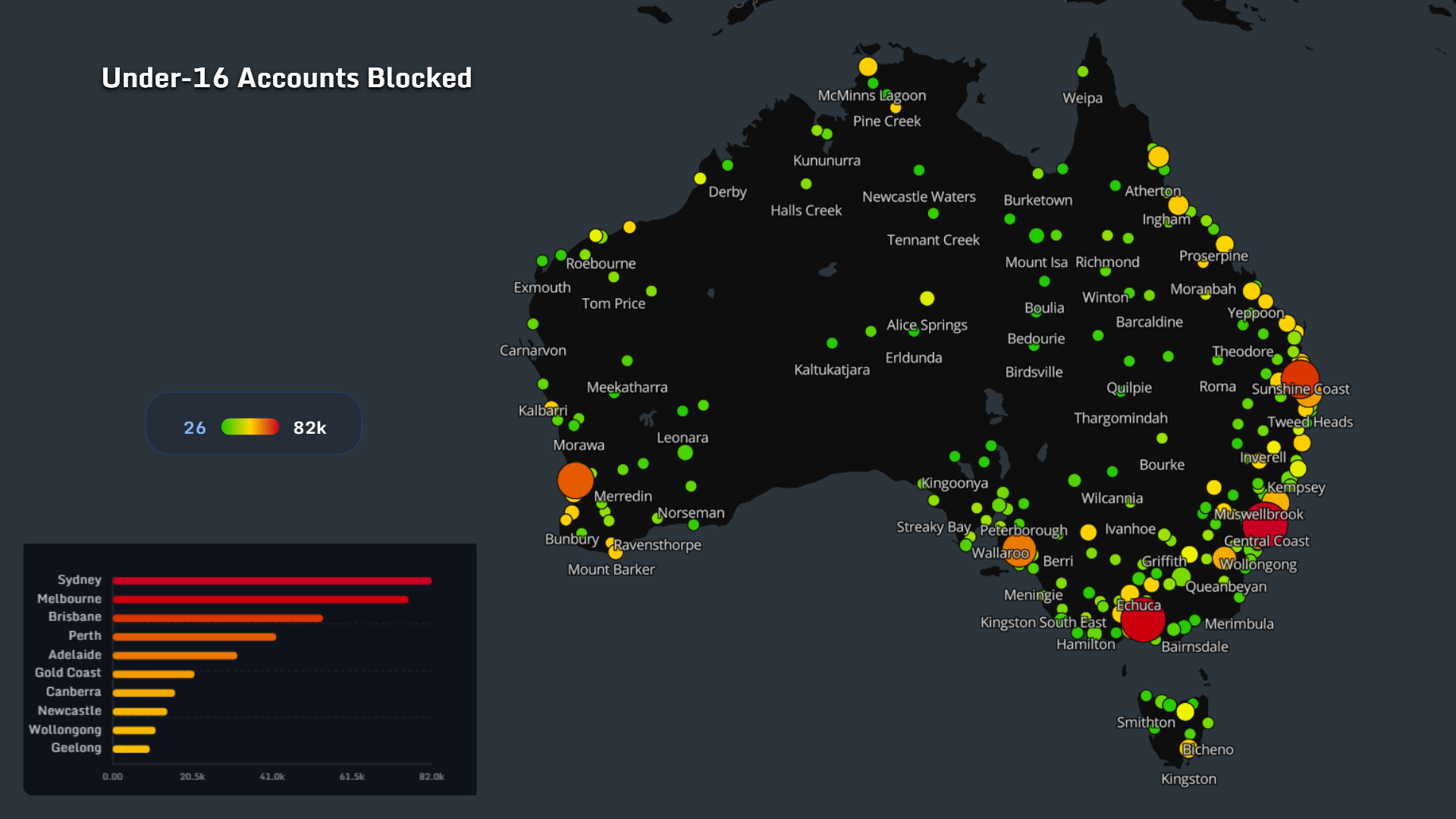
Australia stands out in the 2026 child social media restrictions map.
Major metropolitan areas:
- Sydney
- Melbourne
- Brisbane
- Perth
Unlike the UK’s regional variance, Australia’s approach appears more nationally synchronized. The enforcement footprint is geographically widespread, not clustered.
🇺🇸 United States: Understanding Adolescent Harm
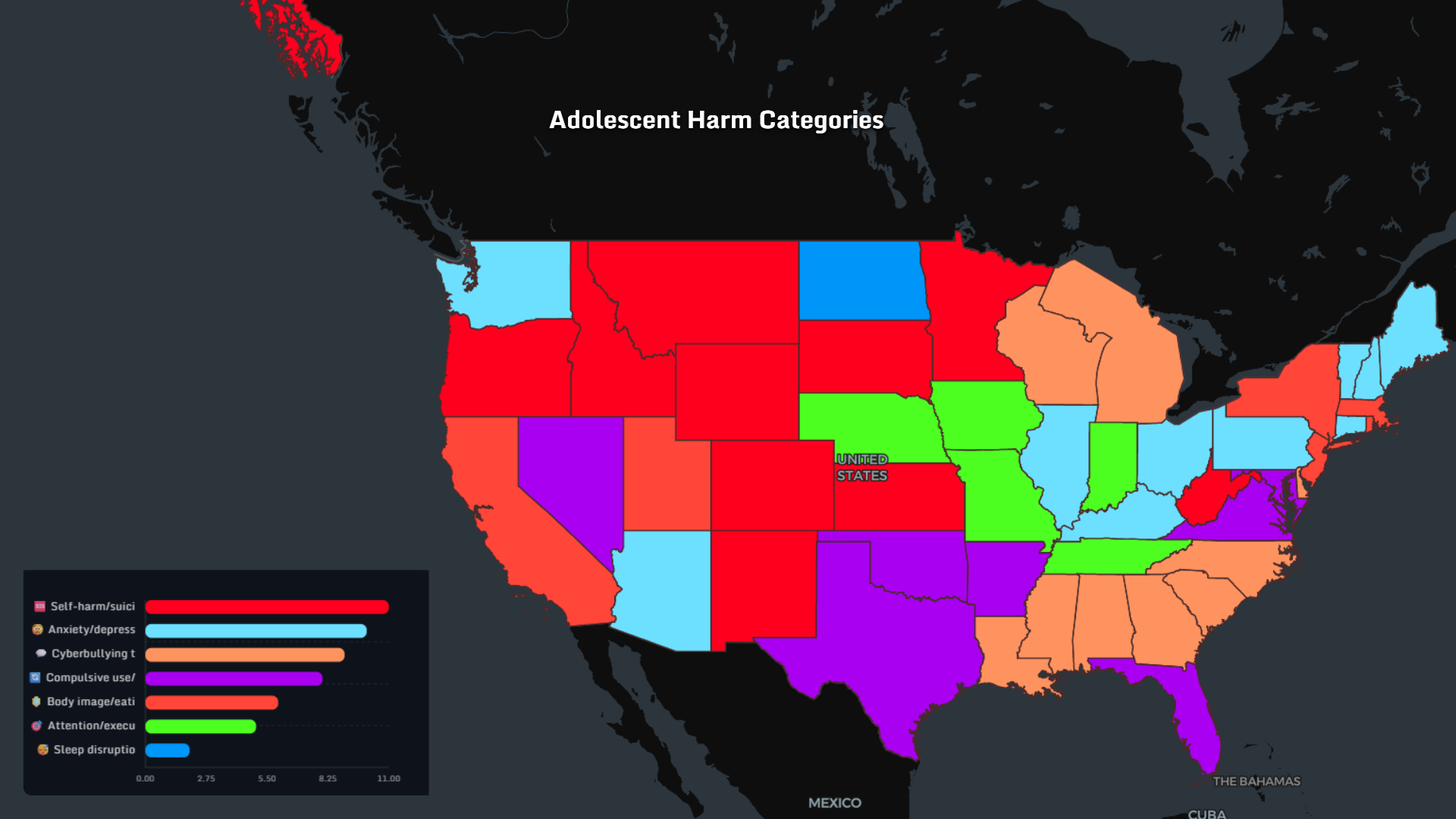
In the U.S., the conversation centers not just on access — but on harm categories.
Across states, adolescent digital harm is categorized as:
- Self-harm and suicide-related exposure
- Anxiety and depression triggers
- Cyberbullying
- Compulsive use
- Body image pressures
- Attention and sleep disruption
Best US Teen Protection Measures
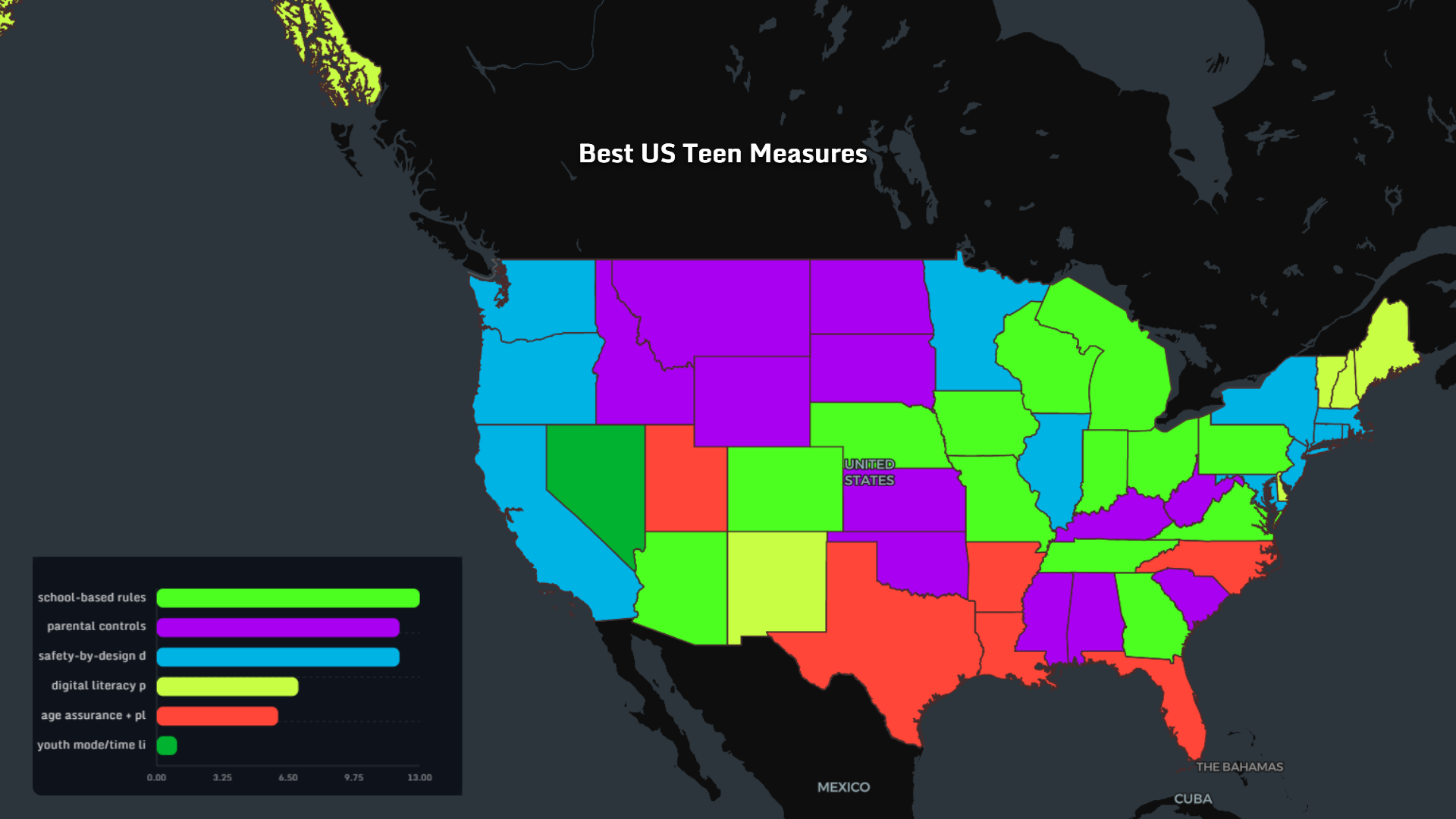
States differ dramatically in approach:
- Some prioritize school-based rules
- Others emphasize parental controls
- A few push platform duty-of-care laws
- Several rely on age assurance + time limits
🌍 Global Social Media Age Limits 2026
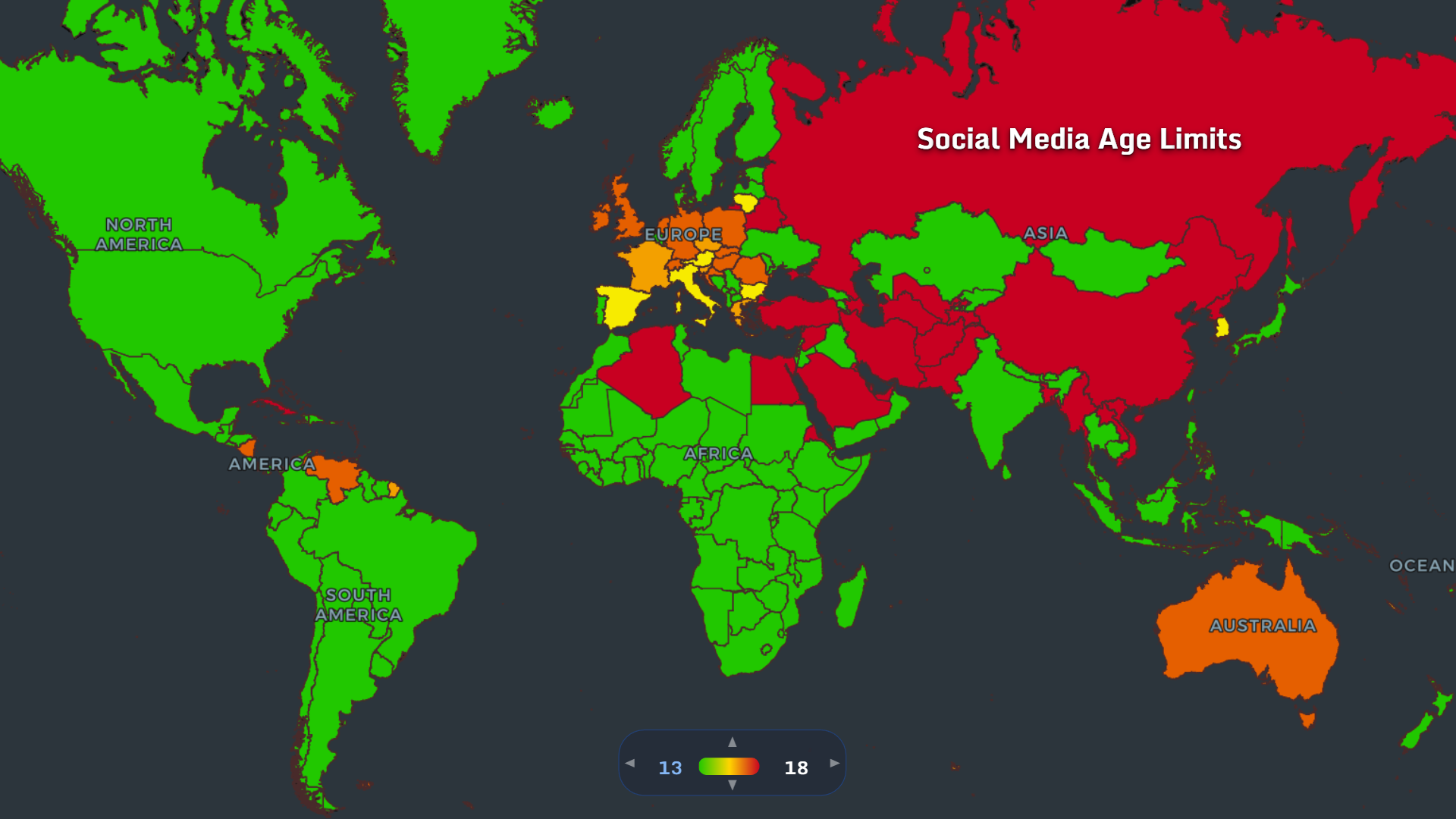
Zooming out, a global pattern emerges:
- Many countries enforce minimum age 13
- Some push toward 16 or 18
- Others maintain partial or sectoral rules
- A large number still have no clear national framework
🌐 Regulatory Models Used Worldwide
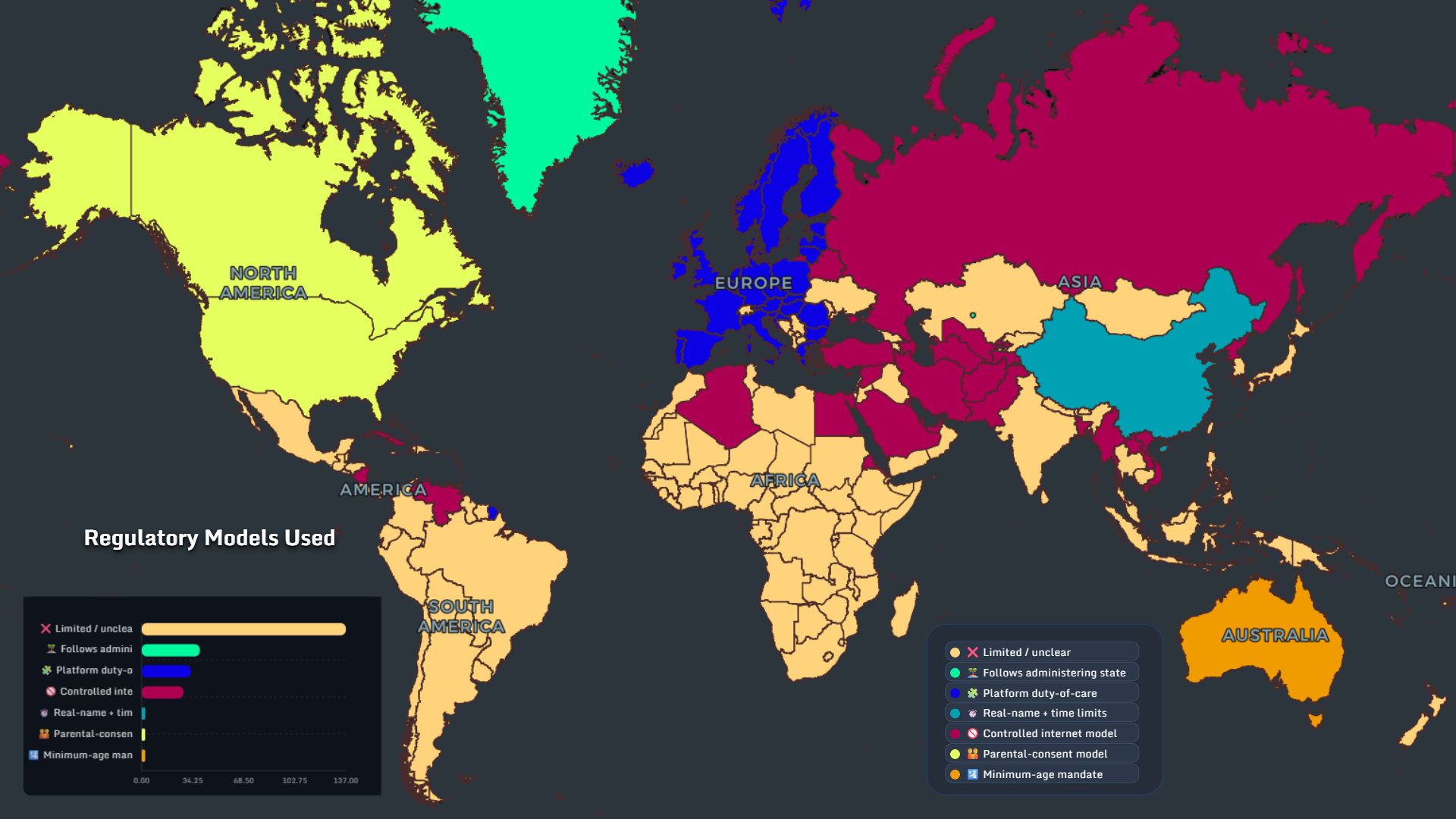
Countries currently follow several distinct models:
1. Limited / unclear frameworks 2. Administering state oversight 3. Platform duty-of-care laws 4. Real-name + time-limit models 5. Controlled internet systems 6. Parental consent models 7. Strict minimum-age mandates
The geography of regulation often mirrors broader political structures.
🧒 Child Social Media Restrictions: Where Laws Are Active
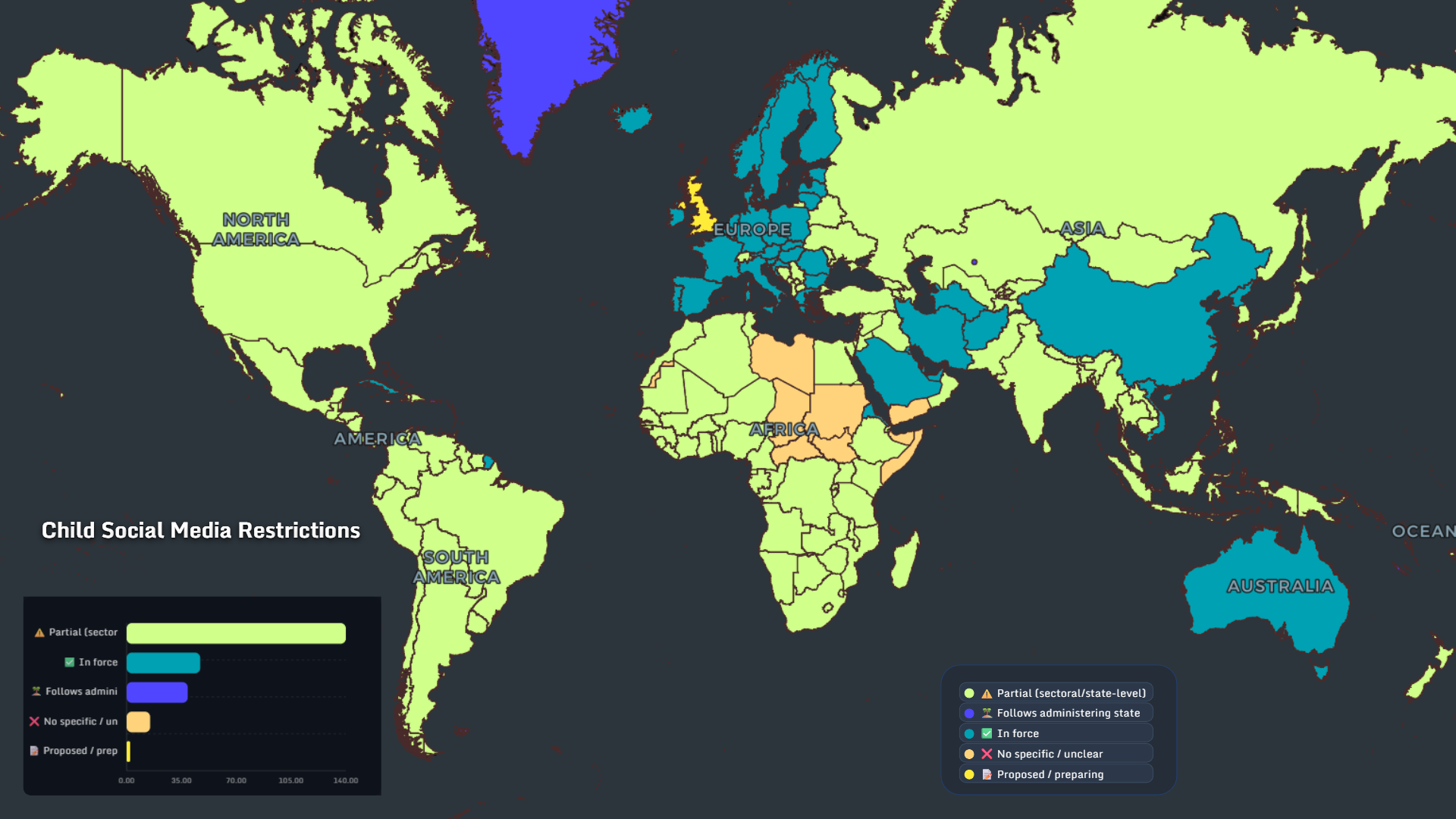
Globally in 2026:
- Some countries have fully enforced child social media restrictions
- Others are in proposal or preparation phases
- Many follow international standards without adding national legislation
- A significant portion remains legally ambiguous
What the Data Tells Us
The average happiness map once told us about well-being. Economic maps told us about prosperity.
Now, the social media age limits map 2026 tells us something else:
It tells us how societies define responsibility — for platforms, for parents, for governments.
Some prioritize restriction. Some prioritize education. Some prioritize platform accountability.
But nearly everywhere, one message is clear:
The era of unregulated digital adolescence is ending.
Digital childhood is no longer invisible. It is mapped, measured, and debated.
And when something becomes visible on a map — it becomes part of global policy conversation.
👉 Explore more at app.mapthos.org
See the world. Map better. Dream big. 🌍✨