
🧠 Mapping Gen Z Mental Health in 2025 🌍
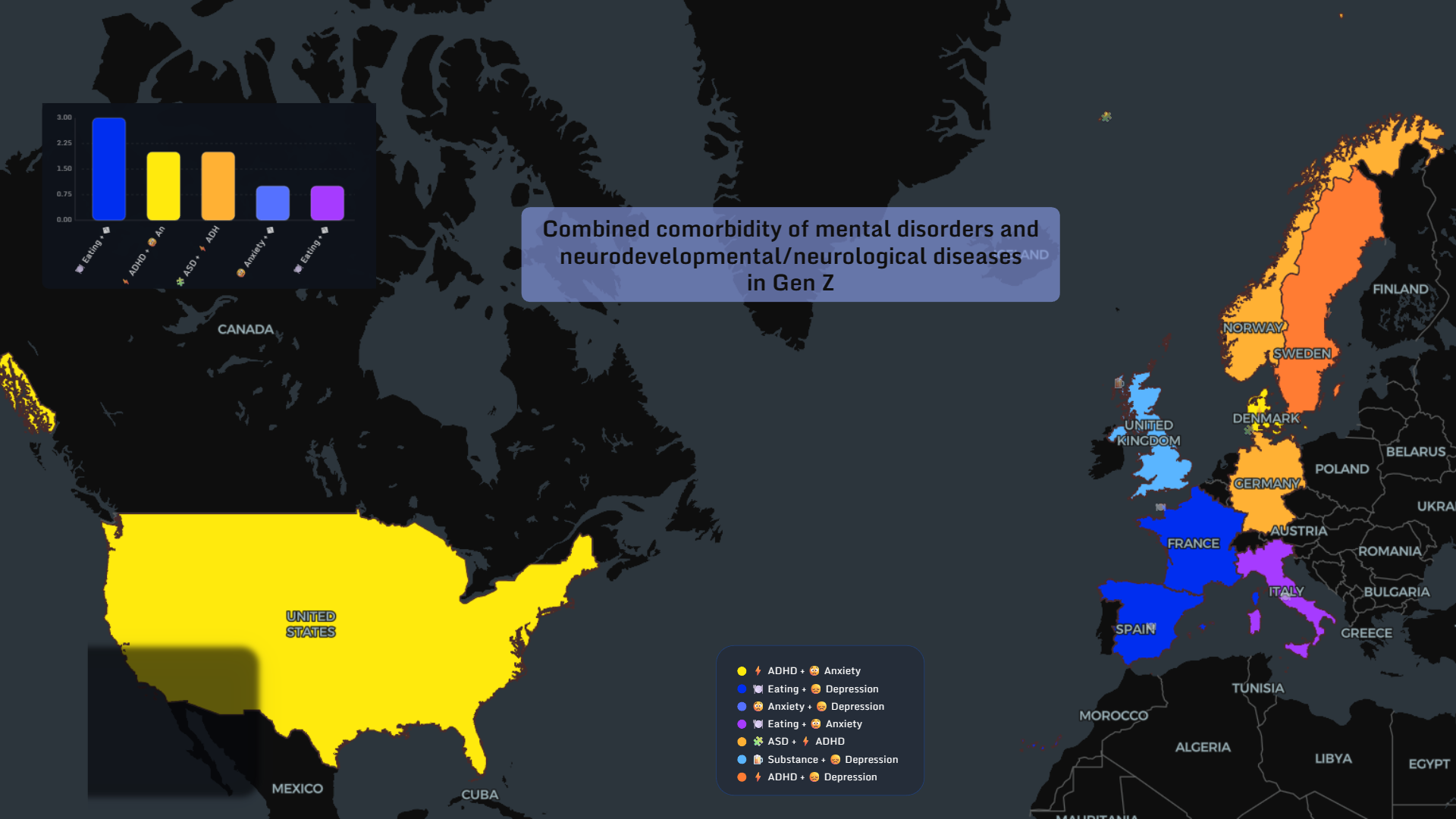
Mental health is no longer a silent statistic. For Generation Z, it has become a visible, measurable, and deeply geographical phenomenon.
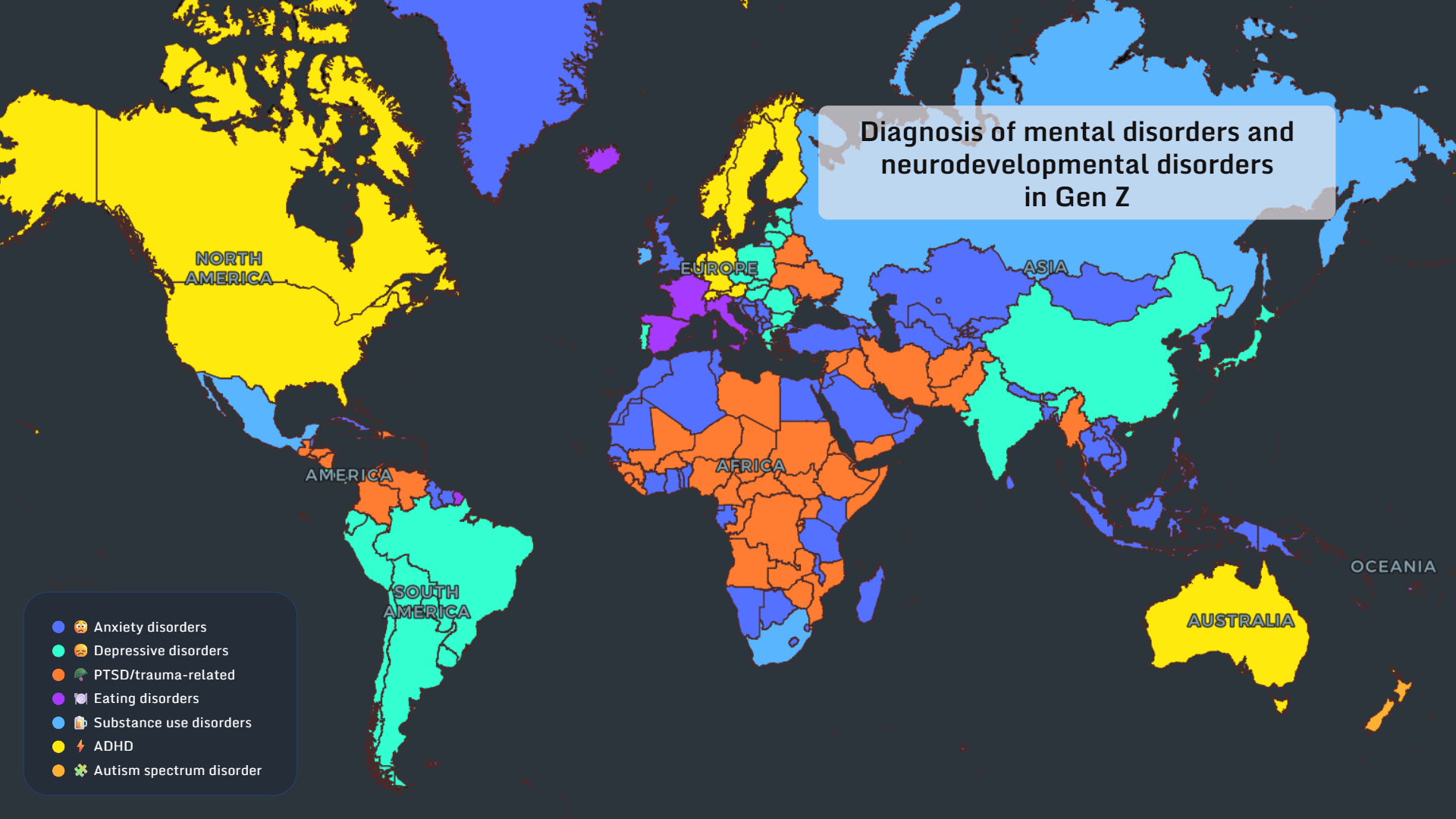
Between 2020 and 2025, diagnoses accelerated, prescriptions increased, and new patterns emerged — not only across age and gender, but across borders. Using global and regional datasets visualized with MAPTHOS, we mapped how Gen Z mental health is diagnosed, treated, misdiagnosed, and influenced by social pressure worldwide.
This is not a story about individuals. It is a story about systems, places, and patterns.
📍 Antidepressants and Treatment-Emergent Suicidality (Under 25)
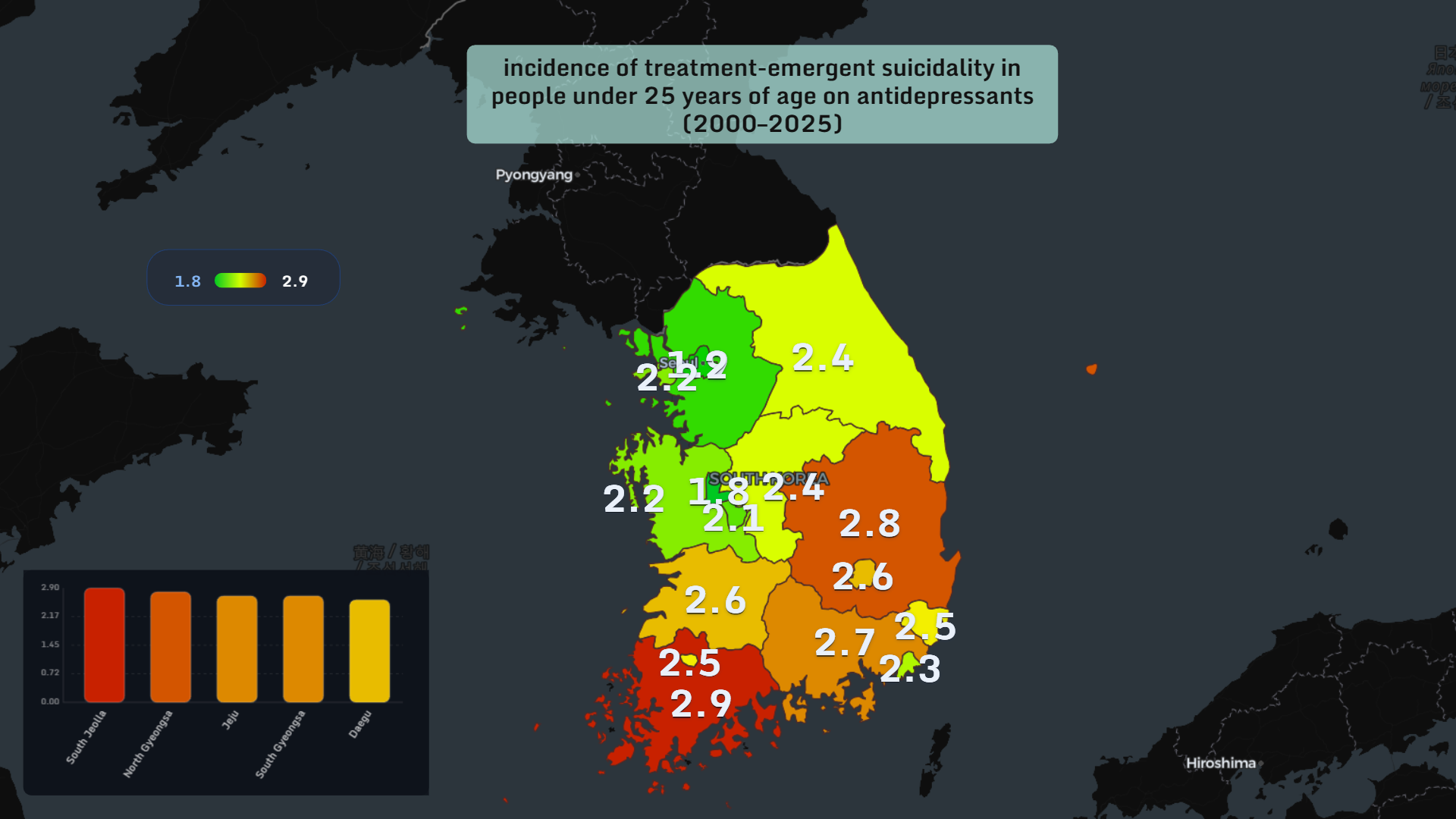
One of the most sensitive indicators in youth mental health is treatment-emergent suicidality — suicidal thoughts or attempts appearing after the start of antidepressant therapy.
South Korea reveals a striking internal gradient. Urbanized and academically competitive regions show higher incidence rates, while less dense areas trend lower. The data suggests that medication alone cannot be isolated from cultural pressure, academic stress, and social expectations.
Numbers do not accuse treatment — but they demand context-aware care.
🇺🇸 The United States: Misdiagnosis Patterns in Gen Z
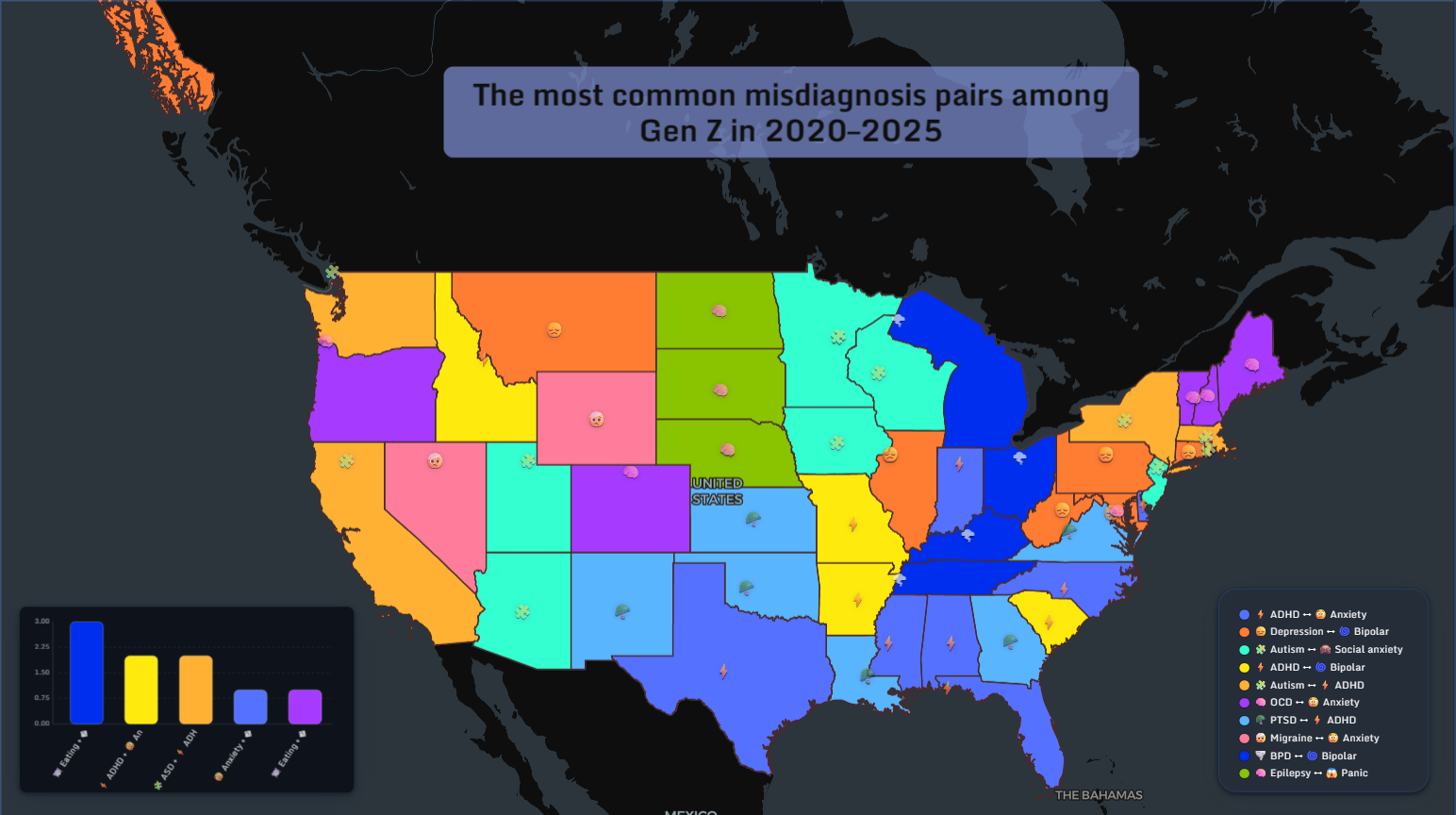
In the U.S., the dominant signal is not underdiagnosis — it is misdiagnosis overlap.
Across states, the most common misdiagnosis pairs include:
- ADHD ↔ Anxiety
- Depression ↔ Bipolar disorder
- Autism ↔ ADHD
- OCD ↔ Anxiety
Maps show something critical: Where diagnosis volume increases, diagnostic ambiguity increases too.
🧬 Comorbidity: When Disorders Cluster Together
Globally, Gen Z shows a strong rise in comorbidity — the presence of multiple mental or neurodevelopmental conditions in the same individual.
Key global patterns:
- ADHD frequently co-occurs with anxiety and depression
- Eating disorders cluster with anxiety in Western Europe
- Substance use disorders align with depressive disorders in parts of North America
- Autism + ADHD clusters are more frequently identified in high-diagnostic-access regions
⚠️ Antidepressants and Suicidal Ideation — A Global View
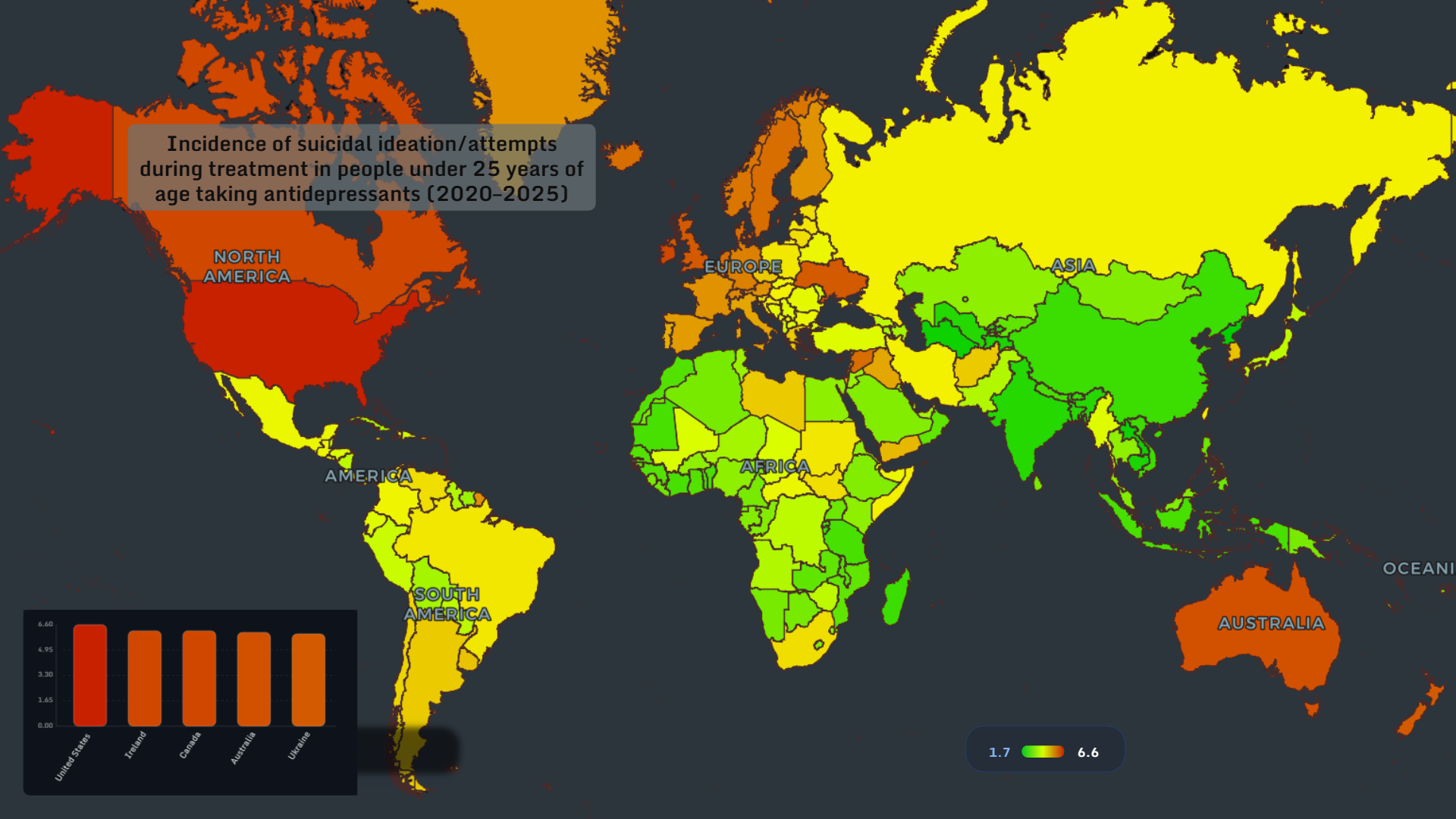
When viewed globally, the pattern becomes uneven — and revealing.
Higher-income regions with aggressive early pharmacological intervention report higher observed incidence of treatment-associated suicidal ideation. Lower-income regions often show lower reported rates — likely reflecting underreporting, not lower risk.
This map highlights a crucial insight for global mental health policy: > Data density often mirrors healthcare visibility, not lived reality.
🌐 Risk Factors That Shape Gen Z Mental Health
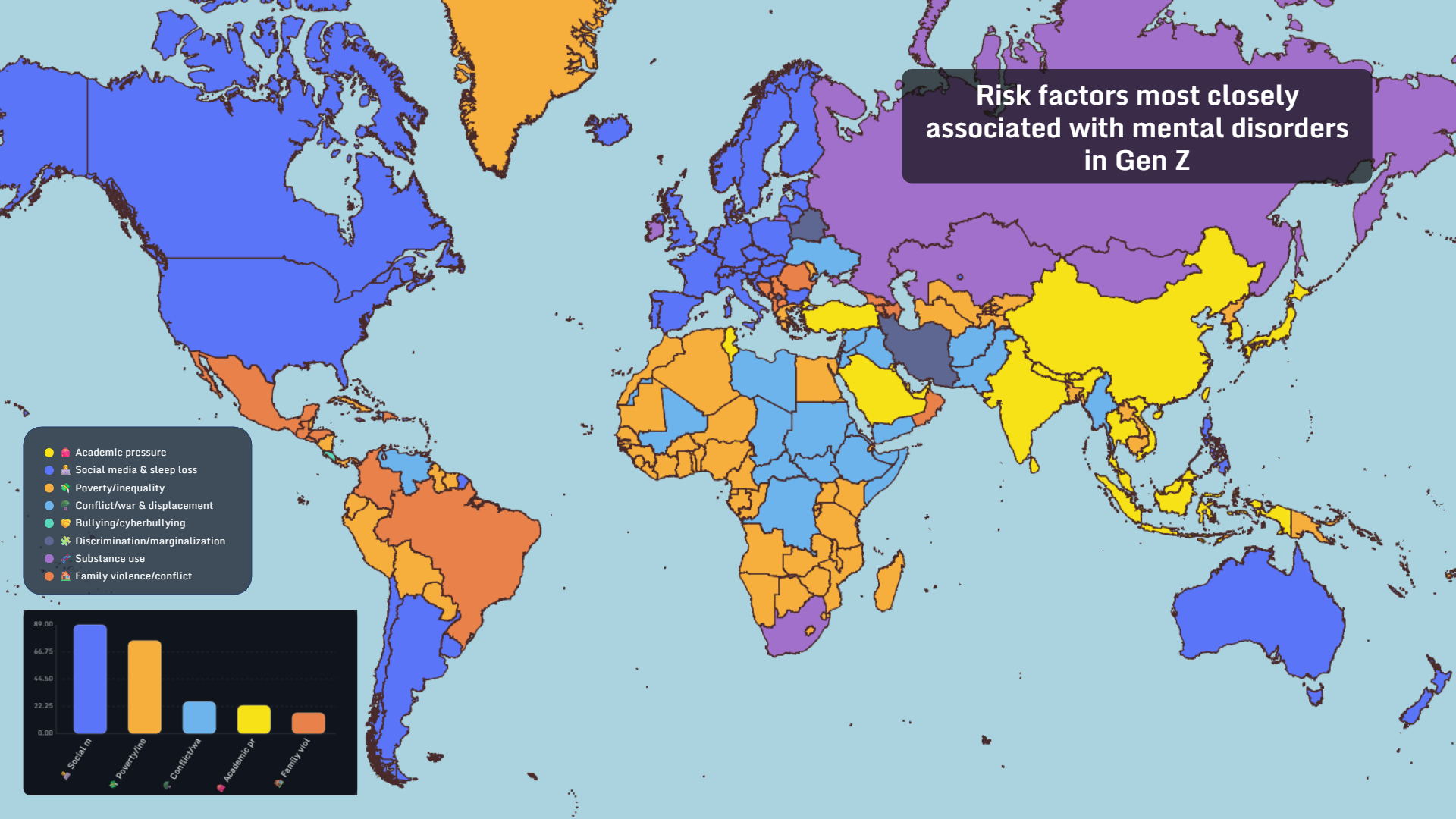
Finally, we mapped what drives risk, not just outcomes.
Across regions, the strongest associated risk factors include:
- Social media pressure and sleep deprivation
- Academic pressure
- Poverty and inequality
- Bullying and cyberbullying
- Discrimination and marginalization
- Family conflict and violence
Mental health is not evenly distributed because stress is not evenly distributed.
🧩 What These Maps Tell Us
Taken together, these visualizations reveal a single, quiet truth:
> Gen Z mental health is not a crisis of weakness. > It is a crisis of environmental load, diagnostic complexity, and systemic mismatch.
Maps allow us to see what tables cannot:
- Where treatment helps — and where it harms
- Where diagnoses clarify — and where they blur
- Where society supports — and where it overwhelms
👉 Explore more at app.mapthos.org Create your own global mental health maps, compare datasets, and see patterns where numbers alone fall short.
See the world. Map better. Dream big. 🌍✨