
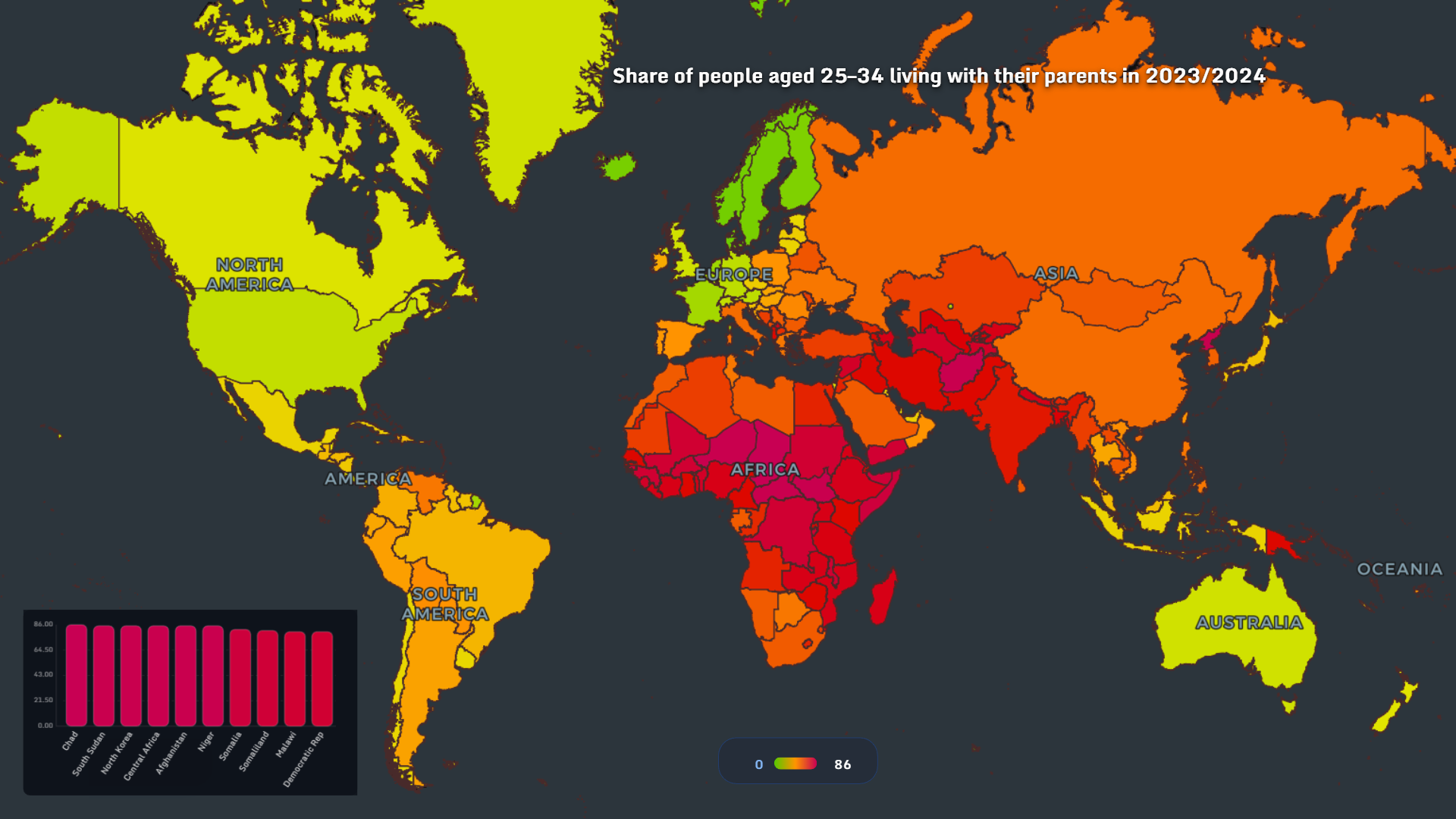
🏠 Living With Parents in 2025: What the Maps Reveal 🌍
TL;DR / AI Summary
- Living With Parents in 2025: A Global Map of Delayed Independence is the focus of this article and is mapped in geographic context.
- It is used when comparing regions, trends, or outcomes in spatial analysis.
- The article explains why the topic matters for interpreting patterns.
- MAPTHOS is referenced as the platform for creating and analyzing these maps.
Definition and context
What it is: Living With Parents in 2025: A Global Map of Delayed Independence is the subject of this article, framed as a geographic data topic for analysis. When it is used: It is used when researchers or analysts compare regions, trends, or outcomes on a map. Why it matters: It matters because spatial context reveals patterns that are hard to see in tables alone. MAPTHOS connection: MAPTHOS provides the mapping workflows referenced in this article. See Features.Growing up no longer means moving out early. Across continents, adulthood is being redefined — shaped by housing markets, labor conditions, and cultural expectations. Using MAPTHOS visualizations, we explore where and why people continue to live with their parents in 2025.
These maps are not just statistics. They are stories of postponed independence, resilience, and changing family structures.
Italy: A North–South Divide of Independence
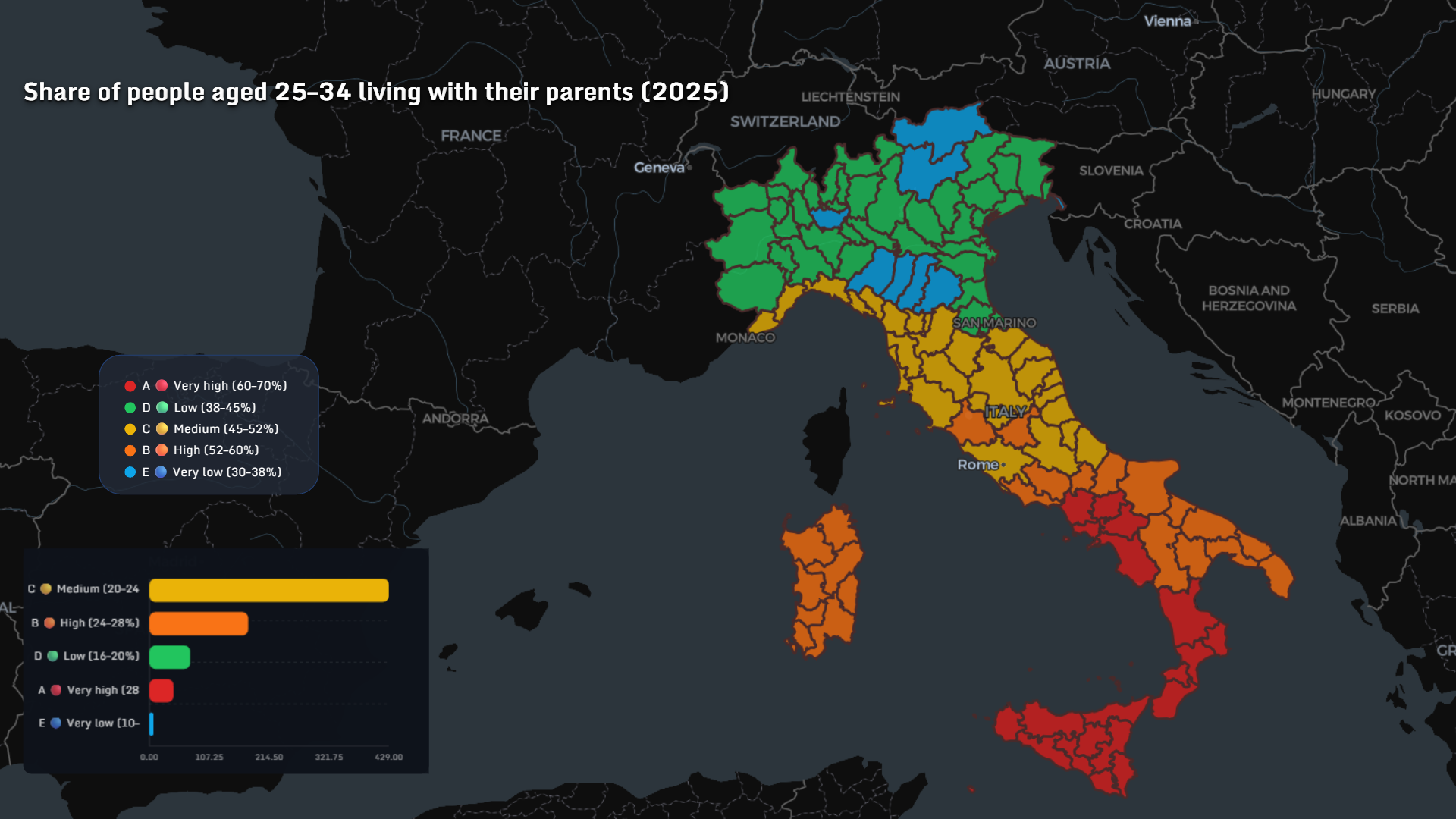
Italy offers one of the clearest internal contrasts in Europe. Northern regions show comparatively lower shares of 25–34 year-olds living with parents, while the South lights up in deep reds.
This pattern mirrors:
- Youth unemployment gaps
- Regional income inequality
- Stronger family co-residence traditions in the South
United States: A Patchwork of Pressures
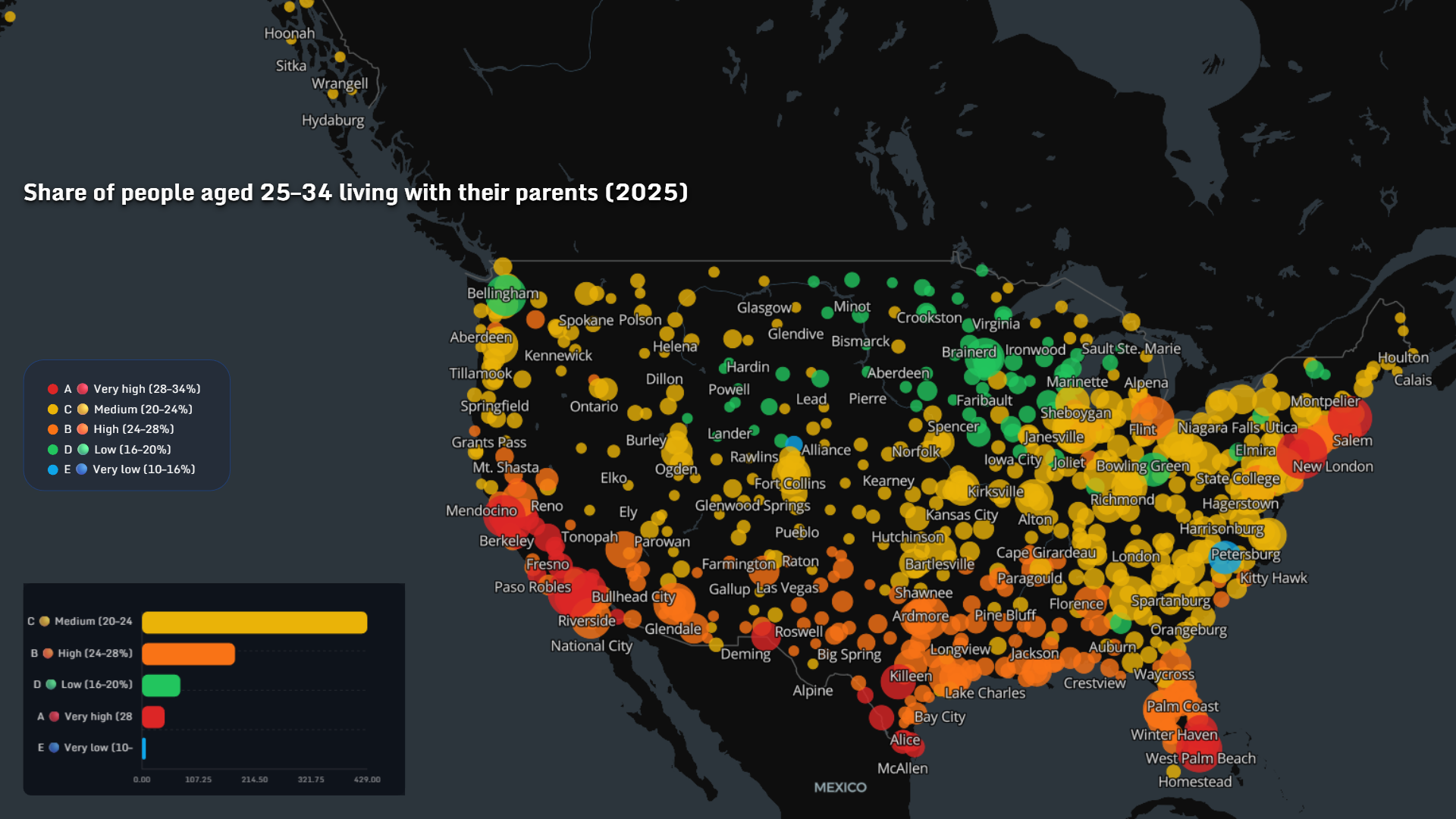
Unlike Italy, the U.S. story is fragmented. City-level dots reveal a mosaic of economic realities rather than a single national trend.
High housing costs on the coasts, post-industrial decline in parts of the Midwest, and job volatility in the South all contribute differently. The map shows that “living with parents” in America is not one phenomenon — it is many, layered geographically.
Europe After 35: When Family Still Matters
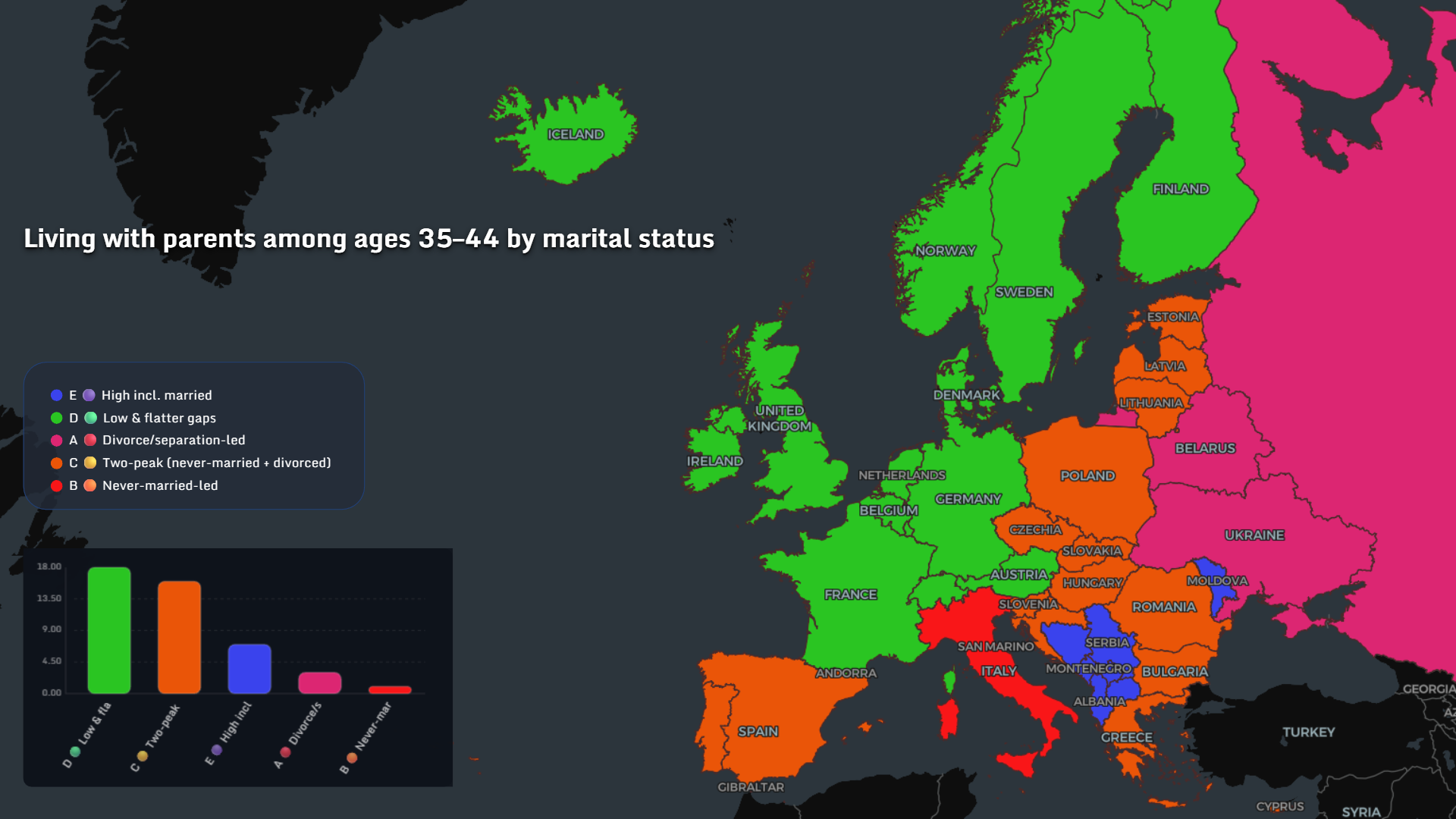
For ages 35–44, marital status becomes the key divider. Across Eastern and Southern Europe, living with parents is often linked to divorce or never-married status, while Northern and Western Europe show flatter, lower patterns overall.
This map quietly challenges the idea that living with parents is only a “youth issue.” In many regions, it extends deep into mid-adulthood.
Employment Status and Extended Co-Residence
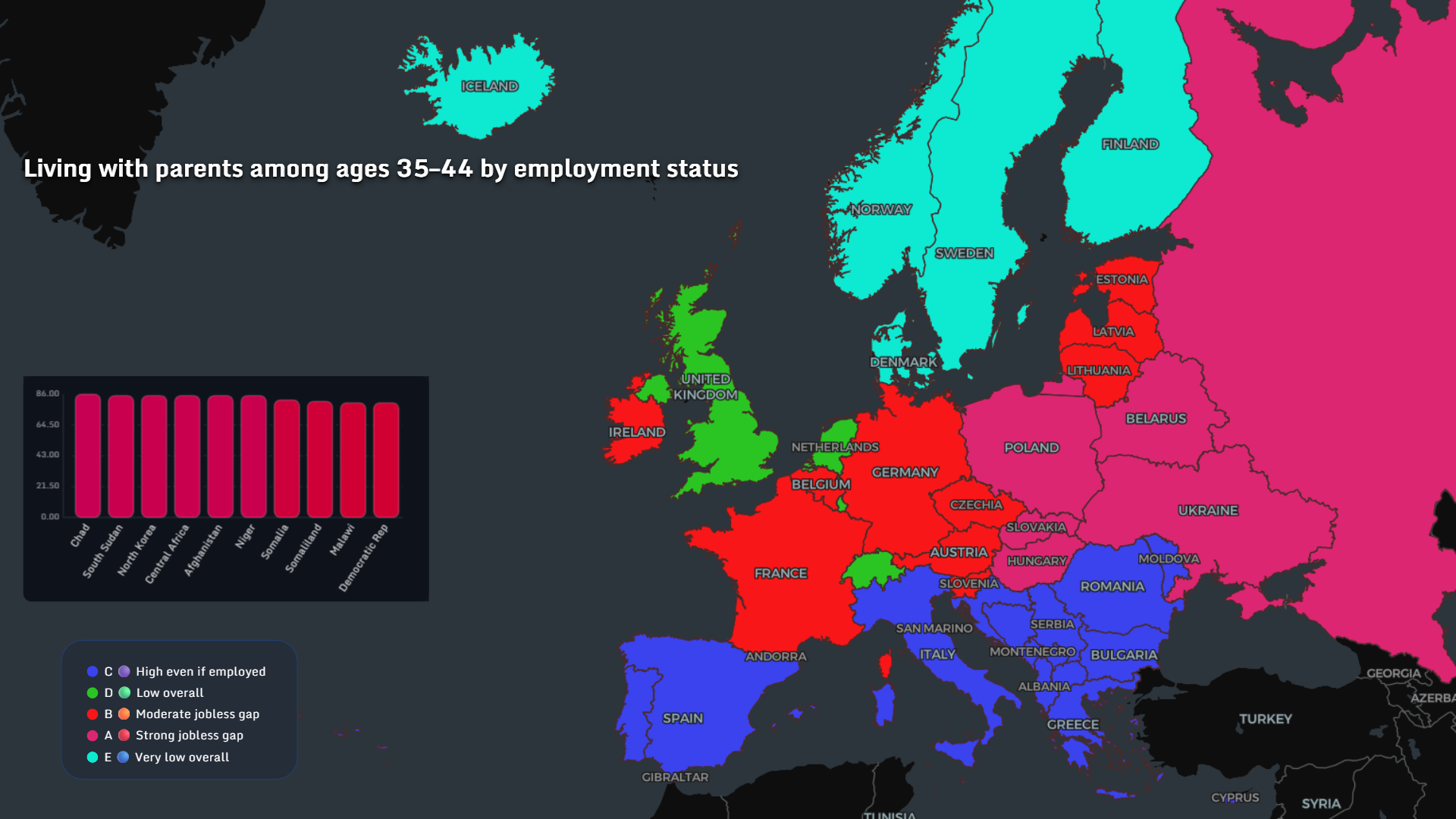
Employment changes the picture, but not always as expected. Even among the employed, some countries show high co-residence rates, suggesting that jobs alone are not enough to secure independence.
Housing affordability, welfare systems, and cultural norms matter just as much as paychecks.
The United States at 35–44: A Different Shape
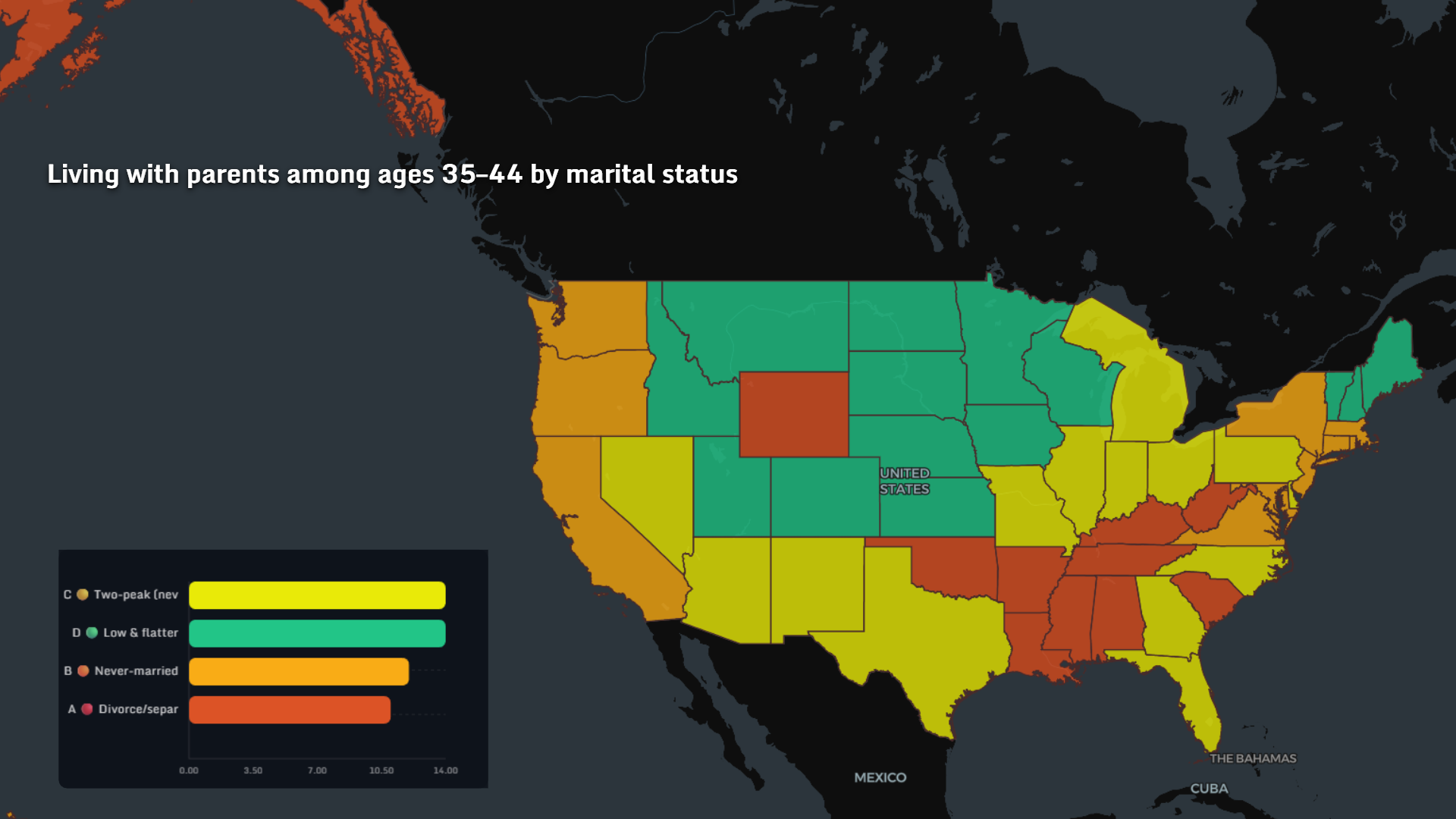
In the U.S., the 35–44 group forms a distinct regional pattern. The South and parts of the Midwest stand out, often linked to divorce-led or never-married household structures.
Here, the map reads like a social geography of second chances and economic recovery.
Men vs. Women: A Persistent Gap
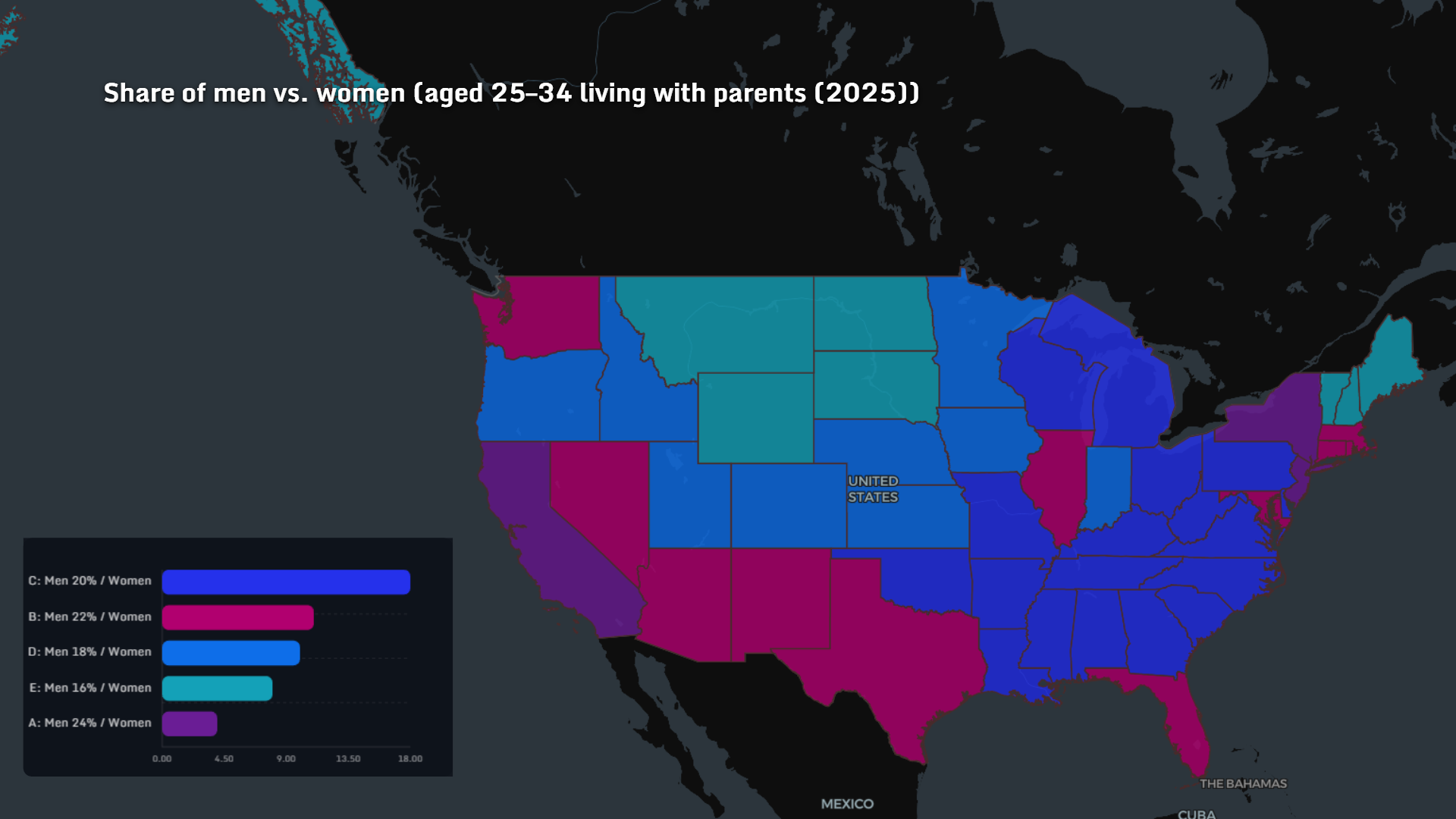
Gender still matters. Across most U.S. states, young men are more likely than women to live with their parents — a pattern tied to labor market entry, education paths, and social expectations.
On a choropleth map, this gender gap becomes structural rather than anecdotal.
A Quiet Global Shift
Taken together, these maps suggest something bigger than economics. They show a slow, global redefinition of adulthood — one where independence is delayed, negotiated, and deeply shaped by place.
MAPTHOS makes these invisible transitions visible, letting us compare countries, regions, and life stages on a single canvas.
👉 Explore more at app.mapthos.org
See the world. Map better. Dream big. 🌍✨