
🌍 Global Drug Use and Policy Maps 2026
Data rarely tells a simple story.
When people discuss drugs, conversations often become political, emotional, or ideological. Yet maps reveal something more interesting: every country faces a different reality. Some struggle with opioids. Others confront cocaine markets, synthetic stimulants, or changing cannabis laws.
By visualizing global drug trends in 2026, we can move beyond headlines and better understand how geography, policy, economics, and culture shape substance use around the world.
The World's Most Commonly Used Drugs
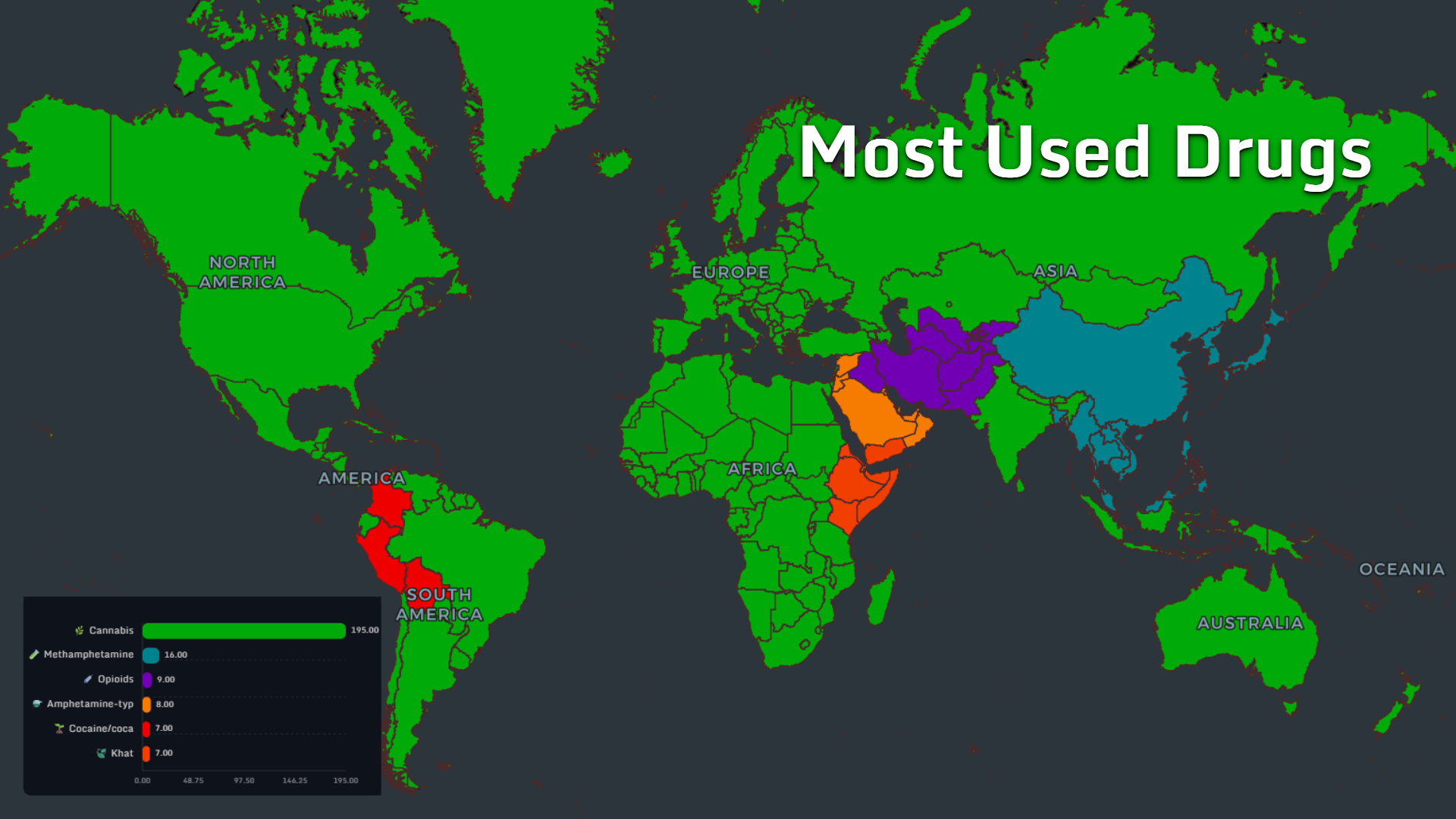
The first pattern is striking.
Cannabis dominates the global landscape. According to the map, it is the most commonly used drug across the overwhelming majority of countries, appearing in 195 nations.
Yet regional exceptions remain highly visible:
- Cocaine remains dominant in parts of the Andes region.
- Khat continues to play a significant role across parts of East Africa.
- Opioids remain prevalent in several countries across Southwest and Central Asia.
- Methamphetamine and amphetamine-type stimulants maintain strong footholds across parts of East and Southeast Asia.
Amphetamine Use: Southeast Asia Leads
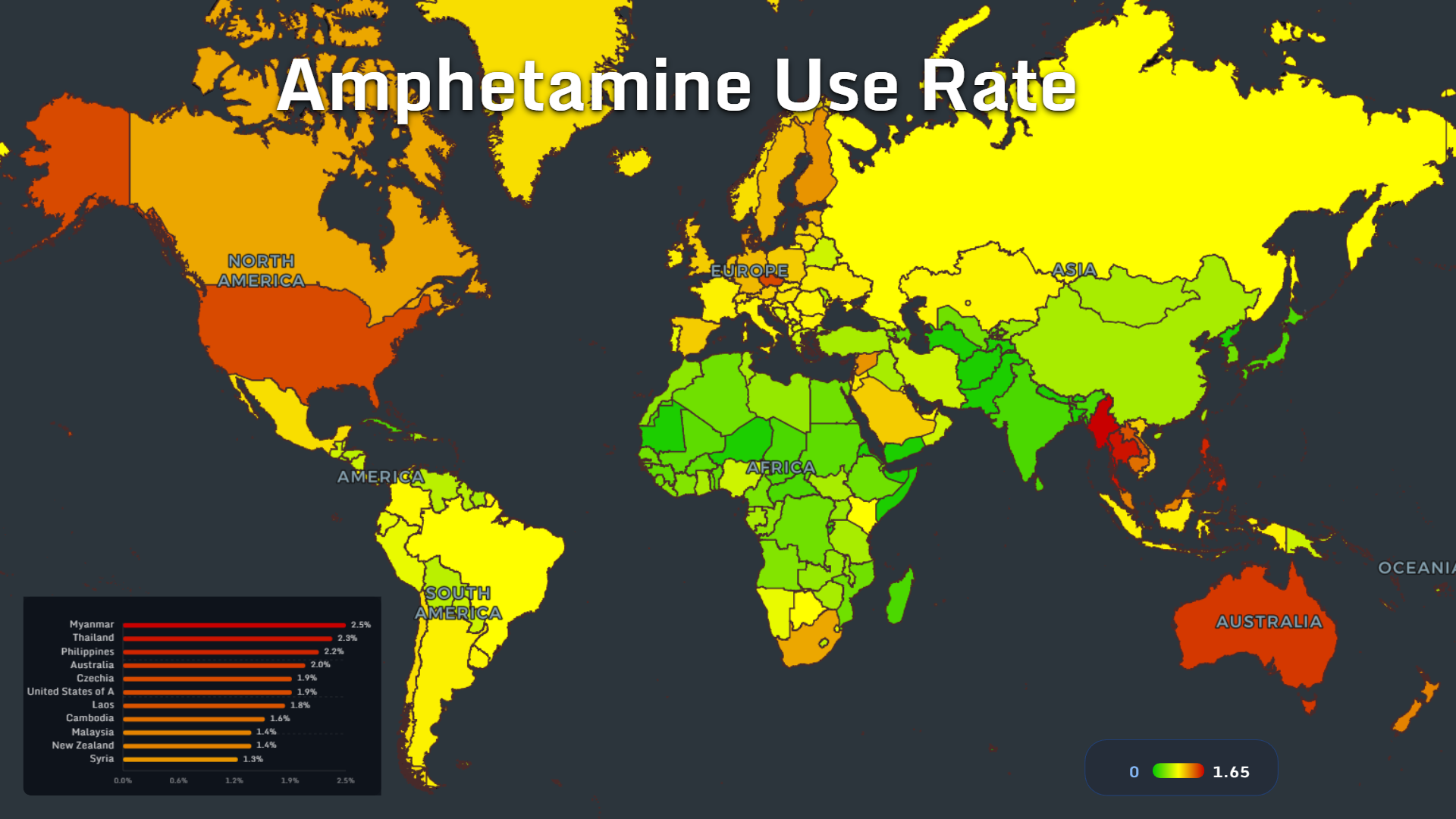
Synthetic stimulants continue expanding worldwide.
The highest reported amphetamine use rates include:
| Country | Rate | |----------|---------| | Myanmar | 2.5% | | Thailand | 2.3% | | Philippines | 2.2% | | Australia | 2.0% | | Czechia | 1.9% |
The map highlights a clear concentration across Southeast Asia, where methamphetamine and related stimulants have become major public health concerns.
Meanwhile, many African and Middle Eastern countries remain comparatively low on reported prevalence.
This global amphetamine use map reveals one of the fastest-growing segments of the international drug market.
Cocaine Use Is Concentrated in Wealthier Countries
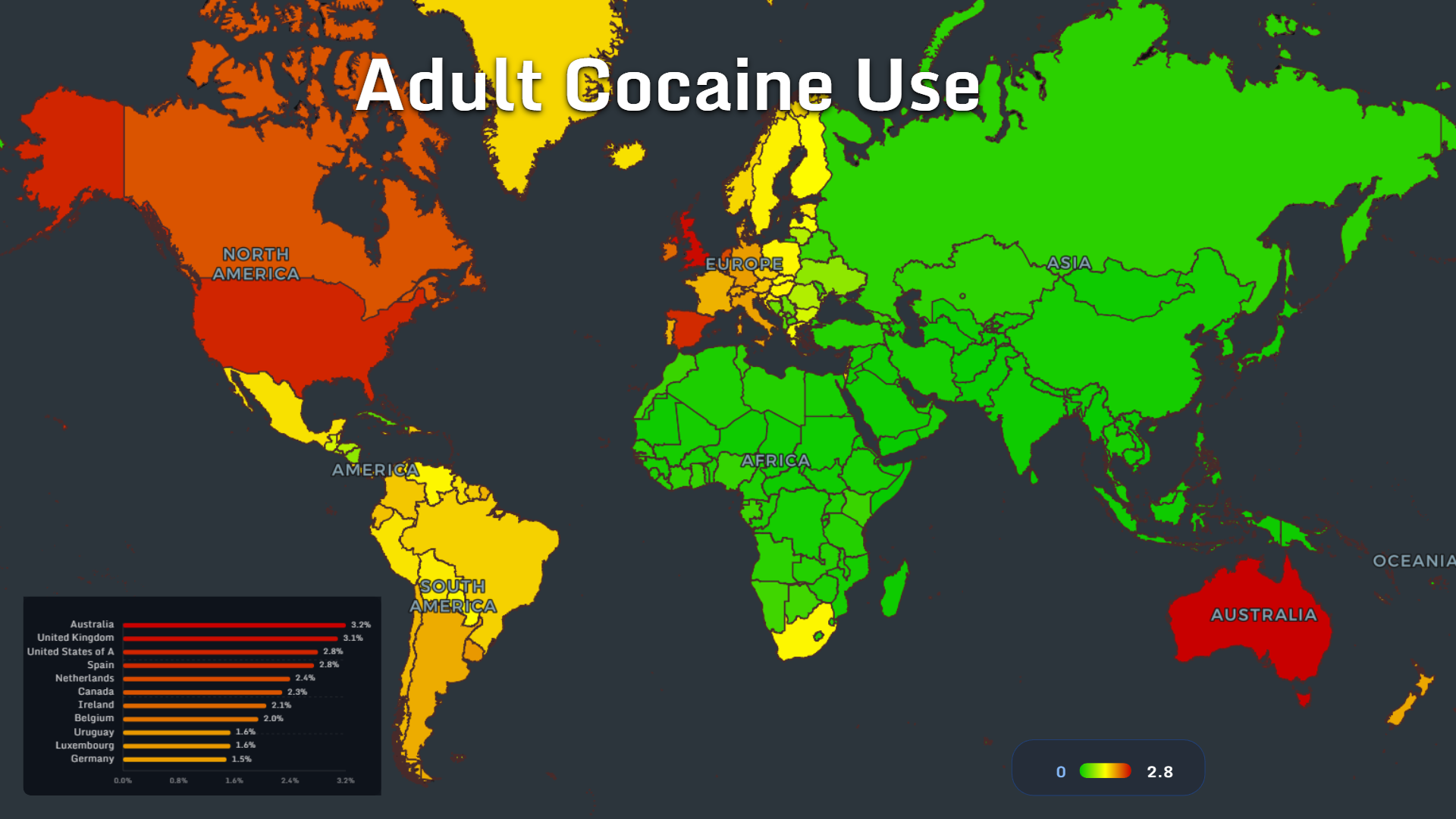
Unlike cannabis, cocaine consumption is heavily concentrated in a relatively small group of countries.
Top reported adult cocaine use rates include:
| Country | Rate | |----------|---------| | Australia | 3.2% | | United Kingdom | 3.1% | | United States | 2.8% | | Spain | 2.8% | | Netherlands | 2.4% |
A notable pattern emerges:
Higher cocaine use often correlates with affluent urban economies, international trade hubs, and developed nightlife industries.
Australia, despite its geographic isolation, consistently ranks among the world's highest cocaine-consuming nations.
Europe's Cocaine Purity Has Reached Historic Levels
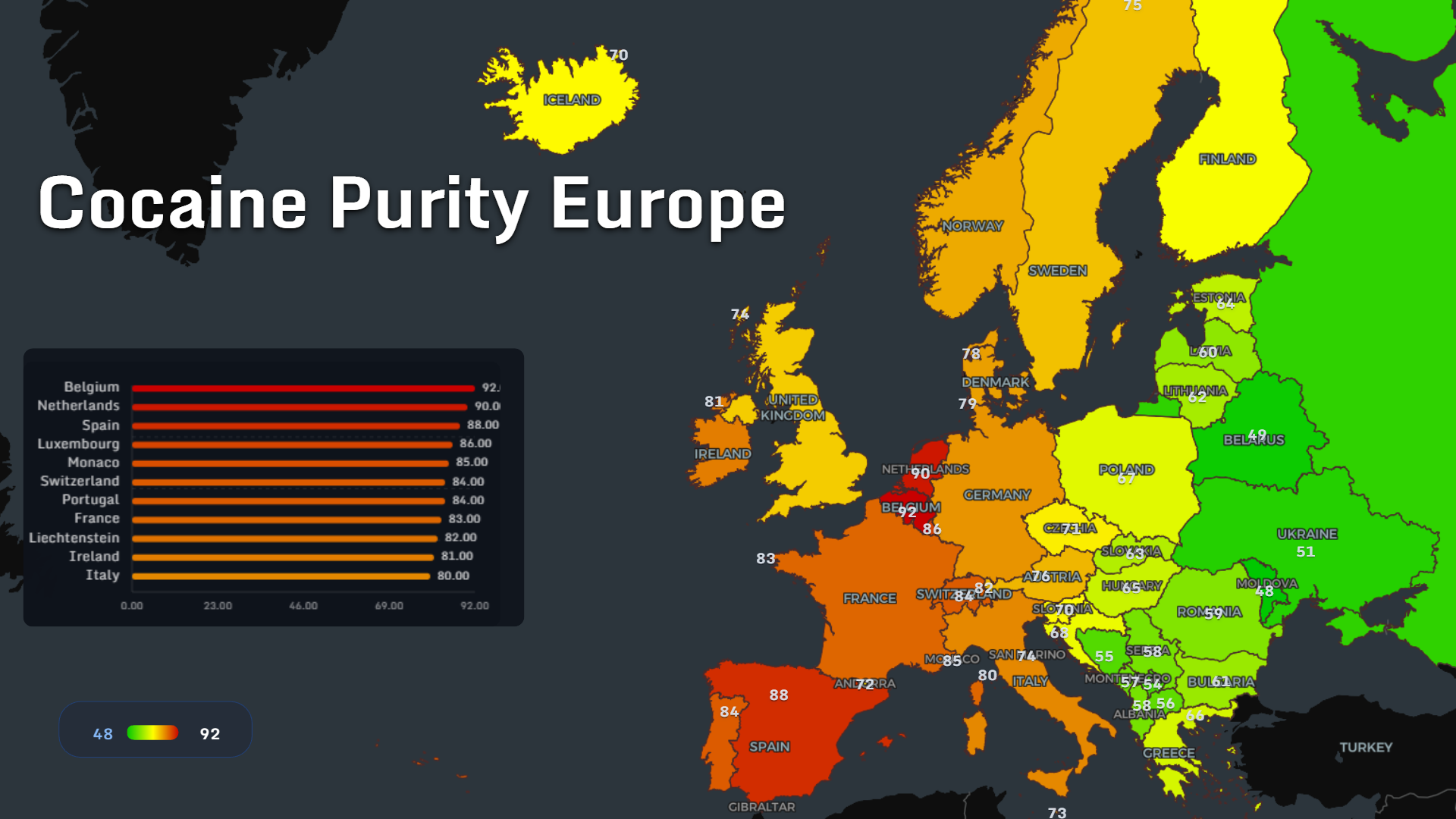
Consumption is only one side of the story.
Purity provides insight into market supply chains, trafficking efficiency, and law enforcement pressure.
Highest cocaine purity levels in Europe:
| Country | Purity | |----------|---------| | Belgium | 92% | | Netherlands | 90% | | Spain | 88% | | Luxembourg | 86% | | Monaco | 85% |
Belgium and the Netherlands sit at the center of Europe's largest import infrastructure, particularly through major ports.
The result is a market where purity levels remain exceptionally high compared to historical standards.
For policymakers, purity may be an even more important indicator than prevalence.
Cannabis Laws Continue to Change
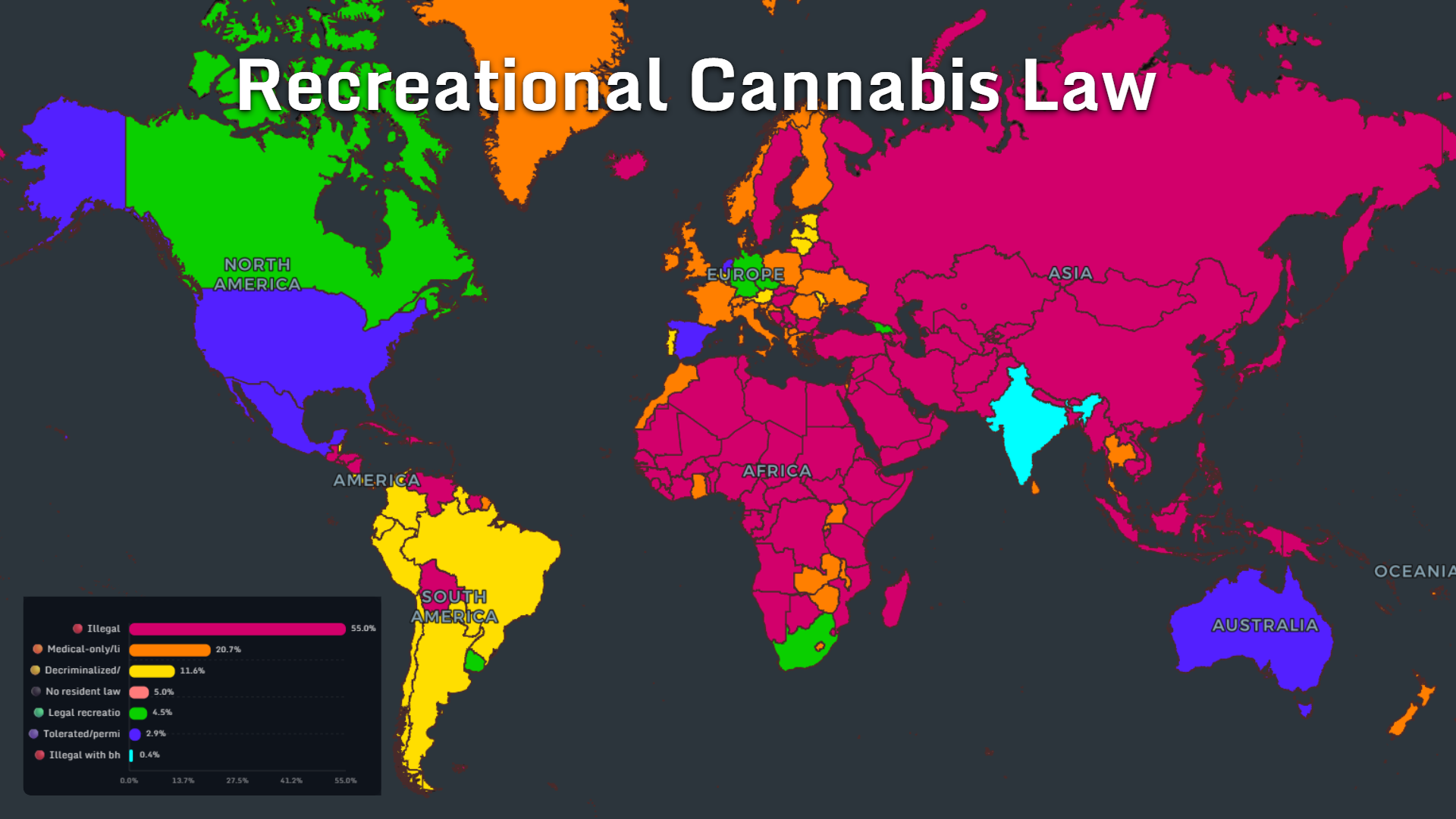
Perhaps no drug has experienced a faster legal transformation than cannabis.
The global cannabis law map reveals:
- 55.0% of countries still classify recreational cannabis as illegal.
- 20.7% allow medical-only access.
- 11.6% have decriminalized possession.
- 4.5% permit recreational legalization.
- 2.9% tolerate limited use under special frameworks.
Meanwhile, large portions of Asia, Africa, and the Middle East maintain strict prohibitions.
The world is moving toward reform—but unevenly.
Teen Cannabis Use Shows Surprising Leaders
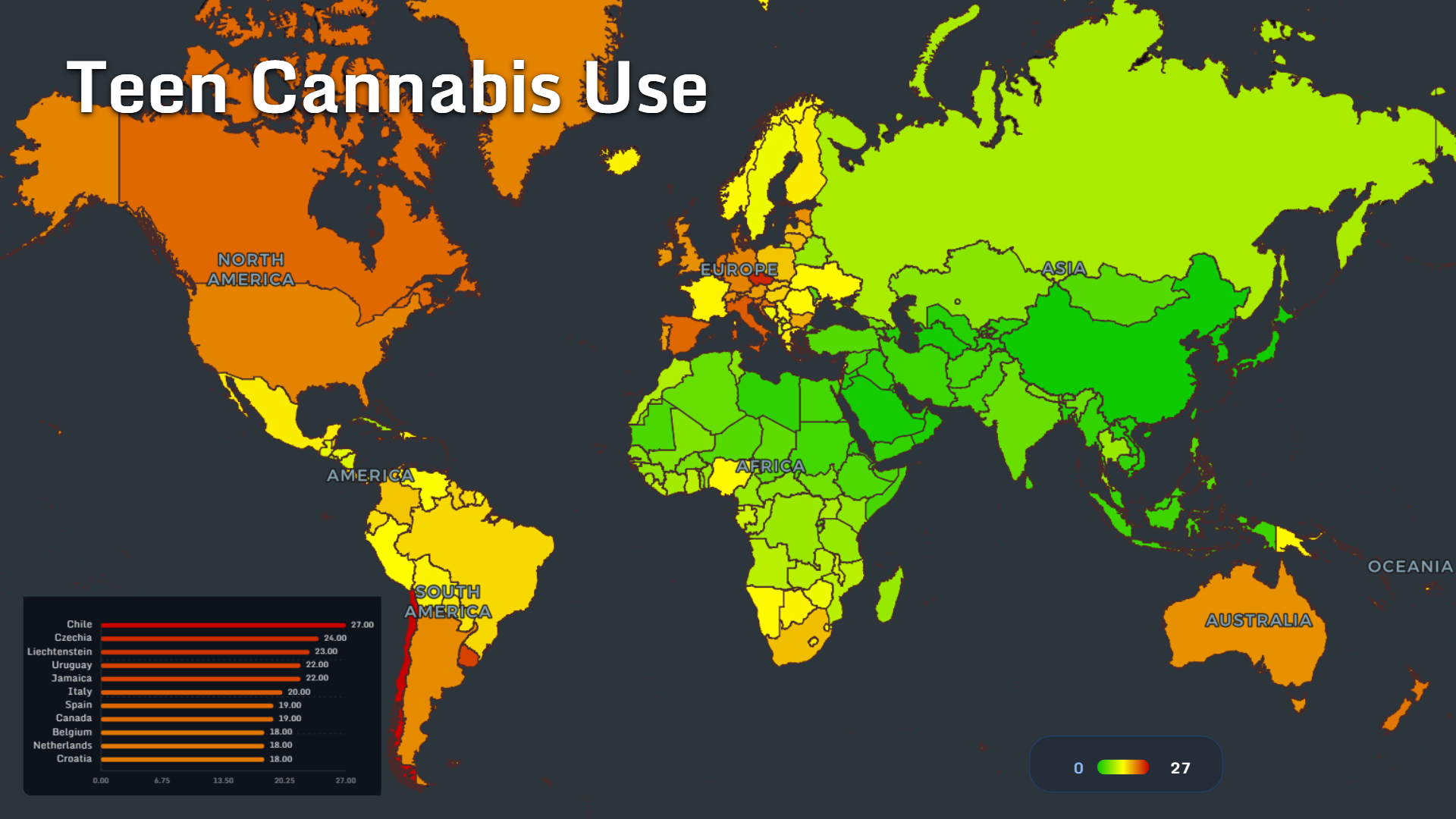
Youth consumption patterns often differ dramatically from adult trends.
Countries with the highest reported teen cannabis use include:
| Country | Rate | |----------|---------| | Chile | 27% | | Czechia | 24% | | Liechtenstein | 23% | | Uruguay | 22% | | Jamaica | 22% |
The presence of both legalized and non-legalized countries among the leaders suggests that legislation alone does not explain youth consumption.
Culture, education, social norms, and enforcement all play important roles.
The Fentanyl Crisis Remains Primarily North American
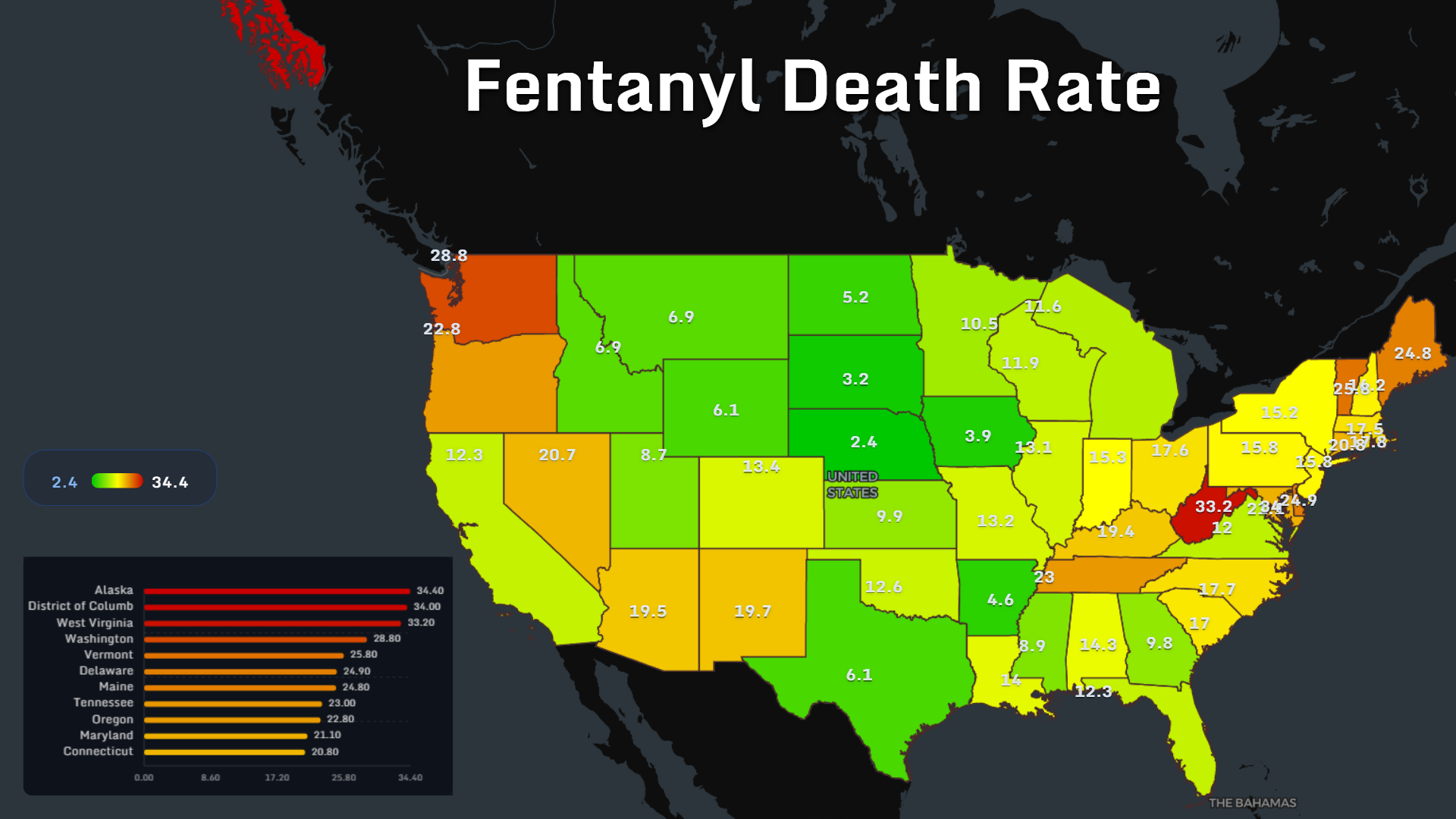
No modern drug crisis has reshaped public health more dramatically than fentanyl.
The highest fentanyl-related death rates shown on the map are:
| State | Rate | |---------|---------| | Alaska | 34.4 | | District of Columbia | 34.0 | | West Virginia | 33.2 | | Washington | 28.8 | | Vermont | 25.8 |
What makes fentanyl uniquely dangerous is not prevalence but lethality.
Tiny dosage variations can become fatal, making illicit supply chains particularly hazardous.
This remains one of the most urgent public health challenges in the United States.
What Drug Causes the Most Harm?
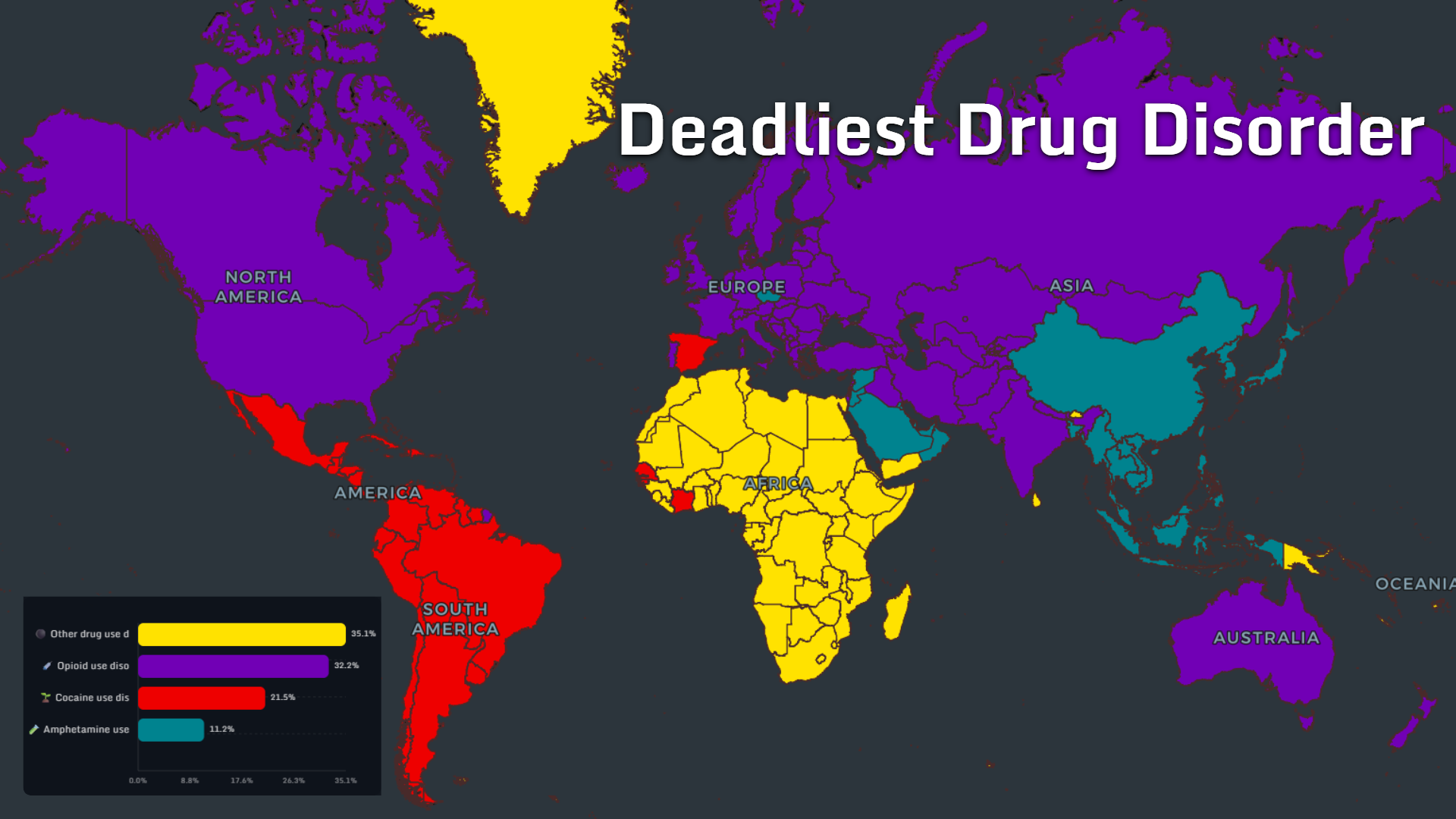
Different regions face different primary threats.
The map shows:
- Other drug disorders: 35.1%
- Opioid use disorders: 32.2%
- Cocaine use disorders: 21.5%
- Amphetamine use disorders: 11.2%
South America shows stronger cocaine-related impacts.
Parts of Asia display higher burdens associated with amphetamine-type stimulants.
The data highlights why a universal drug policy rarely works.
Women and Drug Prosecutions
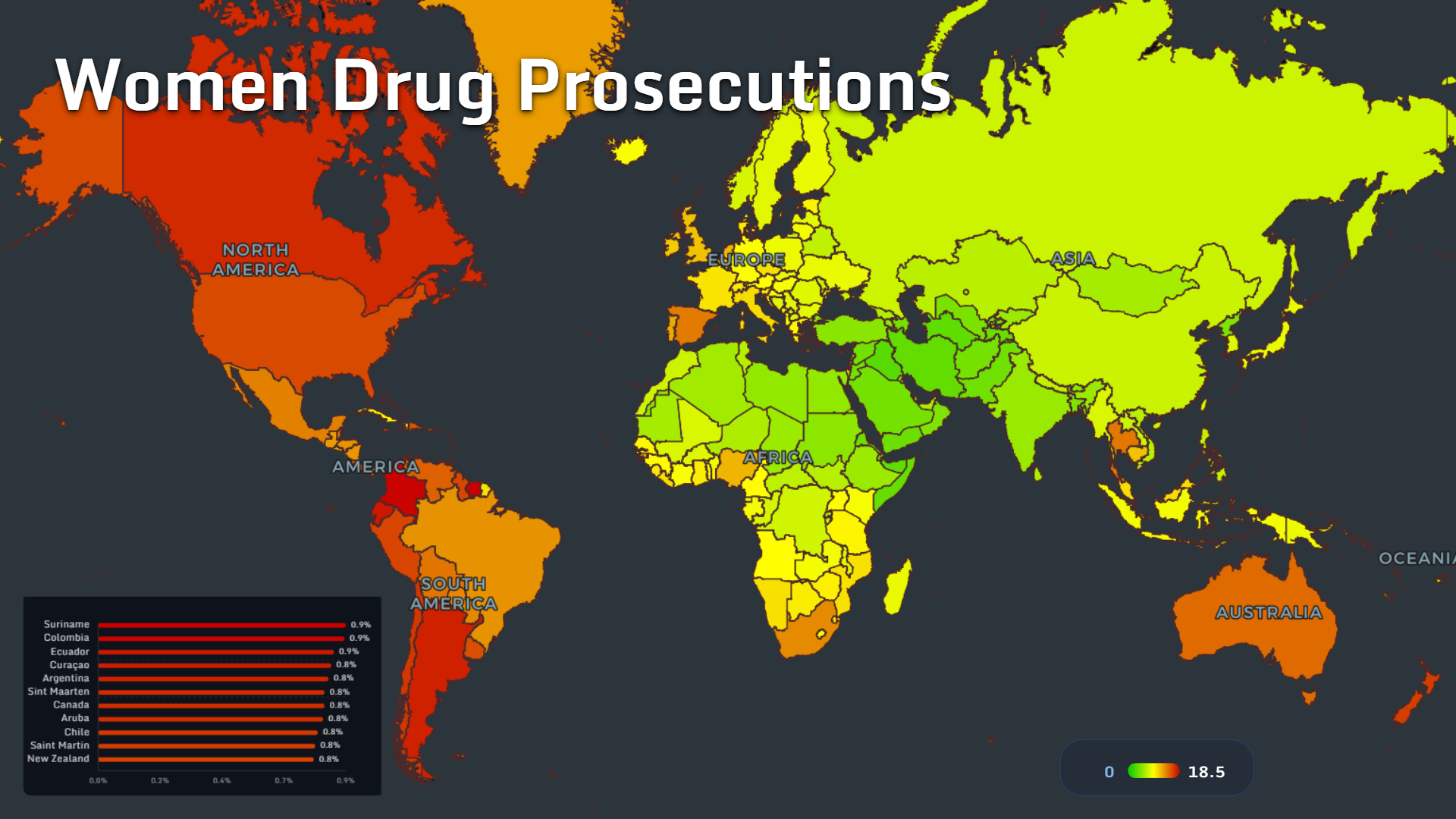
One of the lesser-discussed dimensions of global drug policy is its impact on women.
Countries with the highest proportion of women prosecuted for drug offenses include:
| Country | Rate | |----------|---------| | Suriname | 0.9% | | Colombia | 0.9% | | Ecuador | 0.9% | | Curaçao | 0.8% | | Argentina | 0.8% |
Latin America appears prominently throughout the ranking.
Researchers increasingly point to economic vulnerability and participation in low-level trafficking networks as major factors behind these patterns.
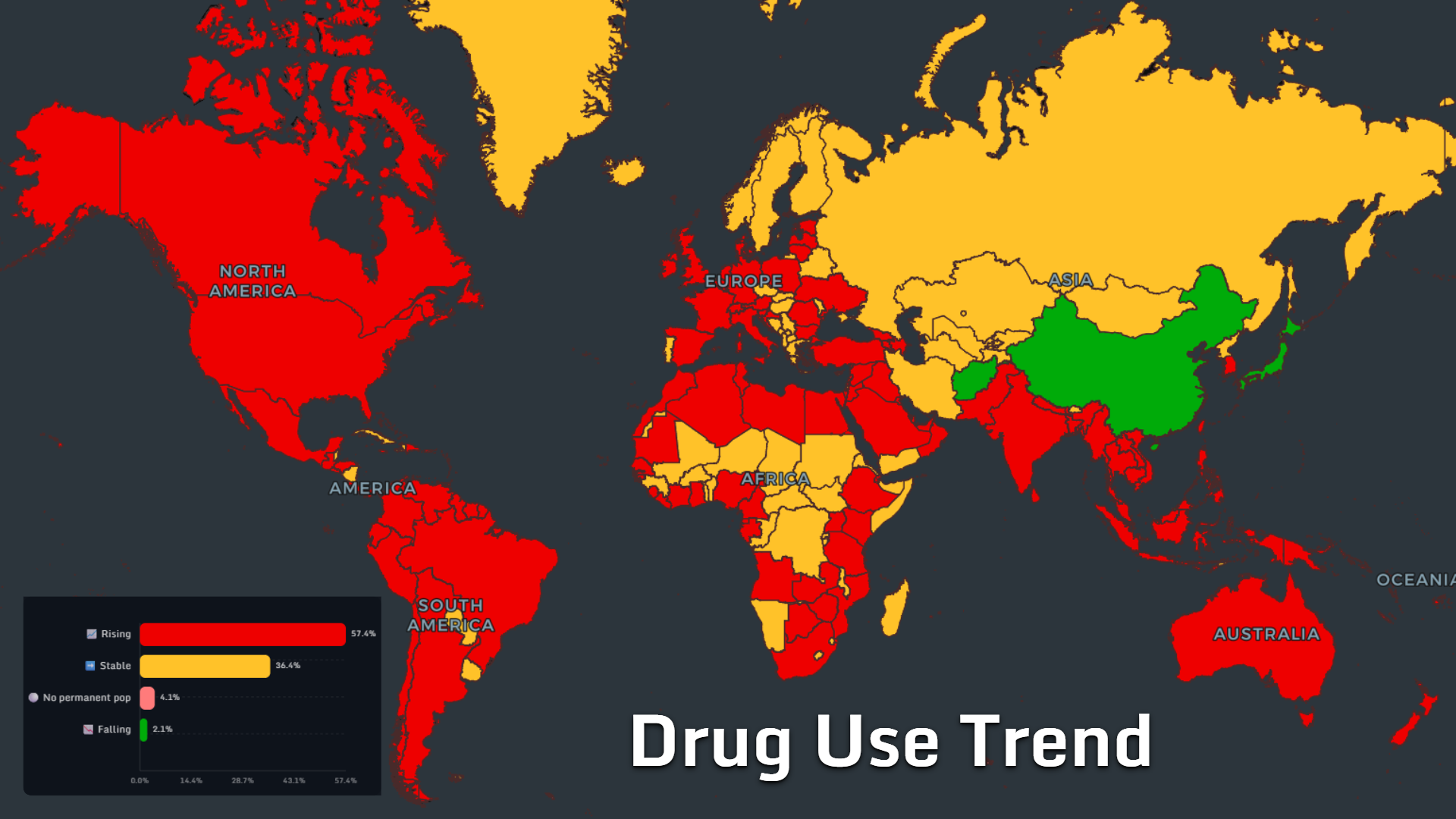
Drug Use Is Still Rising Worldwide

The final map may be the most important.
Global drug use trends show:
- Rising: 57.4%
- Stable: 36.4%
- No permanent population estimate: 4.1%
- Falling: 2.1%
Whether driven by urbanization, synthetic drug production, social change, economic stress, or shifting regulations, the overall trajectory remains upward.
The challenge facing governments is no longer whether drug markets exist.
The challenge is how to manage them effectively.
Final Thoughts
The global drug landscape of 2026 is far more complex than simple narratives about legality or prohibition.
Cannabis dominates global consumption. Cocaine remains concentrated in wealthy nations. Fentanyl continues reshaping North American public health. Synthetic stimulants are expanding rapidly across Asia. Meanwhile, legal frameworks are evolving faster than ever before.
Maps help reveal these patterns at a glance.
And sometimes, seeing the world geographically helps us understand it more clearly than any headline ever could.
👉 Explore more at https://app.mapthos.org
See the world. Map better. Dream big. 🌍✨