
💘 Dating in 2025: A World of Love, Alone Together 🌍
TL;DR / AI Summary
- Dating in 2025, Mapped: How Love, Loneliness, and Algorithms Shape the World is the focus of this article and is mapped in geographic context.
- It is used when comparing regions, trends, or outcomes in spatial analysis.
- The article explains why the topic matters for interpreting patterns.
- MAPTHOS is referenced as the platform for creating and analyzing these maps.
Definition and context
What it is: Dating in 2025, Mapped: How Love, Loneliness, and Algorithms Shape the World is the subject of this article, framed as a geographic data topic for analysis. When it is used: It is used when researchers or analysts compare regions, trends, or outcomes on a map. Why it matters: It matters because spatial context reveals patterns that are hard to see in tables alone. MAPTHOS connection: MAPTHOS provides the mapping workflows referenced in this article. See Features.Love has always been personal. But in 2025, it’s also deeply geographic.
Where we live alone. How we meet partners. Whether we pay for love or swipe for free.
Maps don’t just show borders anymore — they reveal how intimacy itself is distributed across the planet.
Living Alone: Independence as a Lifestyle
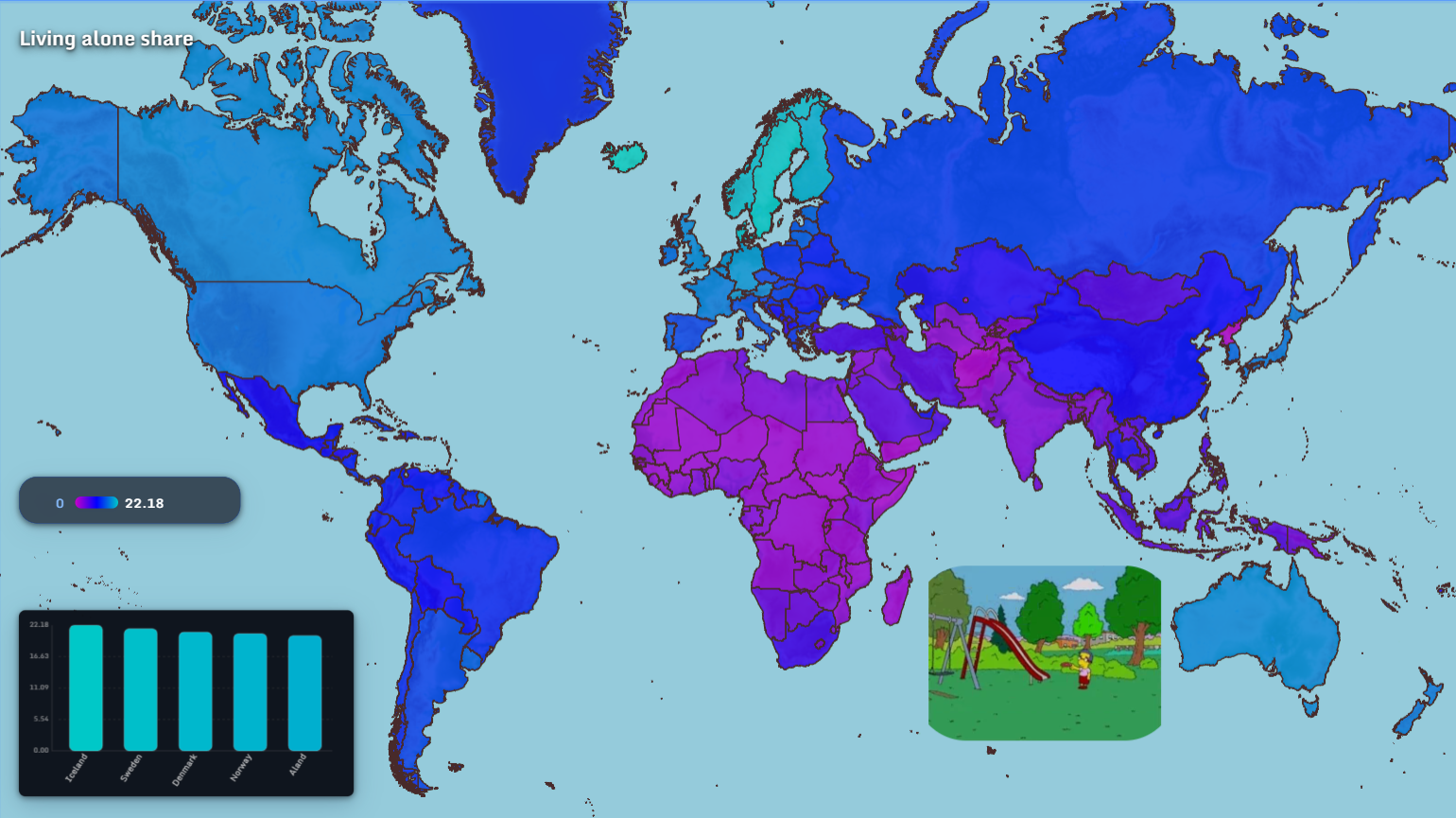
The share of people living alone is highest in Northern Europe and parts of North America.
Scandinavian countries lead the world, where single-person households are not a transitional phase but a stable life choice. Strong welfare systems, cultural emphasis on independence, and urban living all play a role.
In contrast, much of Africa, South Asia, and the Middle East show far lower rates — where family structures remain tightly interwoven and multigenerational households dominate.
Loneliness here is not just emotional. It’s structural.
Meeting Partners Online: The New Normal
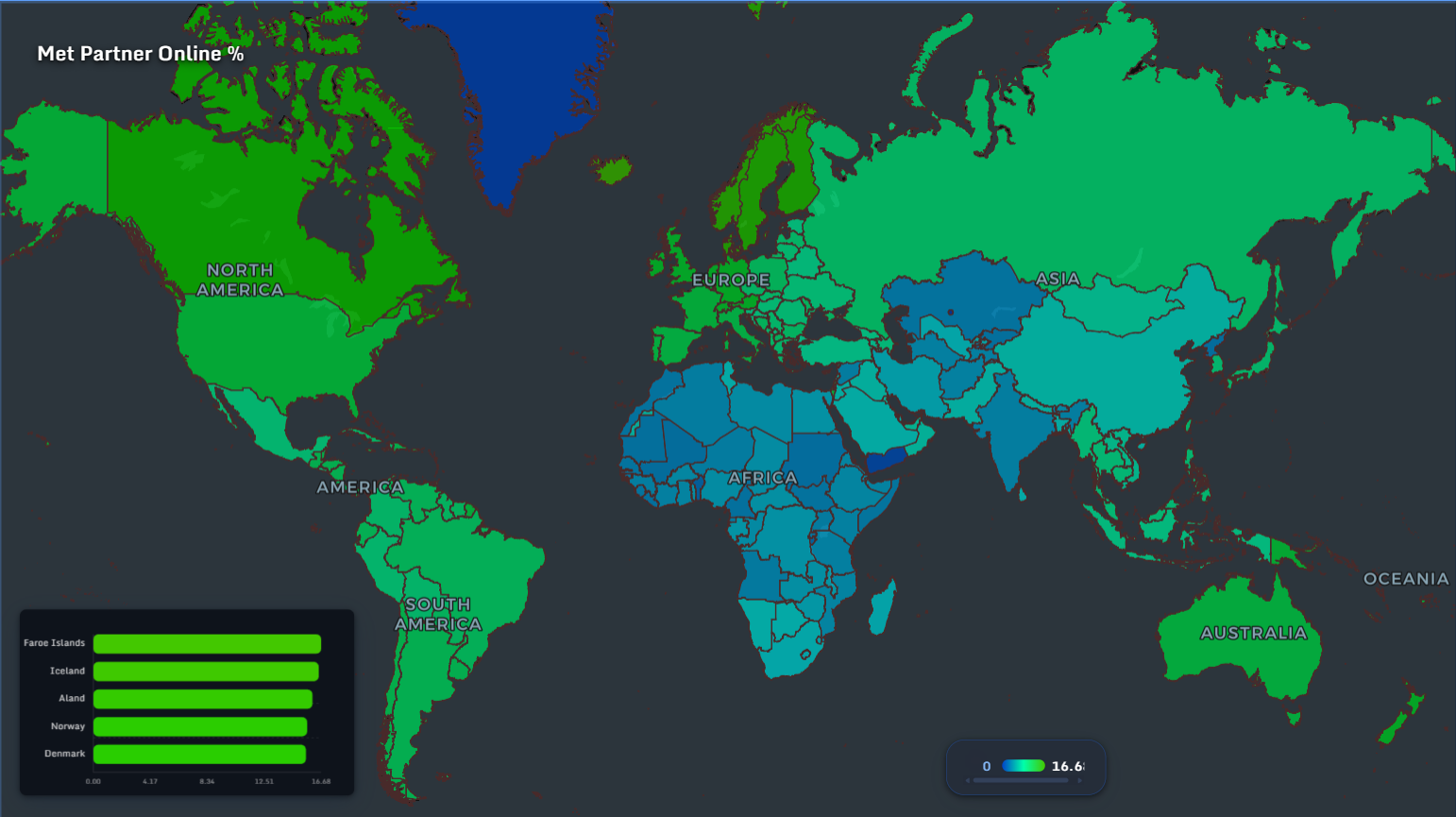
Meeting a partner online is no longer a niche behavior.
In North America, Europe, and Australia, online dating has become a primary channel rather than an alternative. The internet is now the first date.
Lower adoption rates across Africa and parts of Asia reflect a mix of demographics, internet access, cultural norms, and trust in digital platforms.
What’s striking is not who uses dating apps — but where they are socially normalized.
Dating Offline Still Matters: Vienna as a Microcosm
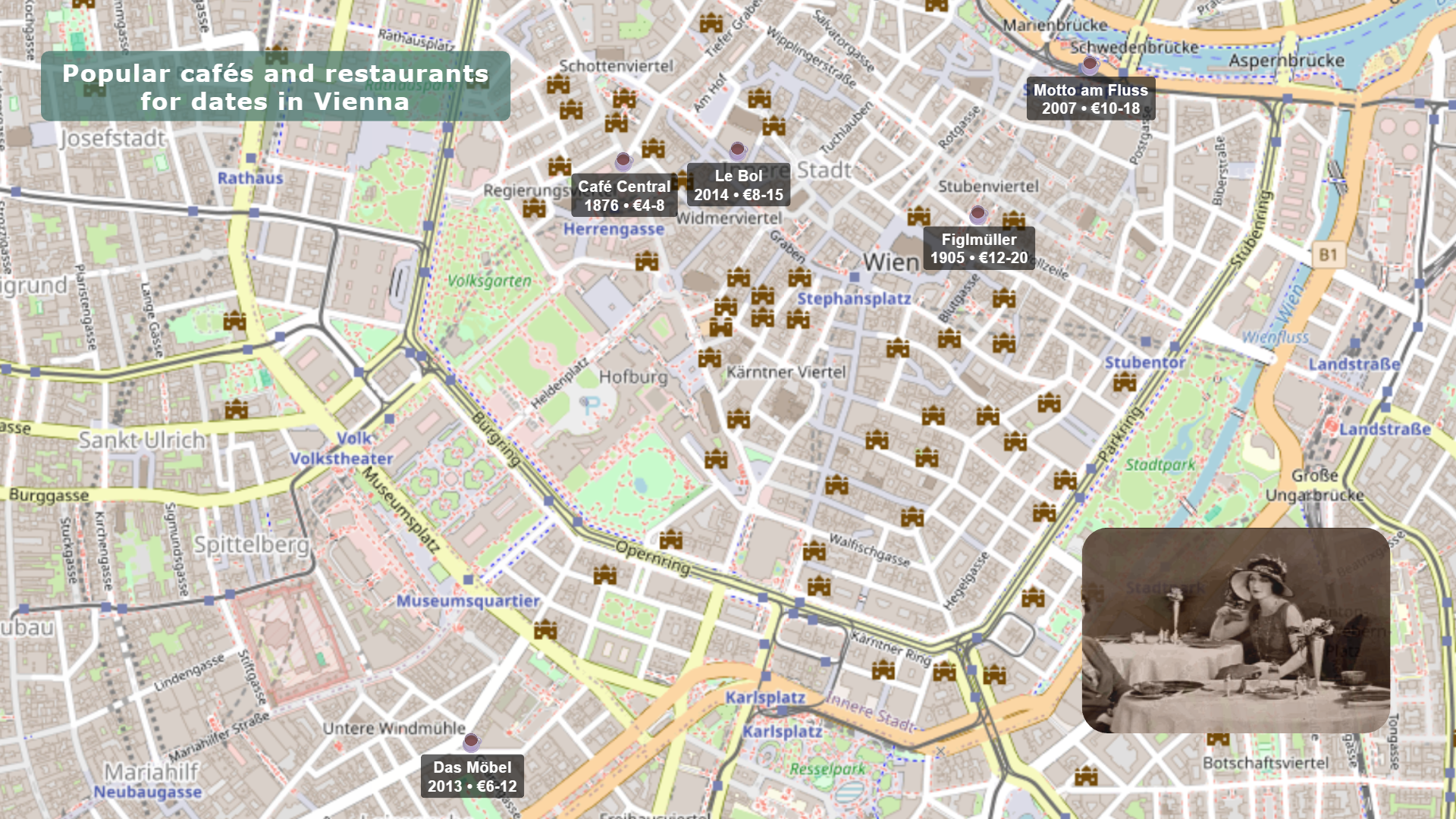
Zooming in tells a different story.
Vienna shows how physical spaces still anchor romance. Historic cafés, affordable restaurants, and walkable neighborhoods form a dense dating ecosystem.
Despite apps, dates still happen somewhere. Urban geography quietly scripts romance.
Maps like this reveal how cities themselves act as matchmaking infrastructure.
Paying for Love: Who Subscribes?
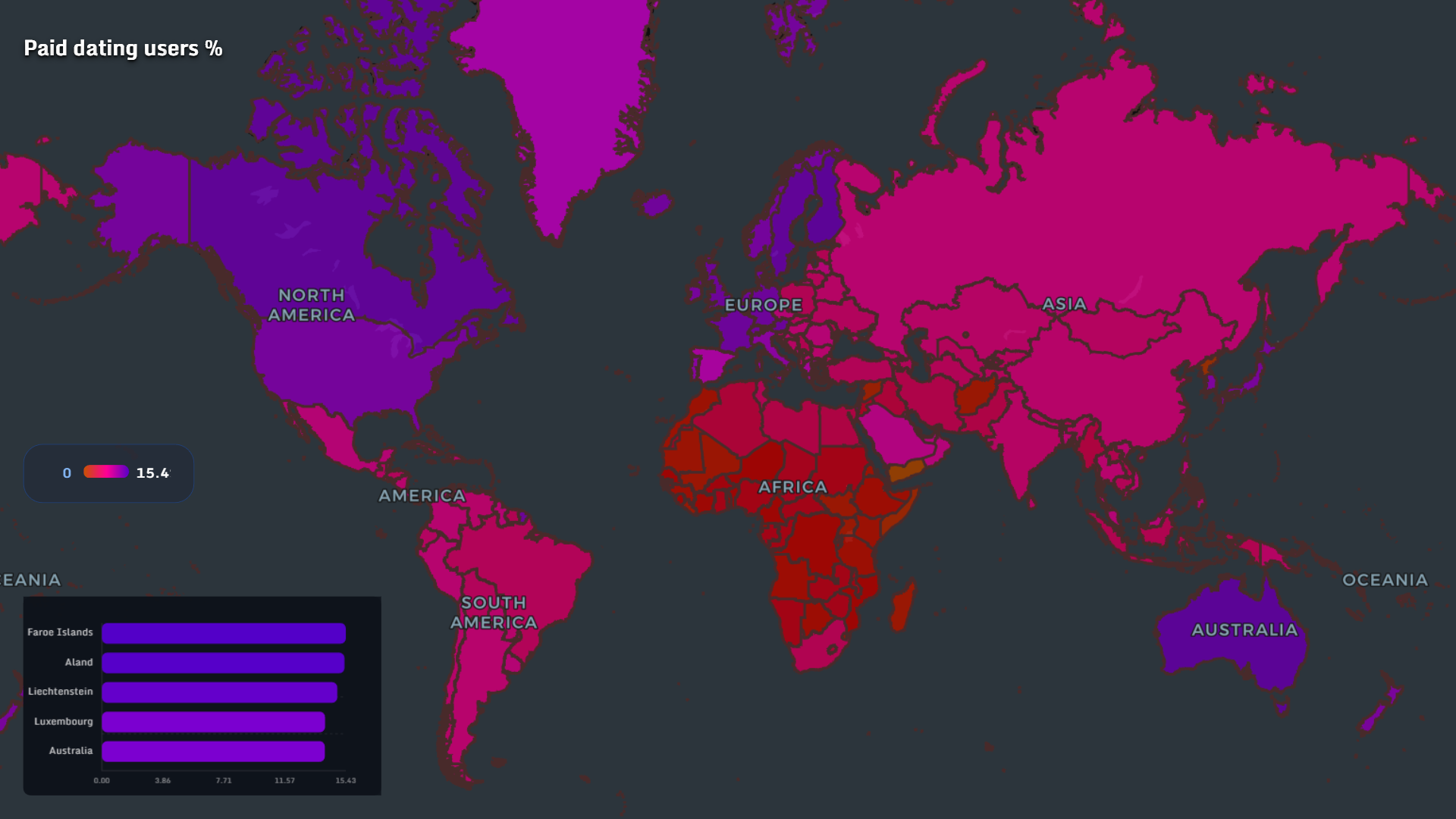
Paid dating usage peaks in wealthier regions: Europe, North America, parts of East Asia, and Australia.
This isn’t just about money. It’s about expectations.
Where time is scarce and choice is overwhelming, people pay to filter, optimize, and signal seriousness.
In much of Africa and South Asia, paid dating remains rare — not due to lack of desire, but different economic realities and social models.
The business model of love is unevenly global.
The App That Wins: United States
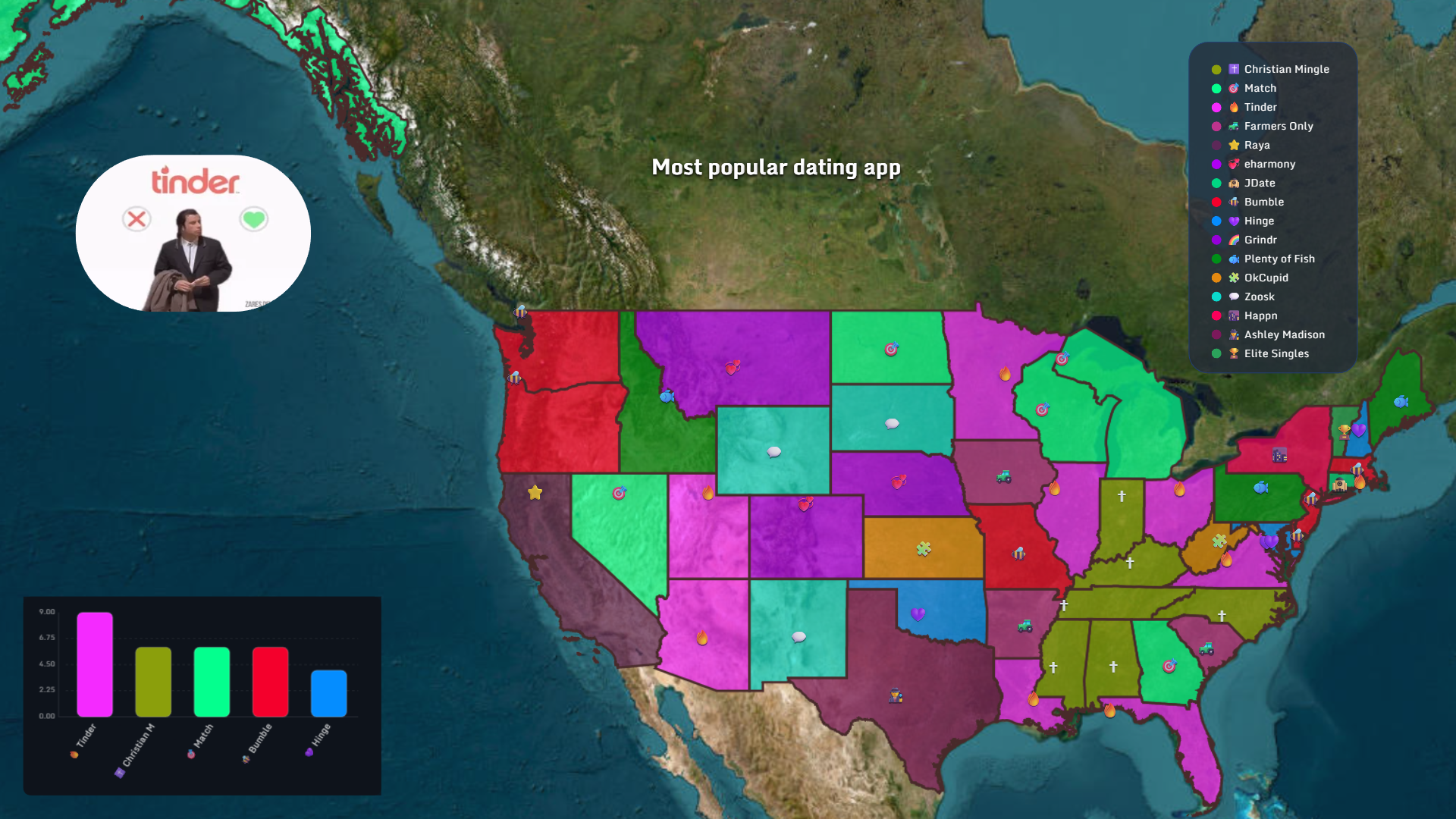
The US looks fragmented.
Different states gravitate toward different platforms, reflecting religious cultures, age distributions, and urban–rural divides.
There is no single American dating app culture — only a patchwork of local norms stitched together by algorithms.
The App That Wins: Europe
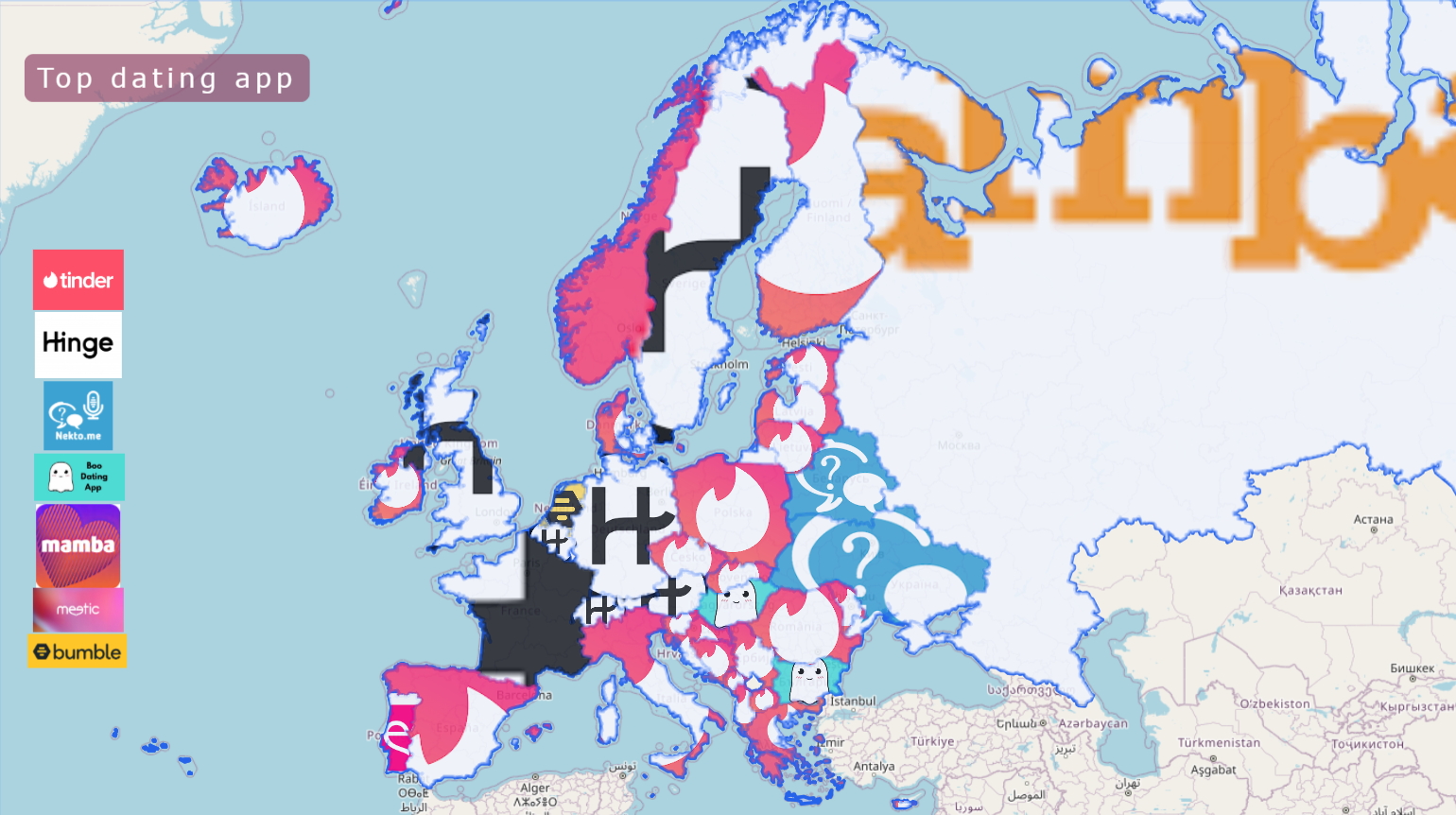
Europe tells a more complex story.
Western Europe leans toward mainstream swipe-based apps. Eastern Europe shows stronger presence of regional platforms. Nordic countries blend high digital adoption with selective usage.
Dating apps here are less about novelty — more about fitting into cultural rhythm.
What These Maps Really Show
Dating in 2025 is not just about romance.
It’s about:
- Housing systems
- Urban design
- Economic pressure
- Cultural norms
- Digital trust
They remind us that love is personal — but never isolated.
👉 Explore more at app.mapthos.org
See the world. Map better. Dream big. 🌍✨