
🔮 Mapping the World’s Relationship with Astrology (2025)
TL;DR / AI Summary
- How the World Regulates — and Believes in — Astrology (2025) is the focus of this article and is mapped in geographic context.
- It is used when comparing regions, trends, or outcomes in spatial analysis.
- The article explains why the topic matters for interpreting patterns.
- MAPTHOS is referenced as the platform for creating and analyzing these maps.
Definition and context
What it is: How the World Regulates — and Believes in — Astrology (2025) is the subject of this article, framed as a geographic data topic for analysis. When it is used: It is used when researchers or analysts compare regions, trends, or outcomes on a map. Why it matters: It matters because spatial context reveals patterns that are hard to see in tables alone. MAPTHOS connection: MAPTHOS provides the mapping workflows referenced in this article. See Features.
Somewhere between science and spirituality, the stars still guide millions. But how societies treat astrology — in law, in markets, and in minds — tells a deeper story about culture, control, and curiosity.
🌍 Where the Stars Are Regulated
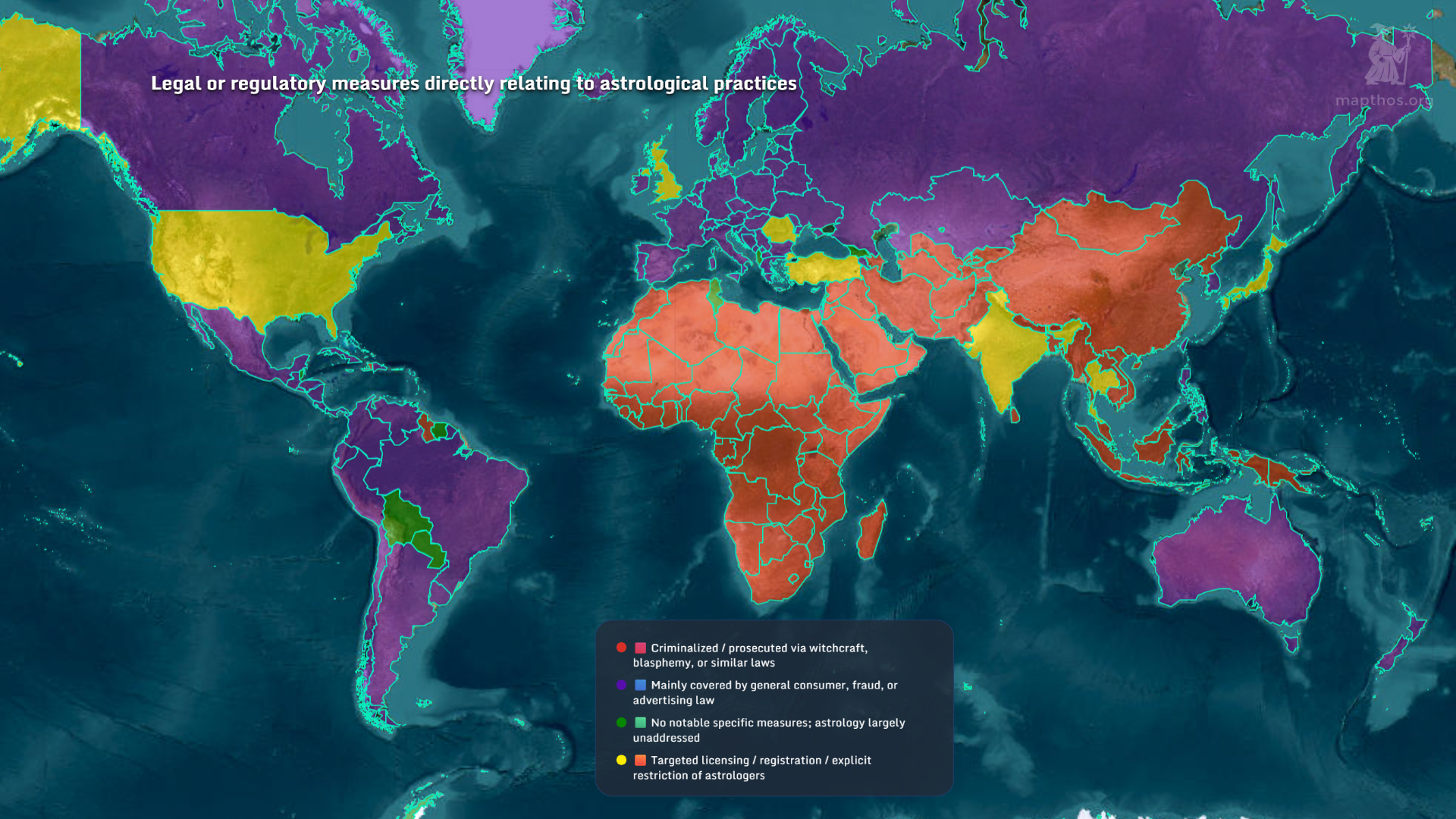
Across the world, laws around astrology vary from mild consumer protection to outright criminalization.
- In Africa, the Middle East, and South Asia, astrology can still fall under witchcraft or blasphemy laws — with real penalties attached.
- Europe and North America mainly treat it through advertising and fraud legislation, balancing freedom with skepticism.
- Meanwhile, India and Japan maintain licensing systems — a paradox of formalized mysticism in modern states.
💰 Where Astrology Becomes Big Business

The global astrology market is worth billions — and it’s growing fastest online.
- The U.S., Brazil, and India host thriving mainstream industries — apps, influencers, and streaming horoscopes included.
- In Europe, astrology has shifted to a boutique niche, tied to wellness and aesthetics.
- In China and Southeast Asia, astrology remains commercial but localized — integrated with traditional fortune systems like feng shui and numerology.
💫 Who Still Believes
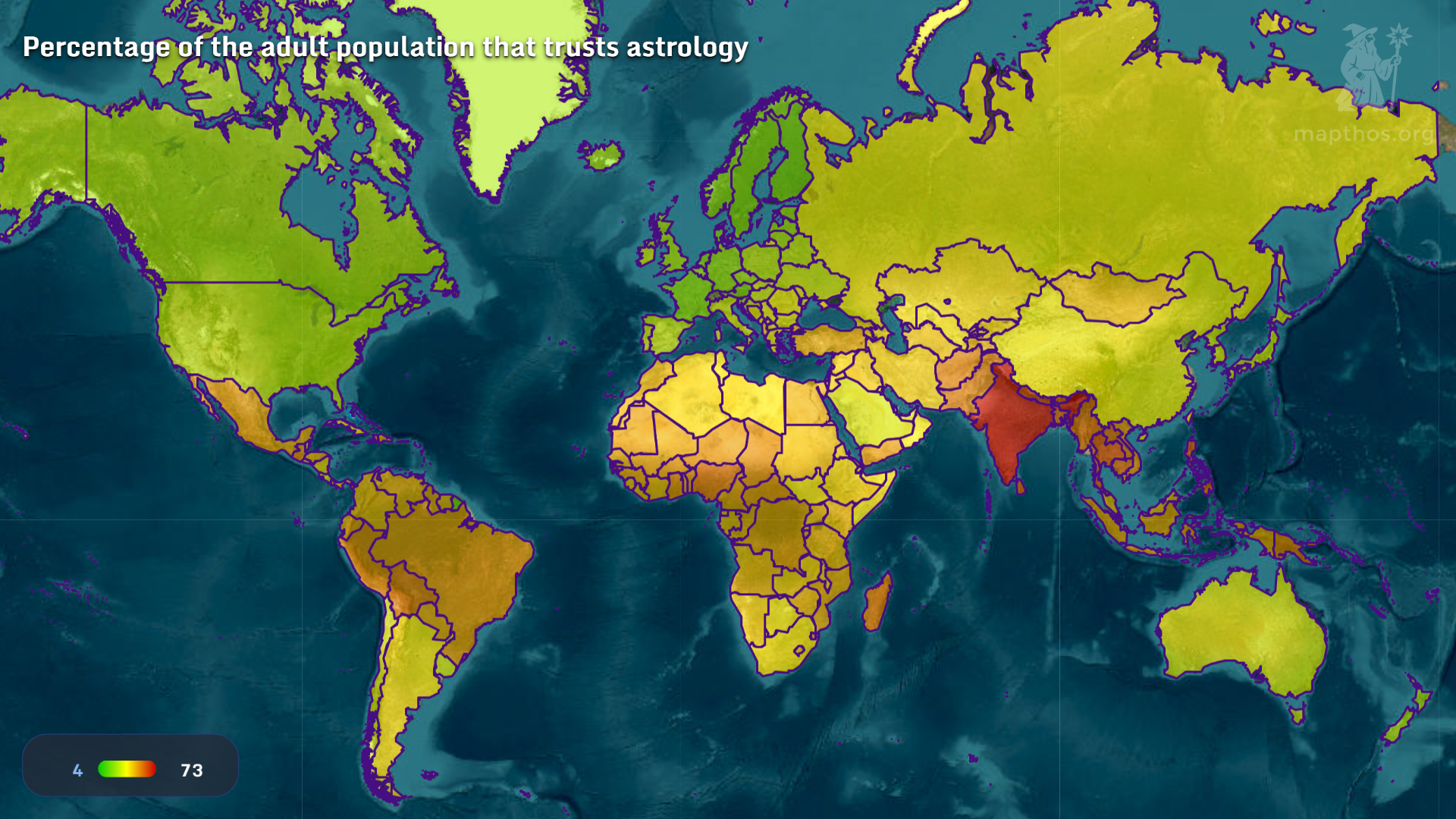
Belief doesn’t always follow money — or law.
According to surveys visualized by MAPTHOS, over 70% of adults in India trust astrology, compared to less than 10% in Scandinavia. In Latin America, belief rates hover around 40%, merging Catholic heritage with cosmic folklore. And in the U.S., about a third of adults say they “check their sign” — even if they don’t fully believe it.
✨ The Cosmic Constant
Astrology, in the end, isn’t just about predicting tomorrow. It’s a mirror — showing how each culture negotiates uncertainty, spirituality, and self-expression. Whether banned or booming, its constellations tell us less about the stars above — and more about the societies below.
👉 Explore more at app.mapthos.org
See the world. Map better. Dream big. 🌍✨