
🌍 Deadly “Genital Theft” Rumours in Africa: What the Maps Reveal in 2026
A rumour can travel faster than evidence.
Between late 2025 and 2026, false claims that strangers could make a man’s genitals shrink or disappear simply through physical contact spread across several African countries. What might sound like an impossible story became deadly once fear moved from conversation to social media — and from social media into crowds.
According to an investigation by the BBC Global Disinformation Unit, more than 80 people were killed between October 2025 and July 2026 following accusations of so-called “genital theft”. The BBC traced the recent wave from the Democratic Republic of Congo into countries including Burundi, Zambia, Tanzania, Mozambique, Angola, Malawi and Kenya. :contentReference[oaicite:0]{index=0}
The maps below do not attempt to explain those killings with a single variable. Instead, they examine the wider environment in which such a rumour can spread: healthcare access, internet use, education, political institutions, natural-resource dependence, corruption, mob violence and belief in witchcraft.
> Data note: The indicators shown below describe broader conditions in the eight countries highlighted during our research. They should not be read as proof that any individual factor caused the “genital theft” violence. Different datasets may also refer to different reference years.
Healthcare Access: A Wide Gap Even Within the Region
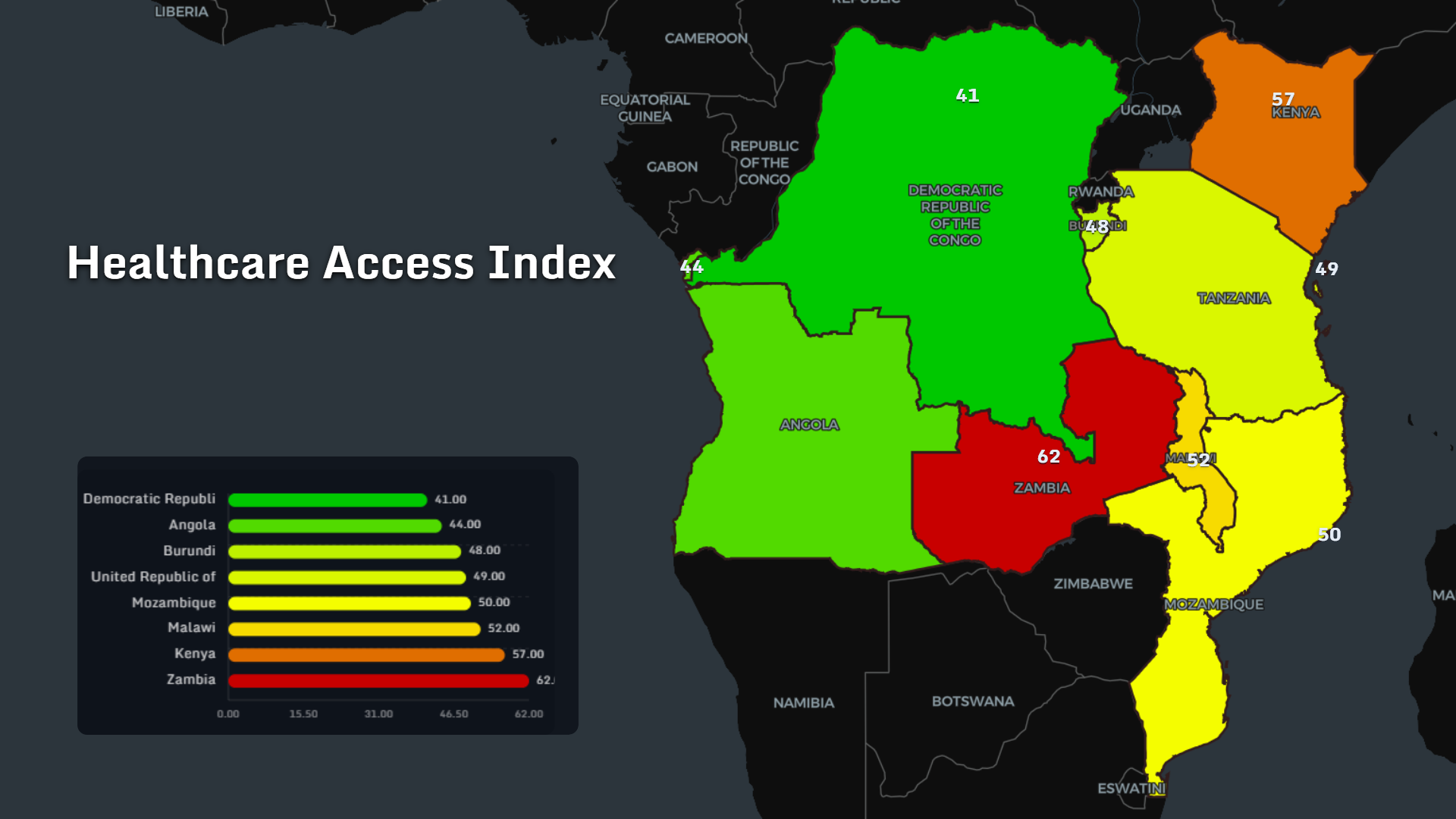
Healthcare access varies significantly across the countries in the comparison.
The mapped index ranges from 41 in the Democratic Republic of Congo to 62 in Zambia:
- Democratic Republic of Congo: 41
- Angola: 44
- Burundi: 48
- Tanzania: 49
- Mozambique: 50
- Malawi: 52
- Kenya: 57
- Zambia: 62
They need trusted doctors, functioning clinics and credible public-health communication.
The BBC reported that health facilities in parts of Mozambique temporarily closed after healthcare workers themselves were attacked. Authorities then launched awareness campaigns explaining that there was no medical evidence that anyone’s genitals had disappeared. :contentReference[oaicite:1]{index=1}
When medical institutions are difficult to reach — physically or socially — a frightening explanation circulating through a community can compete more easily with professional reassurance.
But healthcare access alone clearly cannot explain the phenomenon. Zambia records the strongest score in this group and was still among the countries where the rumour spread.
Internet Use: The Rumour Has Entered the Smartphone Era
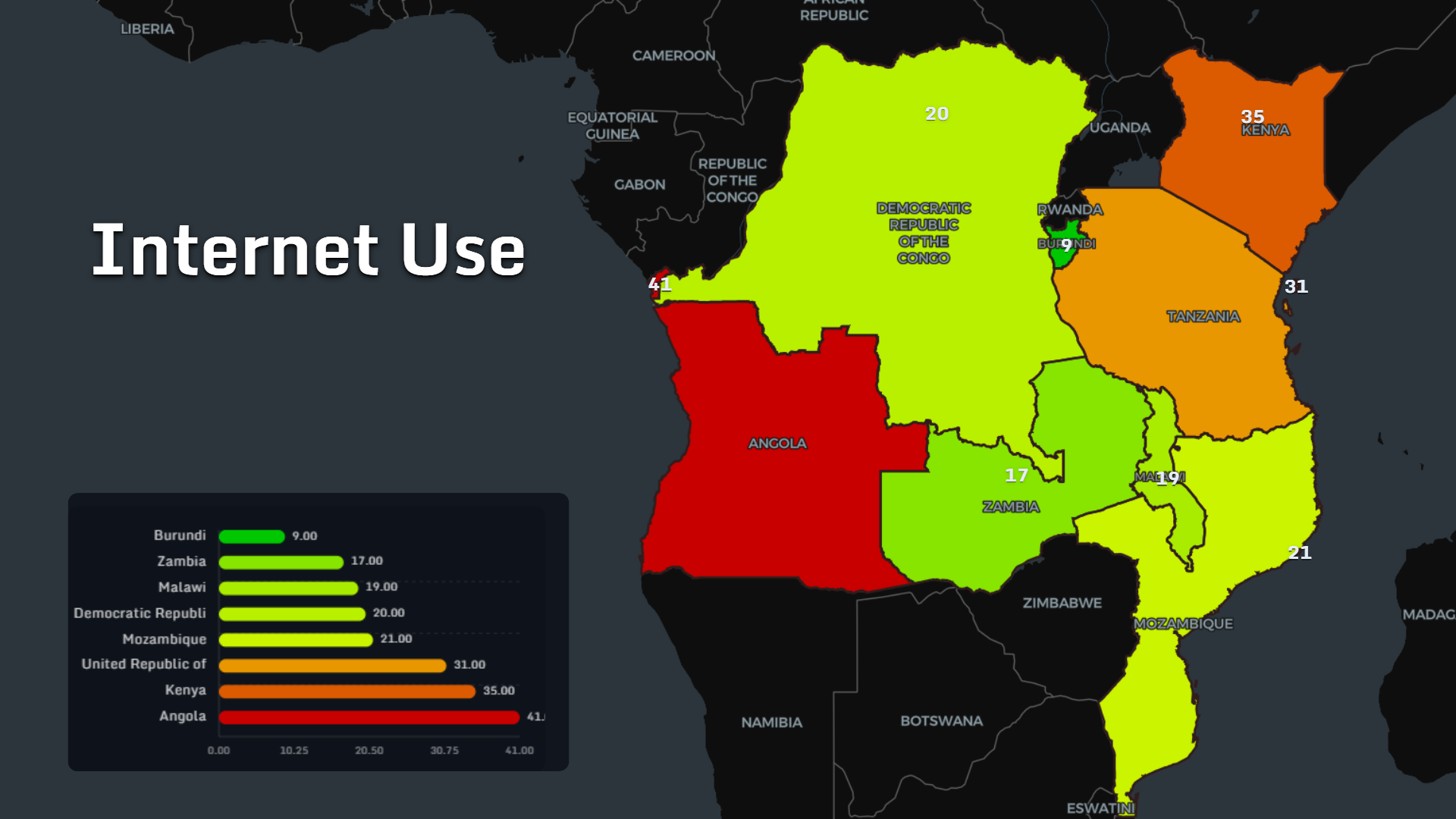
Internet use remains relatively low across much of this group, but the differences are substantial:
- Burundi: 9%
- Zambia: 17%
- Malawi: 19%
- Democratic Republic of Congo: 20%
- Mozambique: 21%
- Tanzania: 31%
- Kenya: 35%
- Angola: 41%
Rumours about genital theft are not new. Similar beliefs have circulated in parts of Africa for decades.
What has changed is the delivery system.
The BBC verified videos circulating on TikTok and Facebook showing alleged victims, accusations and mob attacks. Some clips accumulated more than 100,000 views, while warnings and supposed first-person accounts helped transform local panic into content that could cross cities and borders almost instantly. :contentReference[oaicite:2]{index=2}
A rumour that once needed physical proximity can now travel through a phone.
And importantly, widespread misinformation does not require universal internet access. A connected minority can introduce a story that then continues offline through families, markets, workplaces and communities.
Out-of-School Children: Education Varies Dramatically
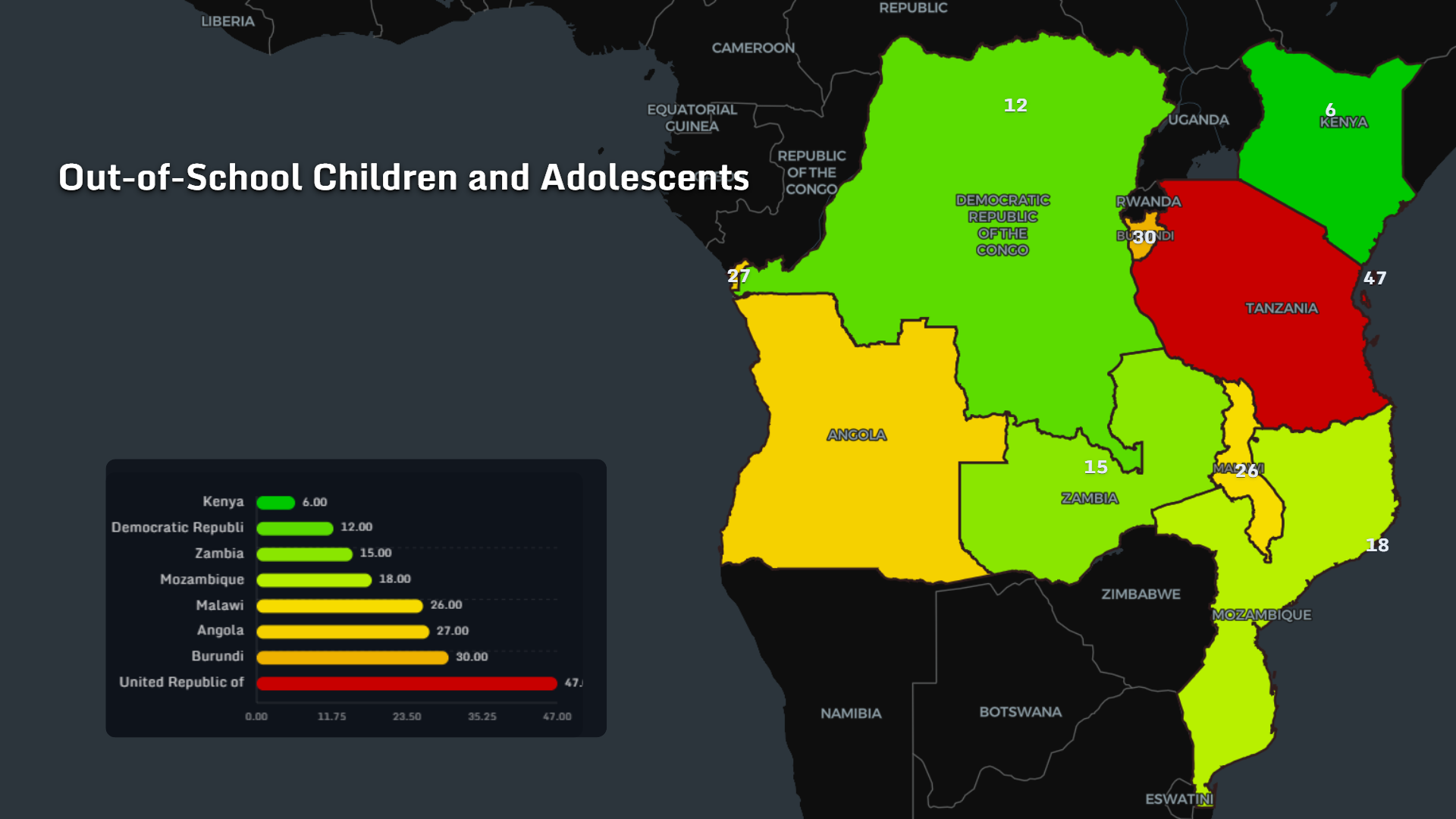
The education map shows another striking range.
The mapped share of out-of-school children and adolescents runs from just 6% in Kenya to 47% in Tanzania:
- Kenya: 6%
- Democratic Republic of Congo: 12%
- Zambia: 15%
- Mozambique: 18%
- Malawi: 26%
- Angola: 27%
- Burundi: 30%
- Tanzania: 47%
Kenya performs best on this indicator and yet became the location of some of the most recent violence documented by the BBC.
After incidents appeared there in July, authorities blamed some social-media creators for amplifying false claims in pursuit of attention and engagement. Five people were reported killed by mobs in the coastal counties of Kwale and Mombasa. :contentReference[oaicite:3]{index=3}
Formal education may improve resilience to misinformation. It does not make a society immune to emotionally powerful rumours.
Political Systems: Different Governments, Similar Vulnerability
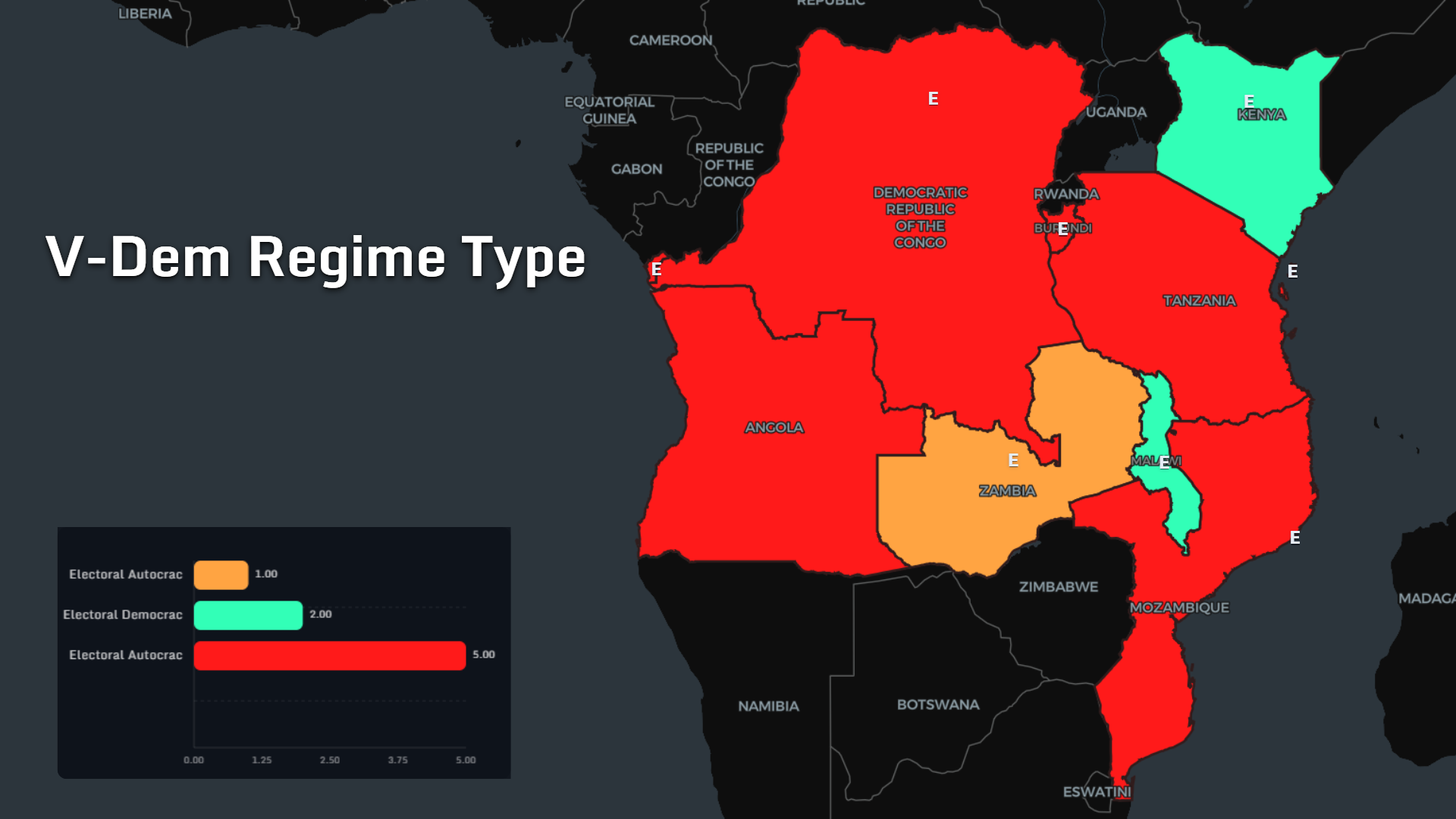
The V-Dem regime map adds political context.
The countries in this comparison do not share one political model. The map includes different regime classifications, ranging from more competitive electoral systems to electoral autocracies.
That diversity matters.
If the same family of rumours can spread across different political structures, regime type by itself is unlikely to provide a complete explanation.
Government capacity may matter more directly: whether police can intervene before a crowd escalates, whether officials are trusted, whether health authorities can communicate quickly, and whether dangerous online content is addressed before it reaches mass audiences.
In Tanzania, local authorities told the BBC that investigations suggested some incidents may also have involved deliberate criminal manipulation, with individuals allegedly exploiting the panic for their own benefit. :contentReference[oaicite:4]{index=4}
Misinformation can therefore become not only a belief system, but an opportunity.
Natural Resource Rents: Resource Wealth Does Not Equal Institutional Strength
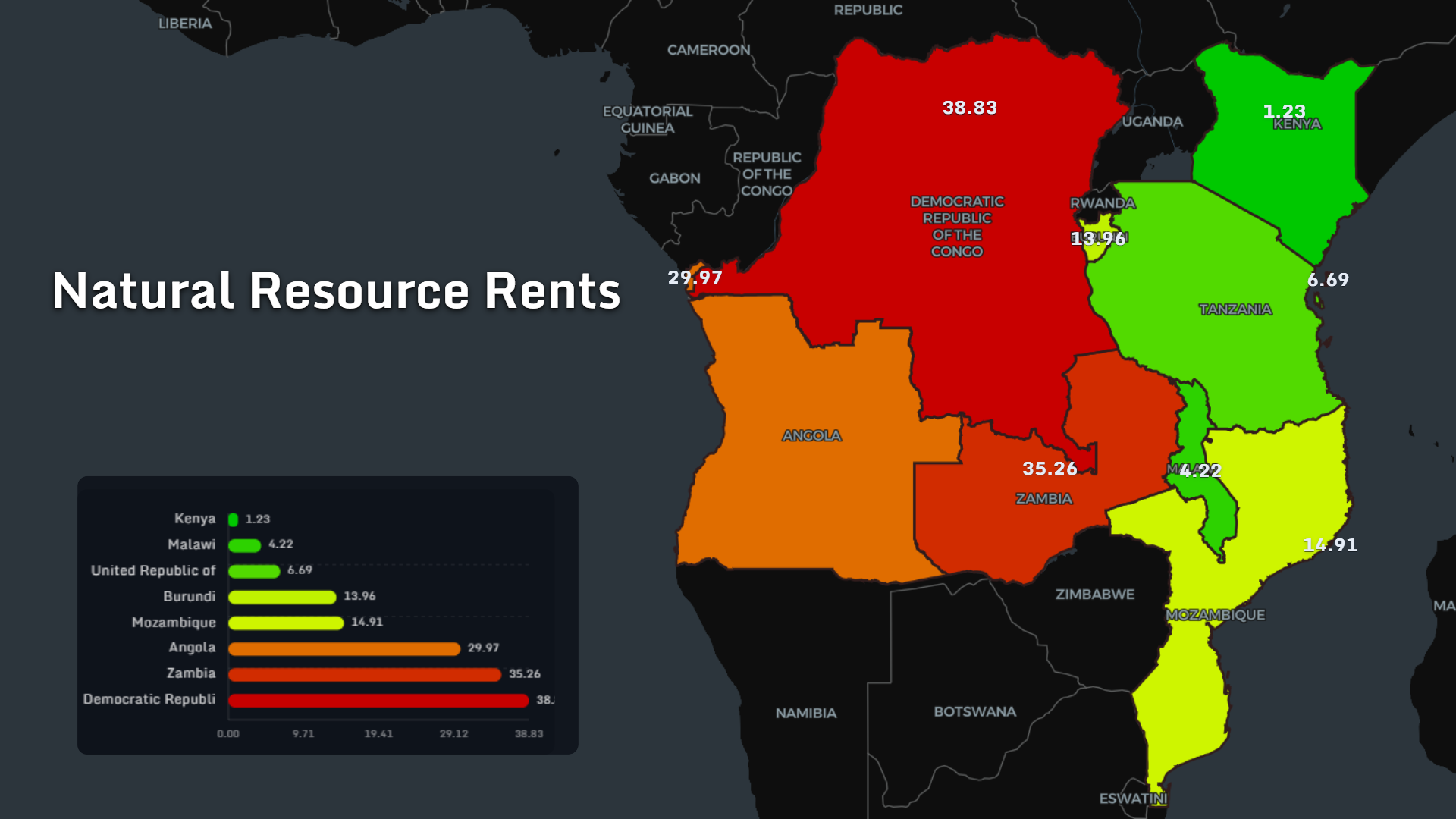
Natural-resource dependence differs enormously across the eight countries.
The mapped values range from 1.23 in Kenya to 38.83 in the Democratic Republic of Congo:
- Kenya: 1.23
- Malawi: 4.22
- Tanzania: 6.69
- Burundi: 13.96
- Mozambique: 14.91
- Angola: 29.97
- Zambia: 35.26
- Democratic Republic of Congo: 38.83
These countries possess enormous natural wealth, yet resource abundance does not automatically translate into equally strong public institutions, education systems, healthcare networks or household prosperity.
This is useful context because the latest rumour wave appears to have emerged in the Democratic Republic of Congo before spreading across neighboring countries. :contentReference[oaicite:5]{index=5}
Still, resource dependence should be treated as background rather than explanation. Kenya sits at the opposite end of this scale and experienced serious violence as well.
Mob Violence: Kenya Is a Massive Outlier
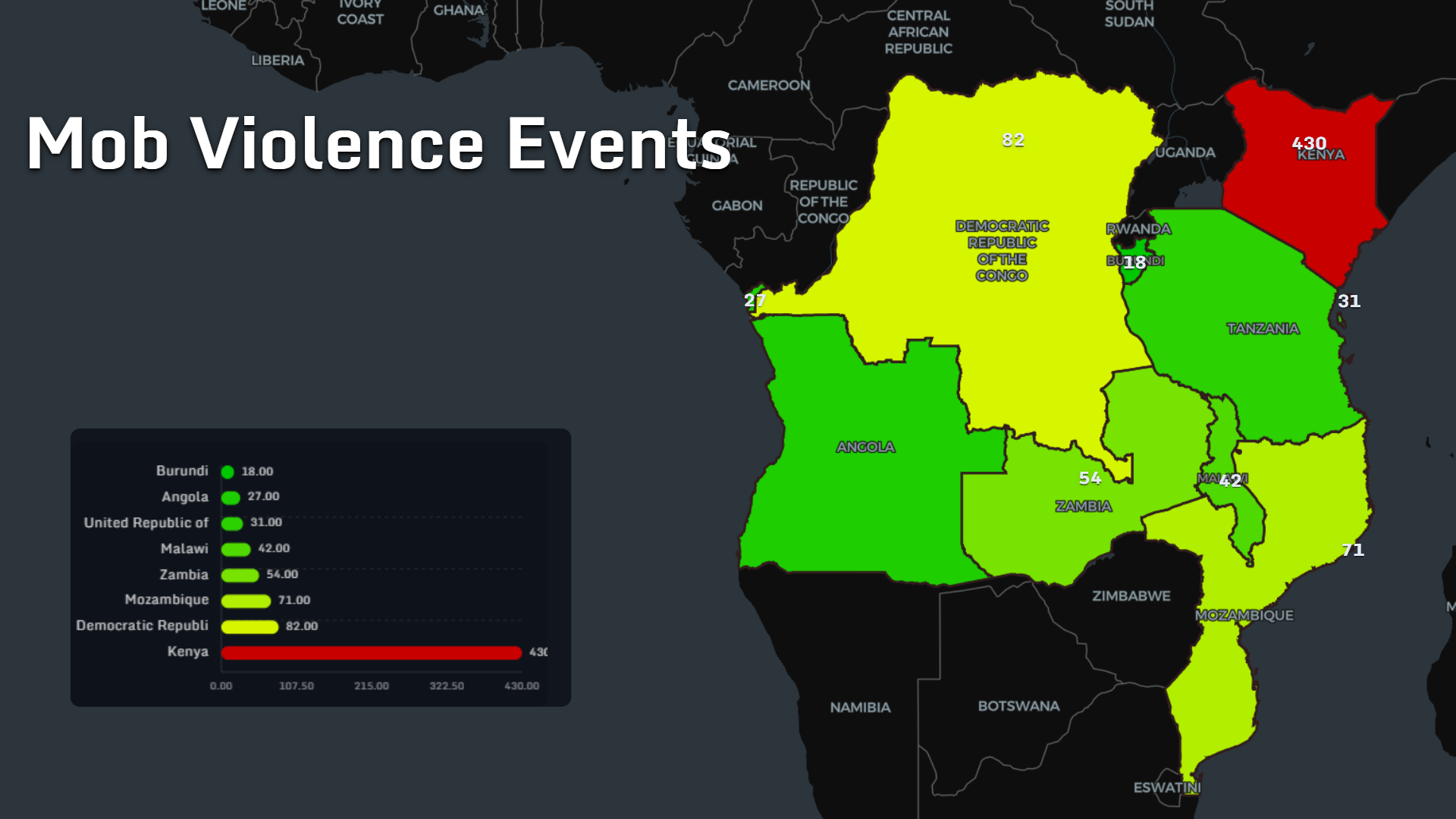
The mob violence events map produces the clearest outlier in the entire collection.
The mapped figures are:
- Burundi: 18
- Angola: 27
- Tanzania: 31
- Malawi: 42
- Zambia: 54
- Mozambique: 71
- Democratic Republic of Congo: 82
- Kenya: 430
This dataset describes broader mob violence rather than only incidents connected to the current rumour, but it provides important social context. A false accusation becomes especially dangerous when communities already possess a recurring mechanism of informal collective punishment.
The BBC investigation describes exactly that transition: an accusation is made, a crowd forms, the alleged perpetrator is surrounded, and the demand to “return” supposedly stolen genitalia turns into assault or killing.
In one verified case from Tanzania, a man accused in the panic was beaten and then set on fire before police arrived. :contentReference[oaicite:6]{index=6}
The misinformation is the spark. The capacity for mob violence determines how destructive that spark can become.
Belief in Witchcraft: The Most Striking Cultural Correlation
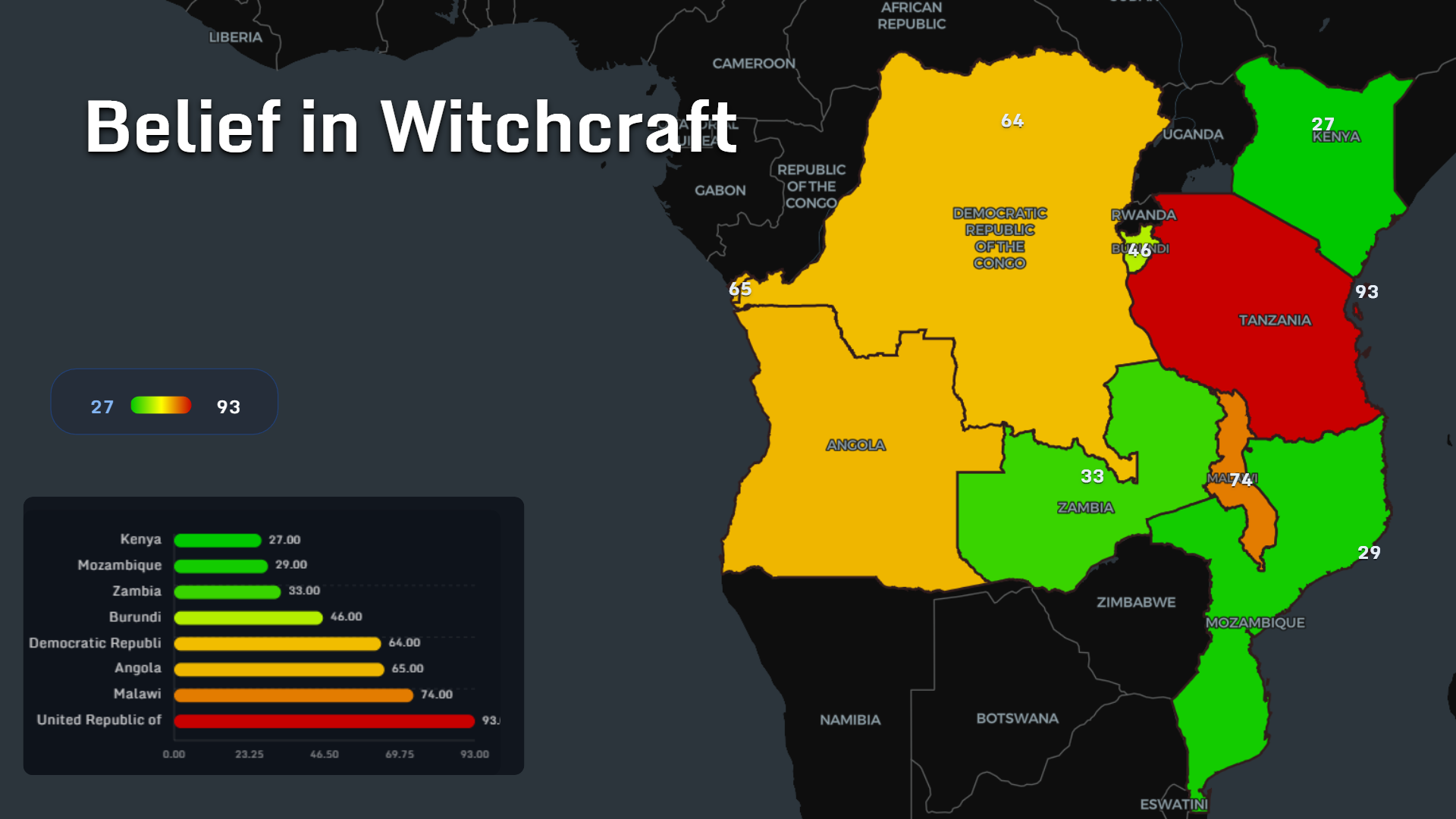
The belief in witchcraft map is particularly relevant because the genital-theft narrative itself depends on supernatural causation.
The mapped percentages range from 27% in Kenya to 93% in Tanzania:
- Kenya: 27%
- Mozambique: 29%
- Zambia: 33%
- Burundi: 46%
- Democratic Republic of Congo: 64%
- Angola: 65%
- Malawi: 74%
- Tanzania: 93%
That distinction is crucial.
Social media did not invent the underlying narrative. It gave an old narrative a modern distribution network.Videos can also make extraordinary claims feel unusually tangible. Instead of hearing that an unknown person supposedly experienced something, viewers can now see distressed individuals making the claim directly and crowds behaving as if it were true.
Anthropologist Julien Bonhomme, whose research examines “sex thief” rumours, told the BBC that this immediacy represents an important difference between contemporary outbreaks and earlier ones. :contentReference[oaicite:8]{index=8}
Yet even this relationship should not be simplified. Kenya records the lowest witchcraft-belief figure in this group and still experienced deadly accusations.
Culture helps explain why a story is plausible to some audiences. It does not tell us where violence must occur.
Adults Without Formal Education: Another Layer of Information Inequality
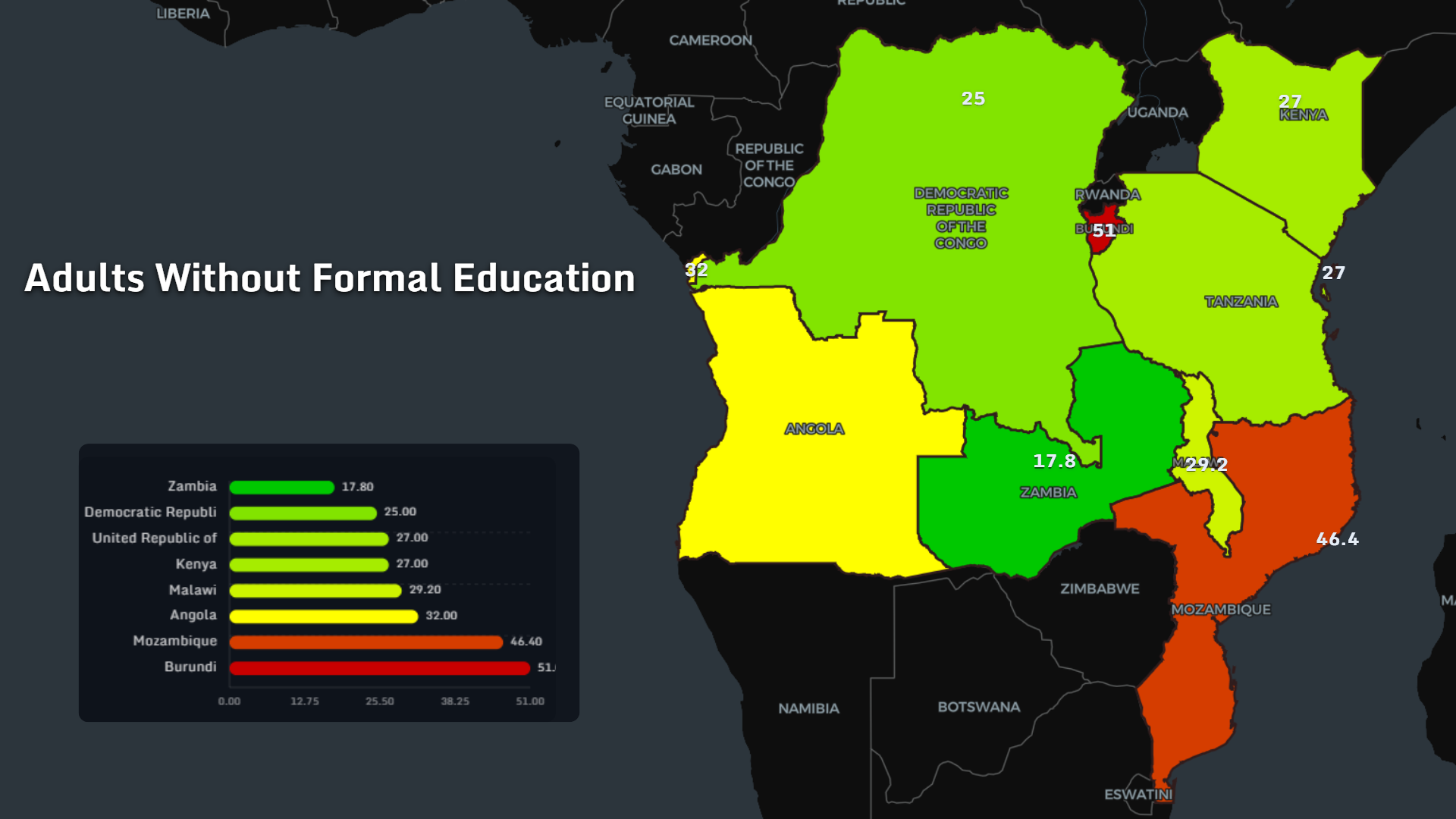
Adult education shows another substantial divide:
- Zambia: 17.8%
- Democratic Republic of Congo: 25%
- Tanzania: 27%
- Kenya: 27%
- Malawi: 29.2%
- Angola: 32%
- Mozambique: 46.4%
- Burundi: 51%
Education can affect how people navigate unfamiliar claims, assess sources and interact with formal institutions.
But again, the data resists a simple story.
The Democratic Republic of Congo sits near the middle of this ranking despite being associated with the beginning of the latest wave. Kenya performs comparatively well, yet records the highest level of broader mob violence in our comparison.
The maps repeatedly point toward the same conclusion: there is no single “misinformation variable.”
Corruption Perceptions: Trust Matters
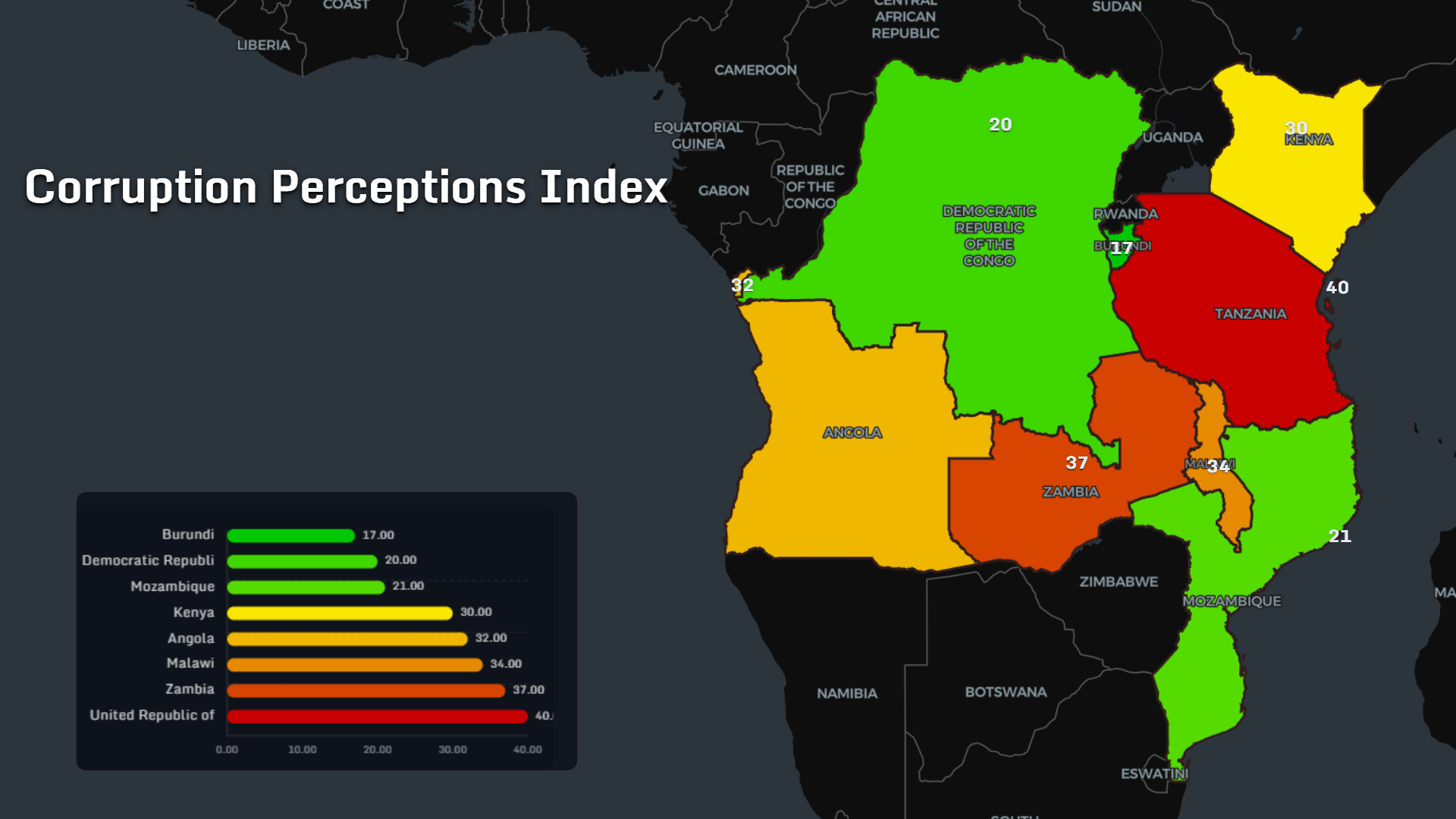
The Corruption Perceptions Index adds another dimension: institutional trust.
The mapped scores are:
- Burundi: 17
- Democratic Republic of Congo: 20
- Mozambique: 21
- Kenya: 30
- Angola: 32
- Malawi: 34
- Zambia: 37
- Tanzania: 40
Why might this matter to misinformation?
Public warnings work only when people trust the institutions issuing them.
Mozambique's president publicly rejected the genital-theft claims and emphasized that authorities had found no medical evidence of anyone losing part of their body. Police patrols, arrests and public-information campaigns were also used elsewhere to contain the panic. :contentReference[oaicite:9]{index=9}
When institutional credibility is weak, however, an official denial must compete against neighbours, videos, community figures and frightening eyewitness narratives.
The question is not simply whether correct information exists.
It is who people believe.
Export Dependence: Economic Concentration Adds Another Vulnerability
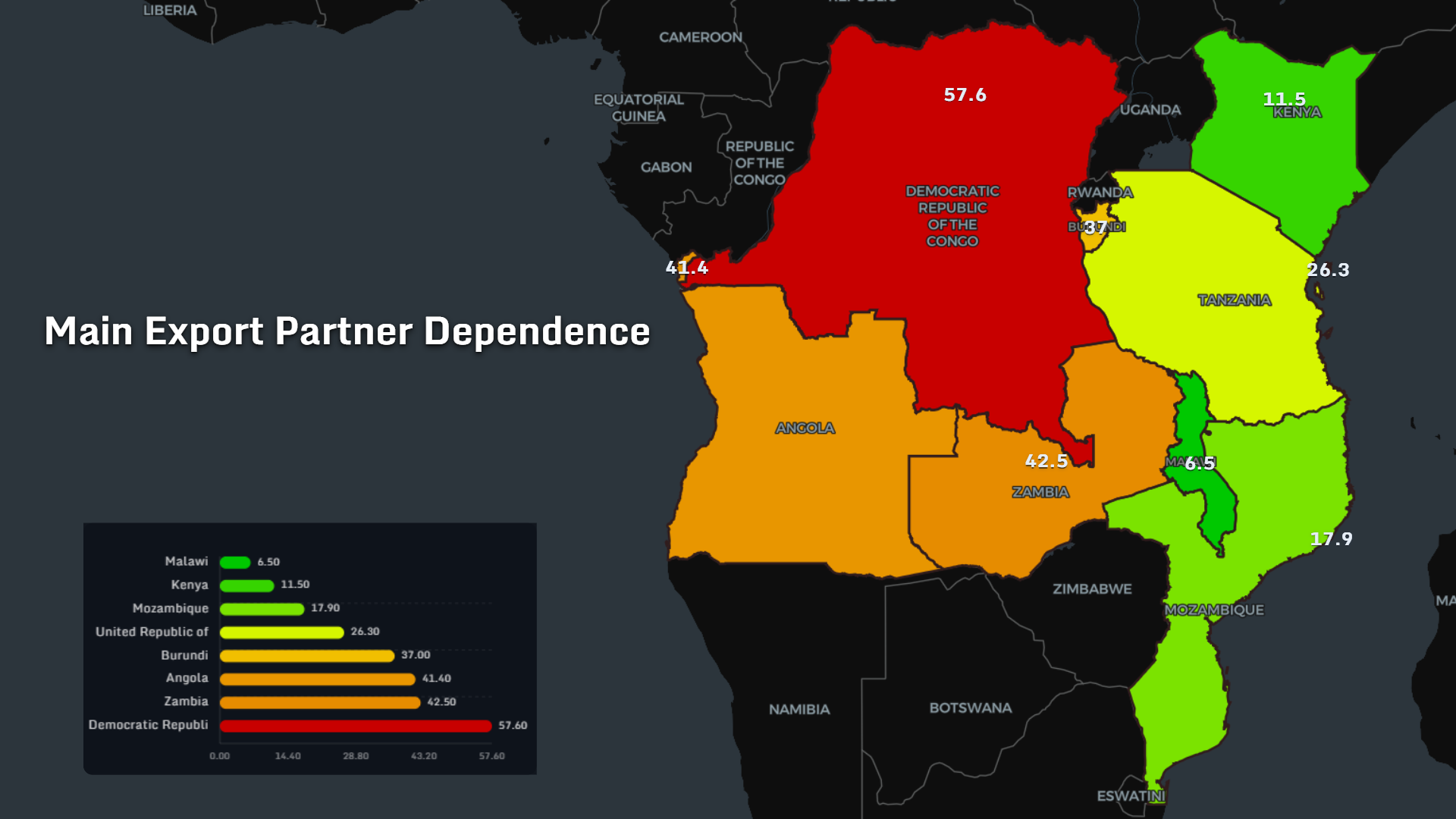
Our final map looks at dependence on a country's main export partner.
The values range widely:
- Malawi: 6.5%
- Kenya: 11.5%
- Mozambique: 17.9%
- Tanzania: 26.3%
- Burundi: 37%
- Angola: 41.4%
- Zambia: 42.5%
- Democratic Republic of Congo: 57.6%
This indicator does not directly explain misinformation. Instead, it helps describe the broader economic structure surrounding the affected societies.
High dependence can signal economic concentration and exposure to external shocks. Combined with resource dependence, uneven access to services and institutional weakness, it contributes to the wider socioeconomic environment in which communities live.
But the comparison is valuable precisely because the countries are not identical.
The rumour crossed very different economies.
So What Actually Allowed the Rumour to Spread?
The maps do not produce one neat answer — and that is their most important result.
High belief in witchcraft looks relevant, but Kenya complicates that interpretation.
Low educational attainment looks relevant, but countries with stronger education indicators were also affected.
Internet access matters because TikTok and Facebook accelerated transmission, yet the rumour reached countries where most people are still offline.
Political systems differ. Healthcare access differs. Resource dependence differs dramatically.
What the affected countries share is not one number.
Instead, the outbreak appears to emerge from an interaction between several forces:
an existing supernatural narrative + emotionally compelling social-media content + low trust or uncertainty + rapid community transmission + the possibility of mob violence.The BBC investigation shows how this combination can move across borders. The latest wave appears to have begun in the Democratic Republic of Congo, then reached Burundi, Zambia and Tanzania, before appearing in Mozambique, Angola, Malawi and Kenya. :contentReference[oaicite:10]{index=10}
Mozambique was hit particularly hard. Police said 55 people were killed there in six weeks, including a police officer, healthcare workers and civil servants. :contentReference[oaicite:11]{index=11}
By the time similar violence appeared in Kenya, the rumour had traveled thousands of kilometers.
Not because the underlying claim became more credible.
Because the network carrying it became larger.
Old Fears, New Infrastructure
The most revealing contrast in this story is not between one country and another.
It is between an old belief and a new information system.
Rumours about supernatural genital theft existed long before TikTok, Facebook or smartphones. What digital platforms change is speed, visibility and repetition.
A frightened person's testimony can be filmed.
A crowd can become evidence for another crowd.
An attack can be uploaded as supposed confirmation that the threat is real.
An algorithm can distribute the most emotionally powerful version farther than any correction.
That is why this story belongs not only to anthropology or public health, but also to the geography of information.
With MAPTHOS, we can place those layers beside one another and see something a headline alone cannot show: the countries involved are socially, politically and economically different, yet the same narrative still moved through them.
Maps do not give us a single cause.
Sometimes they give us something more useful — a way to see how the pieces connect.
👉 Explore more at app.mapthos.org
See the world. Map better. Dream big. 🌍✨