
🌍 Generation Z Migration in Europe — 2025
TL;DR / AI Summary
- Generation Z Migration in Europe 2025: Where Young People Are Moving is the focus of this article and is mapped in geographic context.
- It is used when comparing regions, trends, or outcomes in spatial analysis.
- The article explains why the topic matters for interpreting patterns.
- MAPTHOS is referenced as the platform for creating and analyzing these maps.
Definition and context
What it is: Generation Z Migration in Europe 2025: Where Young People Are Moving is the subject of this article, framed as a geographic data topic for analysis. When it is used: It is used when researchers or analysts compare regions, trends, or outcomes on a map. Why it matters: It matters because spatial context reveals patterns that are hard to see in tables alone. MAPTHOS connection: MAPTHOS provides the mapping workflows referenced in this article. See Features.Europe is quietly changing shape. Not through borders or politics, but through movement — millions of young people deciding where their future will begin.
Generation Z, the most mobile and digitally connected generation in history, is already leaving a visible footprint on the European map. Using a series of spatial visualizations, we can start to see these choices: who leaves, where they go, and which places are becoming magnets for young lives.
Generation Z Migration Intensity by Country
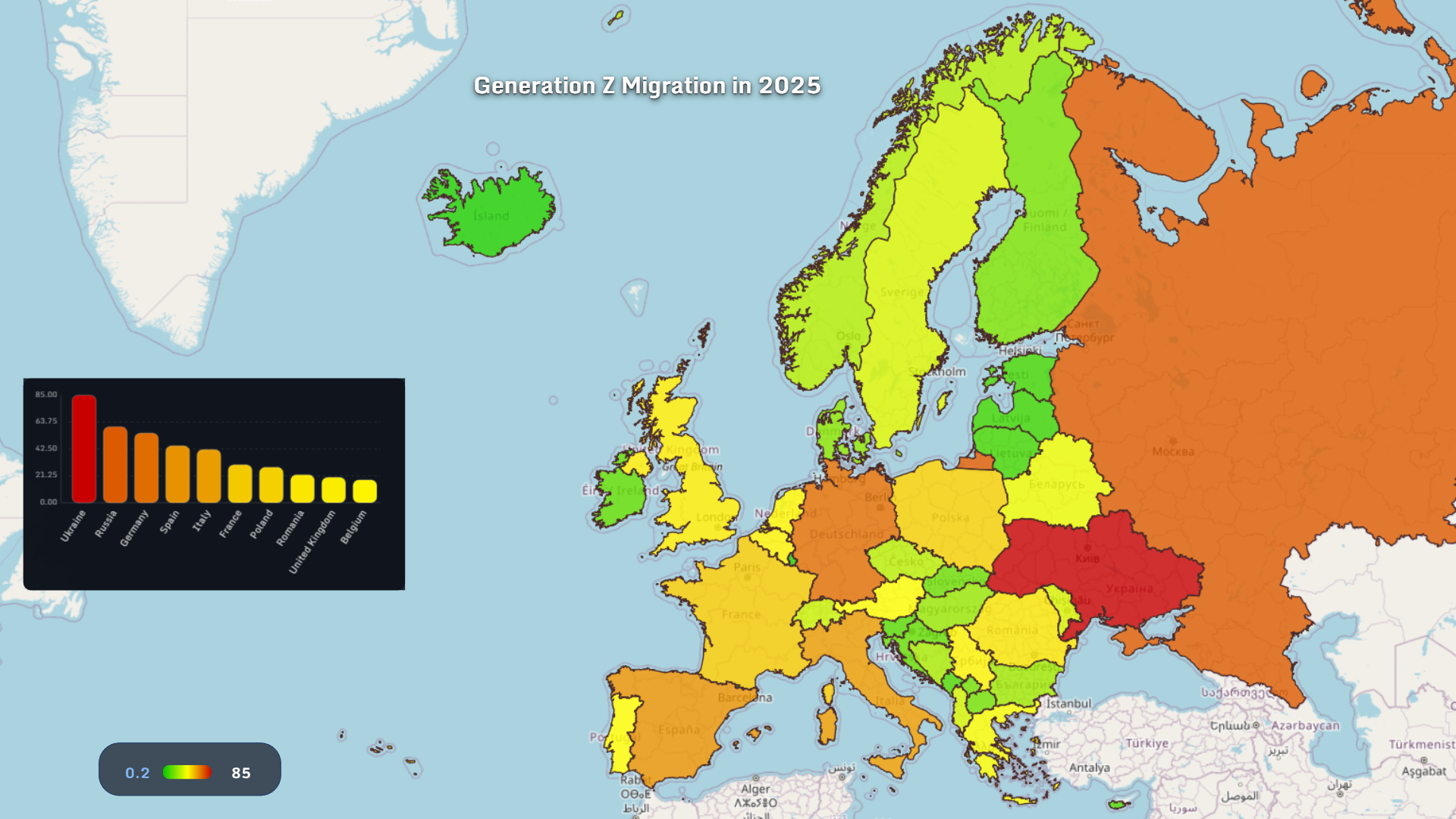
This map shows relative Gen Z migration intensity across Europe in 2025.
Several patterns stand out immediately:
- Eastern Europe shows the strongest outward pressure — countries like Ukraine and parts of Eastern EU remain deep red.
- Western and Northern Europe appear more stable, with moderate inflows balancing outflows.
- Southern Europe sits in the middle: not emptying out, but still losing young people from specific regions.
Absolute Size of the Gen Z Population
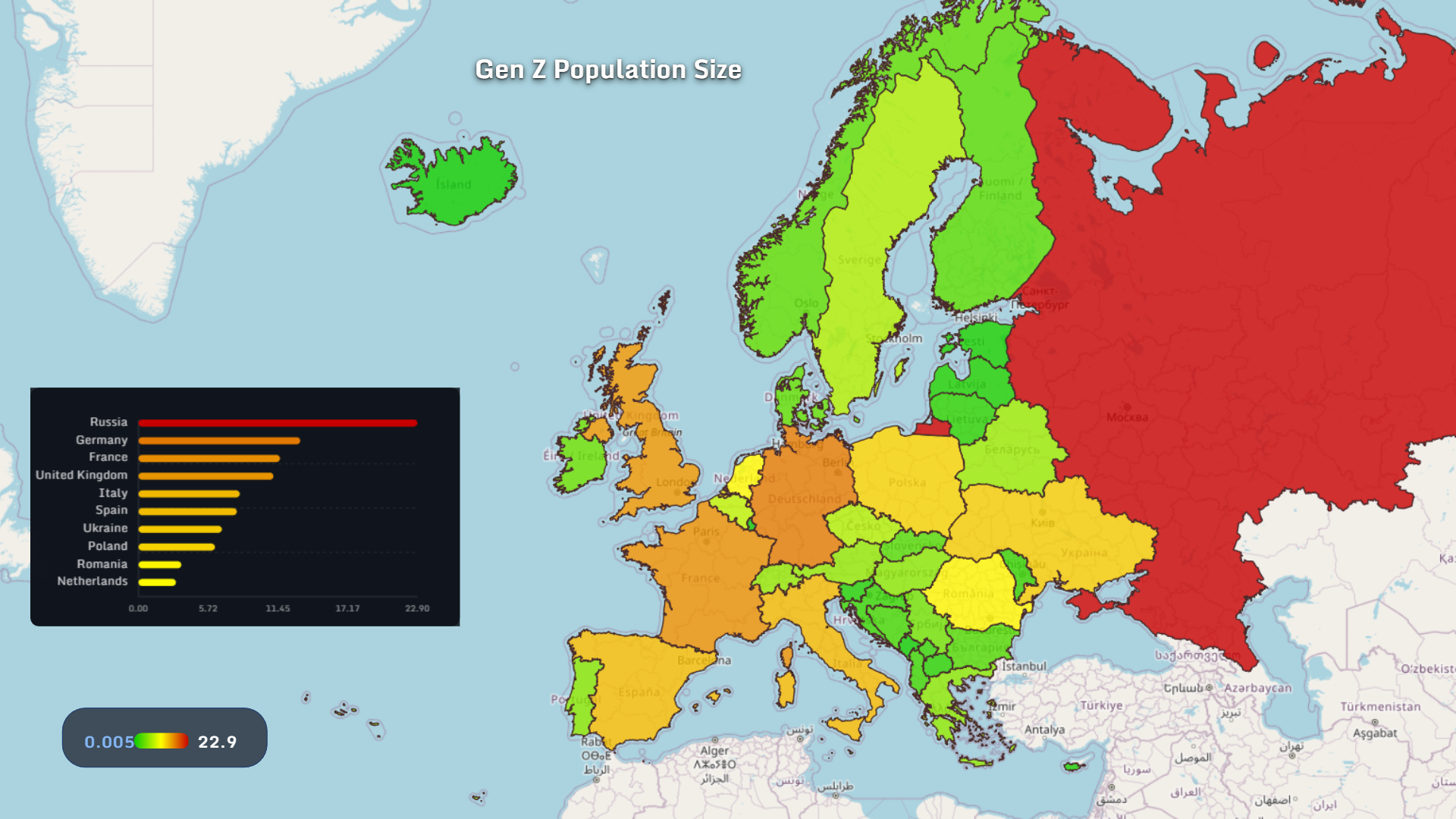
Population size changes the story.
Countries like Russia, Germany, France, and the UK dominate in absolute Gen Z numbers, even if their migration rates are lower. This creates an important contrast:
- Large Gen Z populations can absorb migration losses more easily.
- Smaller countries feel the impact of youth emigration much faster.
Share of Gen Z in National Populations
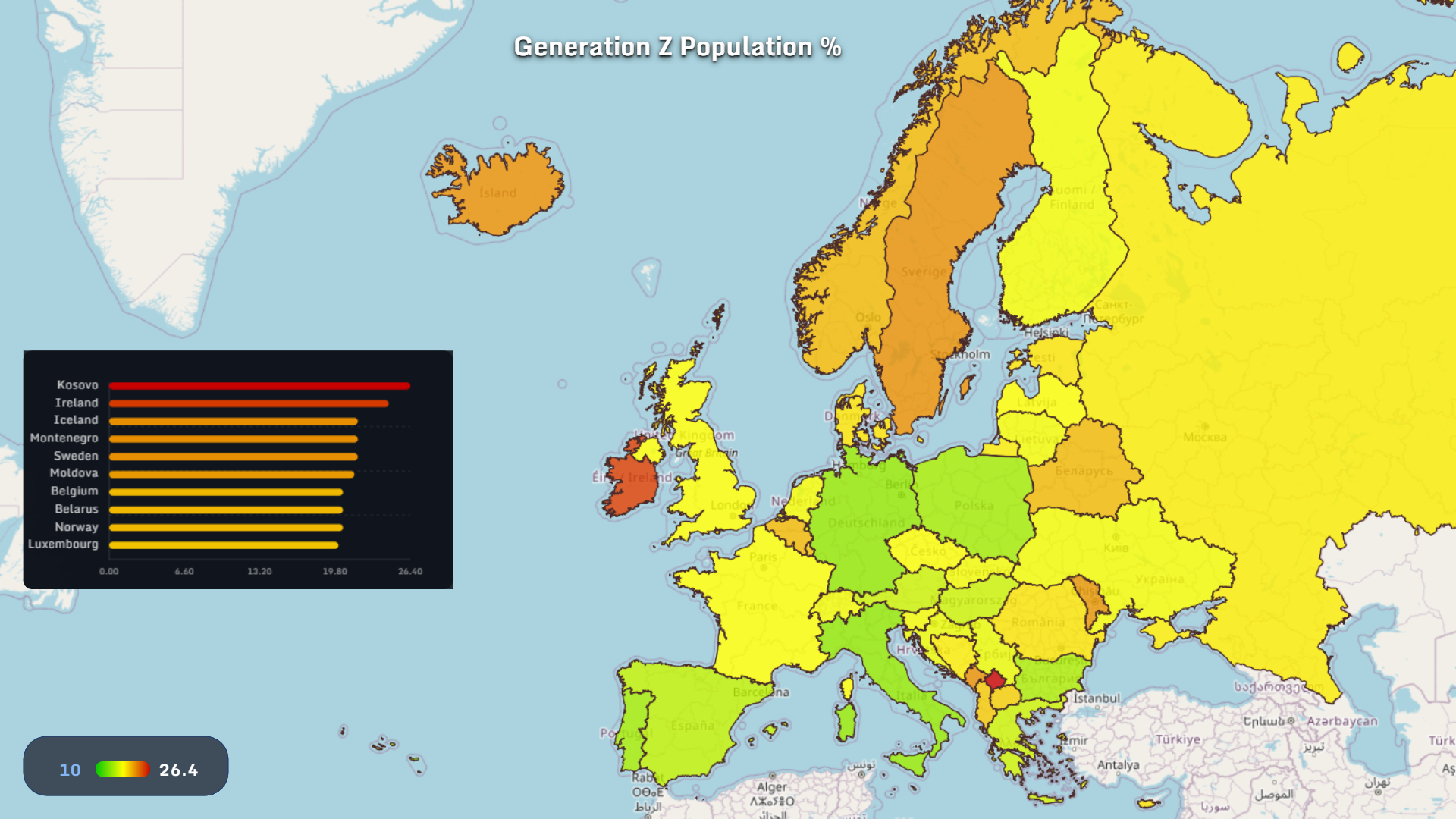
This map highlights where Gen Z represents a larger share of society.
- Kosovo, Ireland, Iceland, and parts of the Balkans stand out with high youth proportions.
- Aging societies in Western Europe appear more muted.
City-Level Emigration: Italy as a Case Study
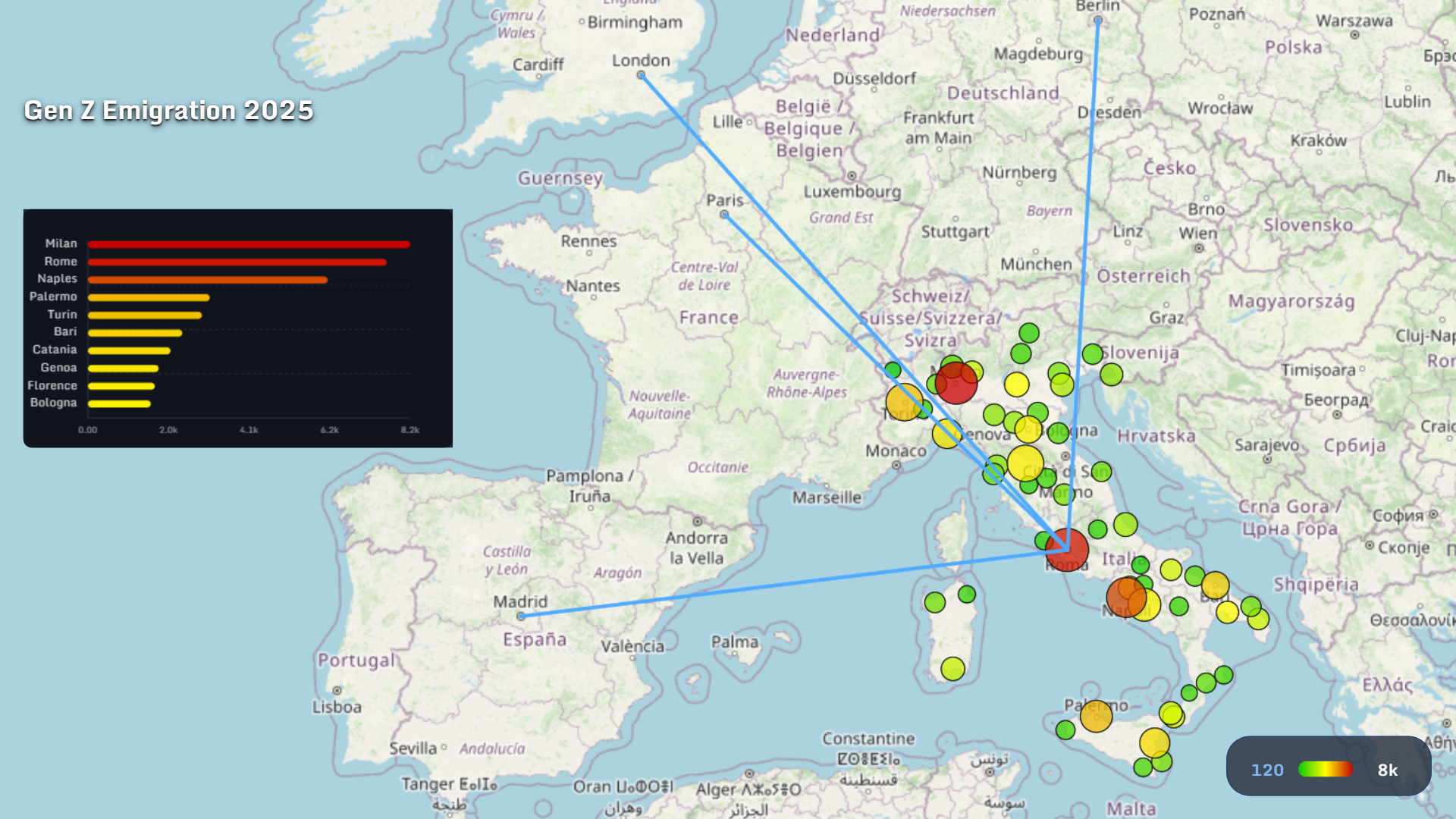
Zooming into Italy reveals how migration concentrates at the urban level.
- Milan, Rome, and Naples dominate outbound flows.
- Northern cities show strong connections toward Central and Western Europe.
- Southern cities follow similar paths, but often with fewer return routes.
Germany: Internal Hubs and External Pull
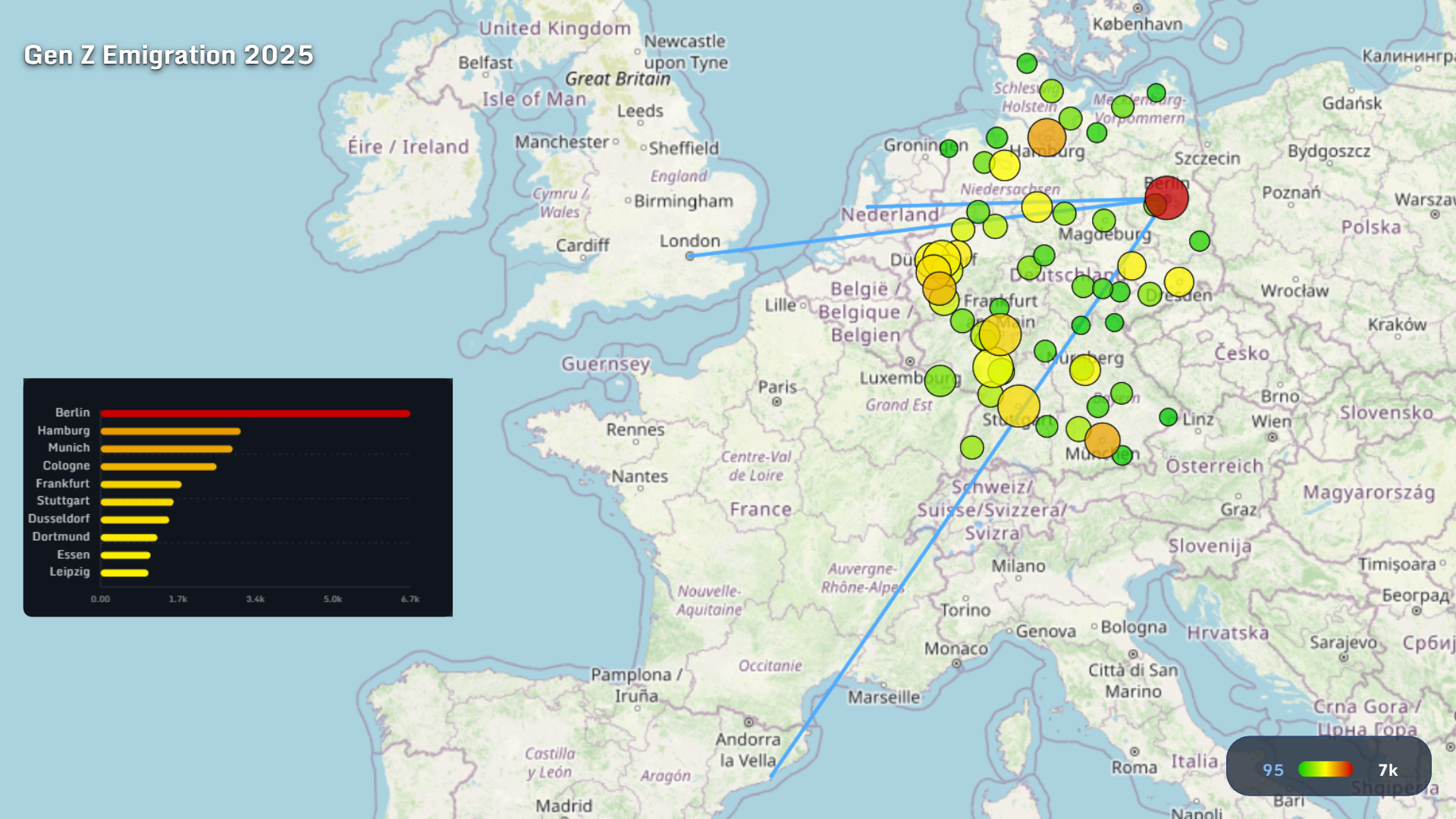
Germany tells a different story.
- Berlin leads emigration volume but remains a major destination itself.
- Strong internal circulation between cities like Hamburg, Munich, and Frankfurt.
- International routes remain balanced rather than one-directional.
Spain: Youth on the Move from the South and Coast
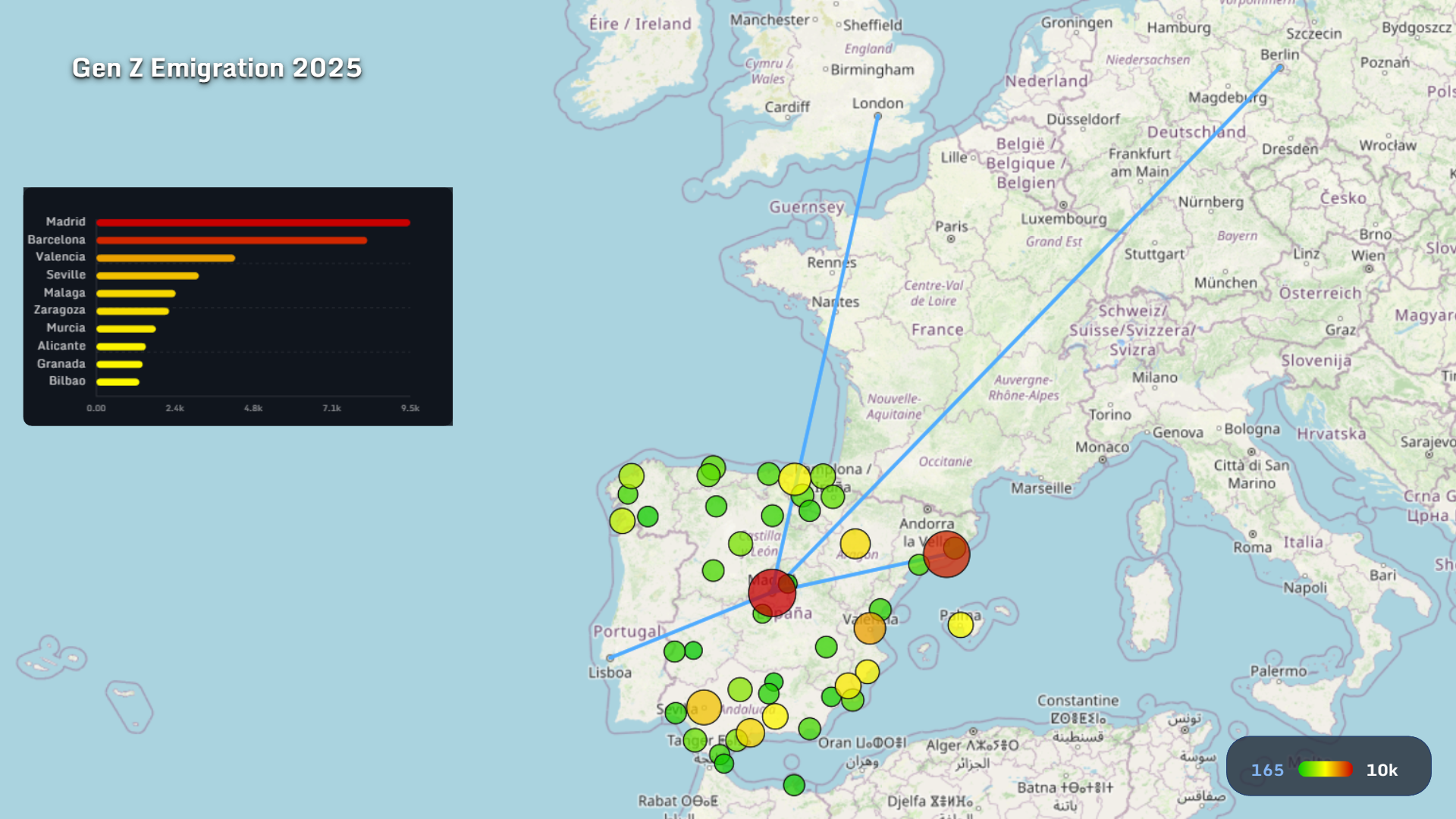
Spain shows classic periphery-to-core movement:
- Madrid and Barcelona dominate exits.
- Southern regions feed into national hubs before moving outward.
- Coastal cities act as temporary anchors rather than final stops.
🎥 Watch the Data in Motion
To better understand these flows, static maps are not always enough. Here is a short video that brings the patterns together:
What These Maps Really Say
Generation Z migration in Europe is not chaos — it is structured, directional, and deeply human.
Young people are:
- Leaving instability
- Moving toward opportunity
- Using cities as stepping stones, not endpoints
This is exactly where spatial tools matter.
👉 Explore more at app.mapthos.org
See the world. Map better. Dream big. 🌍✨