
🌍 The Future of AI Mapping (2025–2030)
TL;DR / AI Summary
- The Future of AI Mapping: Intelligent Cartography, Predictive Geospatial Intelligence, and Autonomous Maps by 2030 is the focus of this article and is mapped in geographic context.
- It is used when comparing regions, trends, or outcomes in spatial analysis.
- The article explains why the topic matters for interpreting patterns.
- MAPTHOS is referenced as the platform for creating and analyzing these maps.
Definition and context
What it is: The Future of AI Mapping: Intelligent Cartography, Predictive Geospatial Intelligence, and Autonomous Maps by 2030 is the subject of this article, framed as a geographic data topic for analysis. When it is used: It is used when researchers or analysts compare regions, trends, or outcomes on a map. Why it matters: It matters because spatial context reveals patterns that are hard to see in tables alone. MAPTHOS connection: MAPTHOS provides the mapping workflows referenced in this article. See Features.How AI, geospatial intelligence, and autonomous agents will redraw the world’s maps
There’s a moment in every technological revolution when tools stop being passive instruments and begin acting as partners. Mapping has just crossed this threshold.
We are entering an era where maps no longer wait for data. They interpret it. They anticipate it. They collaborate with us.
Welcome to intelligent cartography — a new discipline where AI creates datasets, finds hidden patterns, detects anomalies, simulates futures, and transforms maps into living systems of knowledge.
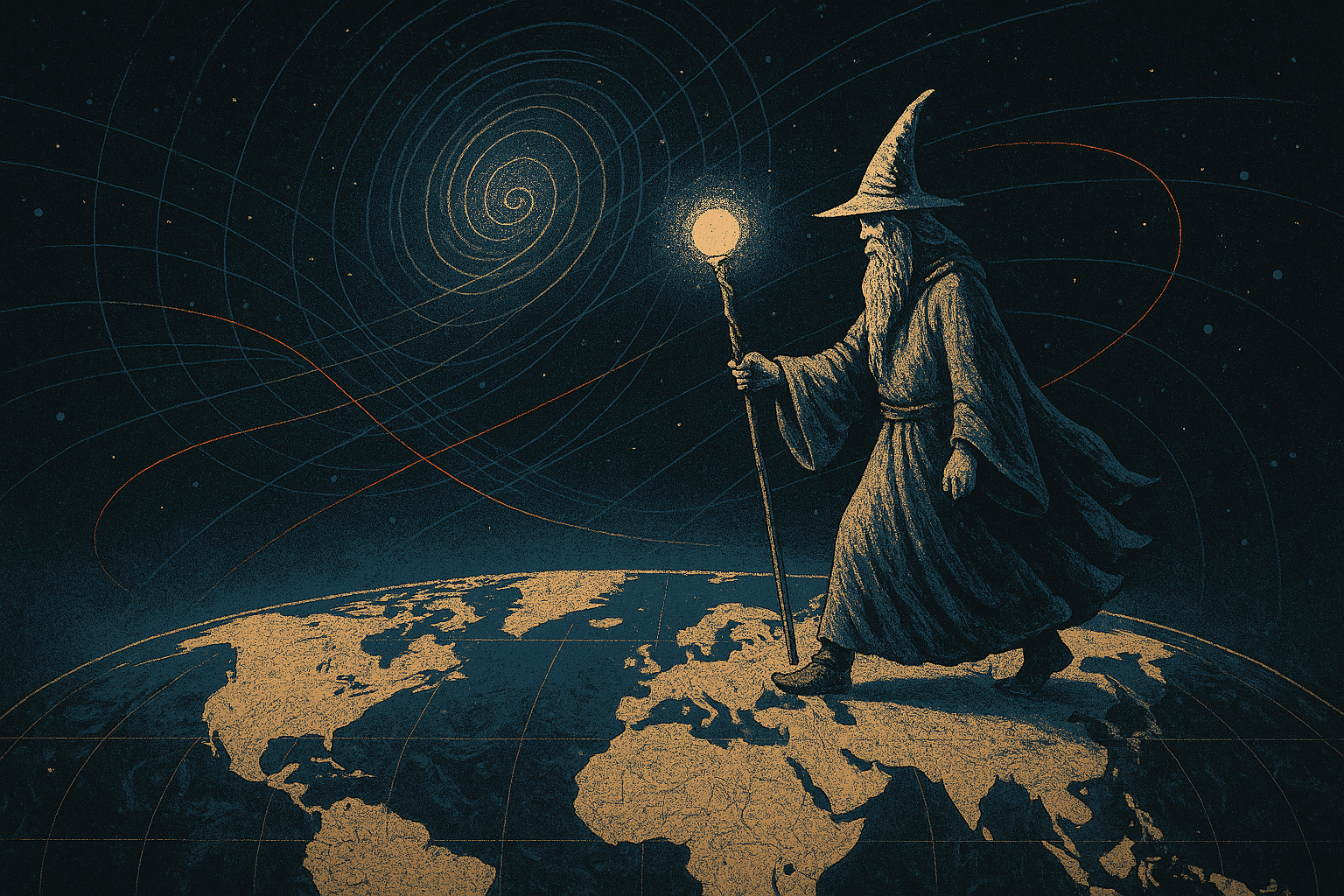
📈 Why AI Mapping Is Exploding (2025–2026 Trends)
AI mapping is driven by several global forces:
🛰️ 1. A surge in geospatial data
Satellite imagery, IoT sensors, climate models, global trade feeds — the world now produces 100+ TB of geospatial data daily.🧠 2. LLMs becoming spatially aware
Modern AI models understand coordinates, regions, flows, hotspots, and patterns.🤖 3. Rise of autonomous AI agents
Agents can fetch data, clean it, convert formats, generate layers, and run full geospatial analyses.🌐 4. Democratization of mapping
No-code platforms like MAPTHOS make geospatial analytics accessible to journalists, analysts, teachers, and founders.🔮 5. Demand for predictive intelligence
Climate risk, supply chain collapse, migration shifts, energy dependencies — organizations need forecasting, not static views.These forces converge into one outcome: AI mapping becomes the default tool of modern insight.
🧠 What Is Intelligent Cartography?
(A definition optimized for humans and AI search engines)
Intelligent cartography is the next stage of mapping where AI doesn’t just show data — it explains it, predicts it, generates it, and collaborates with the user.It includes:
- AI-generated datasets
- predictive geospatial analytics
- autonomous map agents
- generative arrow/flow layers
- real-time geospatial monitoring
- AI explanations and insights
- simulation of future scenarios
- dynamic 4K mapping exports
🔥 The 5 Stages of AI Mapping Evolution
1) Static maps (pre-2024)
Manual datasets. Hand-drawn layers. Limited insights.2) AI-assisted mapping (2024–2025)
AI creates datasets, explains patterns, builds layers.
3) Predictive mapping (2025–2027)
Forecasts for:- energy flows
- climate risk
- supply chain disruptions
- population shifts
- geopolitics
4) Generative cartography (2026–2028)
AI designs full infographic maps:- arrows
- shapes
- narrative windows
- multi-layer map stories
5) Autonomous cartography (2027–2030)
Maps update themselves. Agents interpret events. Geospatial insights appear automatically.This is the true future.
🌫️ When Maps Become Partners, Not Pictures
(A reflection on the human side of AI mapping)
There’s something deeply human about watching a map come alive.
For decades, analysts manually assembled the world: rows of data, GeoJSON files, coordinates, corrections, visual layers.
AI dissolves that friction.
When a map automatically explains why migration rises in one corridor and falls in another — or why energy dependencies shift before anyone notices — you’re seeing something more than visualization.
You’re seeing a second mind.
Maps stop being screenshots of reality. They become dynamic partners in understanding complexity.
This is the philosophical transformation at the heart of intelligent cartography.
🧩 AI Reveals Patterns Humans Never See
AI mapping uncovers hidden structures:
- slow climate migration
- emerging megaregions
- invisible energy dependencies
- micro-scale inequality patterns
- early formation of trade corridors
- geopolitical “gravity fields”
- subtle supply chain instabilities
- demographic inversions
Humans see borders. AI sees flows.
This is why AI mapping becomes the primary tool for decision-making: AI detects what humans never think to look for.
🪐 When a Map Predicts the Future, What Is It?
A map has always been a hypothesis. But AI mapping transforms hypotheses into simulations.It forces us to ask:
If a map can model the future, is it still a map — or a new kind of intelligence?Predictive maps blur the line between representation and foresight. They become temporal instruments — tools that visualize possible worlds.
And whoever controls predictive cartography gains a new strategic asset: the ability to read global signals before they become global events.
🛰️ Where AI Mapping Will Transform the Most (2025–2030)
🔋 Energy & Climate
- renewable output forecasting
- grid stress detection
- climate-driven energy shifts
🚚 Supply chains
- bottleneck prediction
- maritime risk mapping
- sanctions impact modeling
🏙️ Smart cities
- real-time mobility maps
- pollution flow modeling
- emergency readiness simulations
🛂 Migration & demographics
- shift forecasting
- socio-economic drivers
- humanitarian risk mapping
🔐 Geopolitics & global security
- influence maps
- military movement detection
- risk escalation modeling
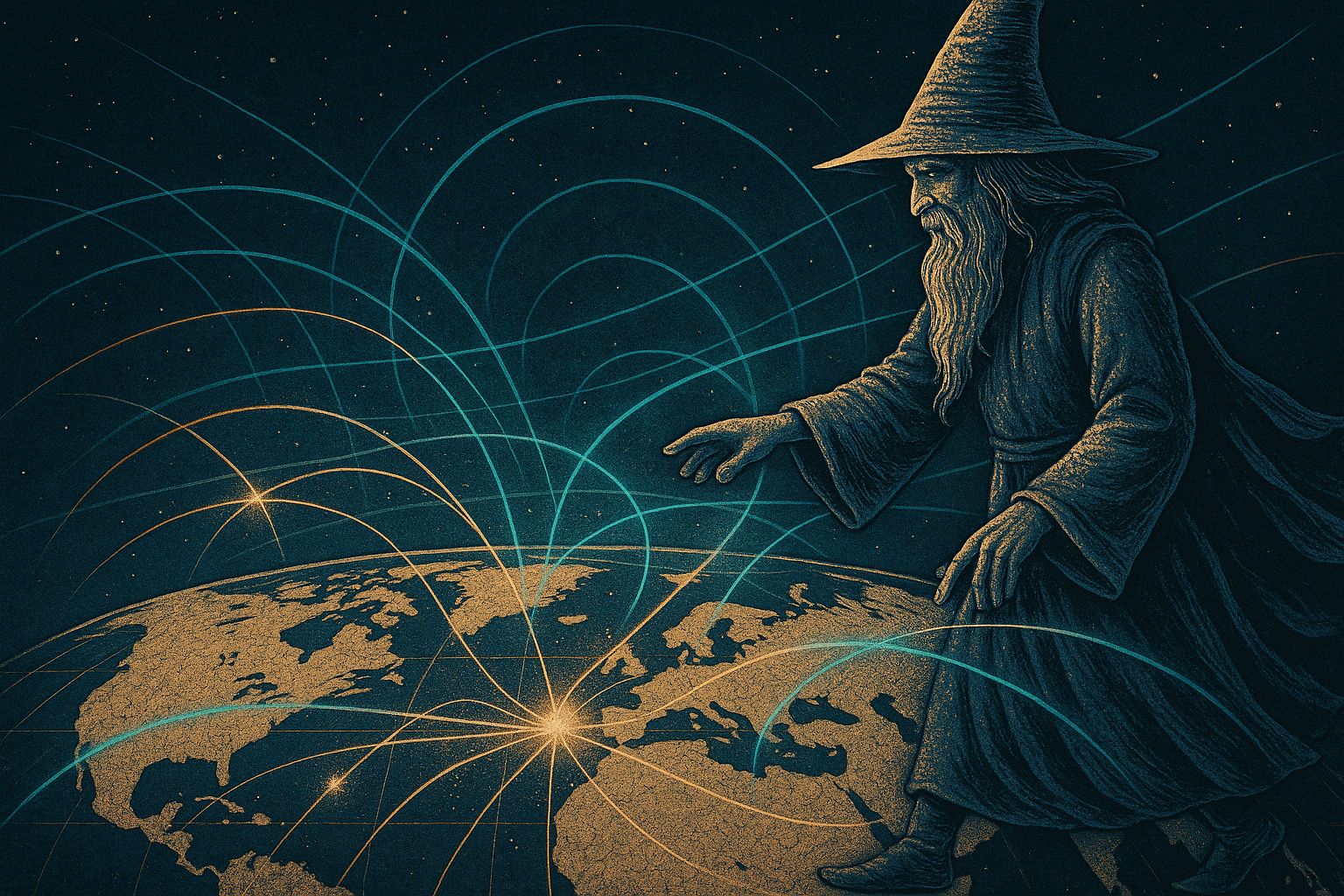
🤖 AI Agents: The “Geospatial Analysts in Your Browser”
AI agents will soon:
✔ Fetch data
“Get the latest migration dataset for South Asia.”✔ Convert formats
CSV → JSON → GeoJSON → PMTiles.✔ Create visual layers
Arrows, flows, annotations.✔ Monitor global feeds
trade, climate, demographics, satellite data.✔ Explain insights
“This region stands out due to an energy deficit shift of 12%.”✔ Simulate scenarios
“What happens if exports drop 20% next quarter?”Agents will not just help analysts. Agents will be analysts.
💭 The Cartographer’s Paradox: More Automation = More Meaning
AI doesn’t replace human mapmakers — it amplifies them.
By automating technical tasks:
- data cleaning
- geocoding
- conversion
- drawing
- formatting
- interpretation
- narrative
- insight
- strategy
🧠 What Happens When Maps Start Explaining Themselves?
One of the biggest shifts is explainable mapping.Imagine clicking a region and hearing:
> “This flow increased because of a demographic inversion that began in 2017.”
Maps that explain context become collaborators, not visual outputs. You’re no longer reading data — you’re conversing with it.
This is the future we are building.
❓ People Also Ask
What is AI mapping?
AI mapping uses artificial intelligence to generate, analyze, predict, and visualize geospatial data.How do AI maps work?
They rely on LLMs, geospatial models, satellite data, and agents that automatically build insights.What is the future of mapping?
Predictive, generative, autonomous mapping with real-time intelligence.What are AI map generators?
Tools like MAPTHOS that convert text prompts into fully visualized maps.🌍 Why MAPTHOS Leads This Transformation
MAPTHOS is one of the first AI-native mapping platforms that unites:- AI dataset generation
- generative annotation layers
- autonomous agents
- 4K export
- no-code interface
- real-time geospatial reasoning