
🍞 Food Rules Around the World in 2026: What’s Banned, Taxed and Still Allowed?
The same supermarket shelf can look completely different depending on which side of a border you stand.
An ingredient considered ordinary in one country may be prohibited in another. A processing method accepted across much of the world can become a political flashpoint elsewhere. Some governments tax sugary drinks. Others regulate raw milk cheese. Even the sweetness of the same soft drink can change dramatically from one market to another.
These maps show a simple truth: there is no single global rulebook for food.
What we eat is shaped not only by taste, agriculture and culture, but also by regulation.
Potassium Bromate: A Bread Additive With Very Different Rules
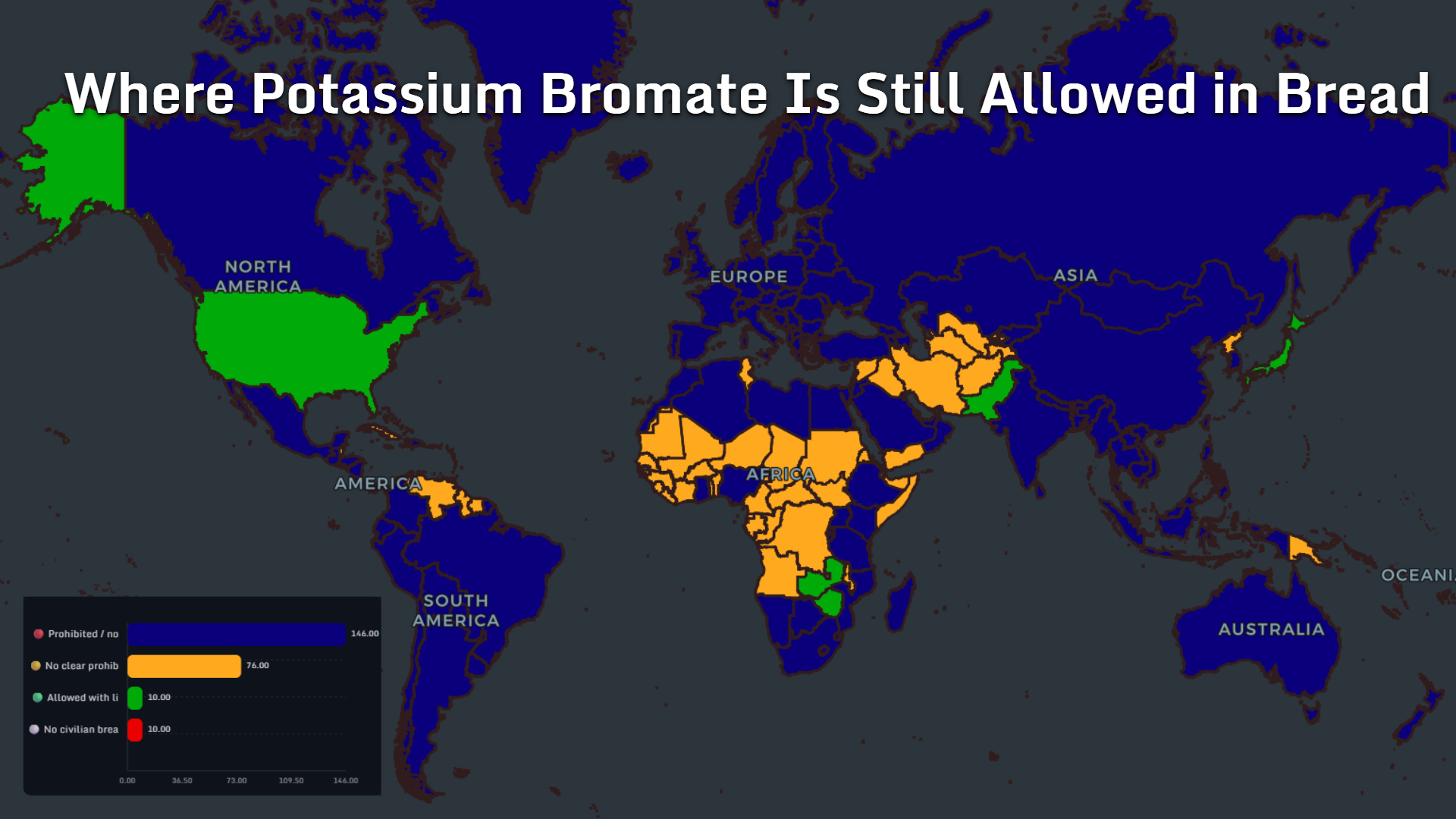
Potassium bromate is one of the clearest examples of how food regulation diverges across borders.
According to the map, the largest category is “prohibited / no permitted use”, covering 146 jurisdictions.
Another 76 fall into the less definitive “no clear prohibition” category.
Only 10 jurisdictions are mapped as allowing potassium bromate with limits, while another 10 have no civilian bread-market comparison in the dataset.
The geographic contrast is striking.
Much of Europe appears in the prohibited category, while the United States stands out among major developed markets where its use remains possible under certain rules.
This kind of map explains why ingredient lists can become controversial online: something that feels completely normal to one consumer may look unusual to someone living under a different regulatory system.
Chlorine-Washed Chicken: Legal Across Much of the World
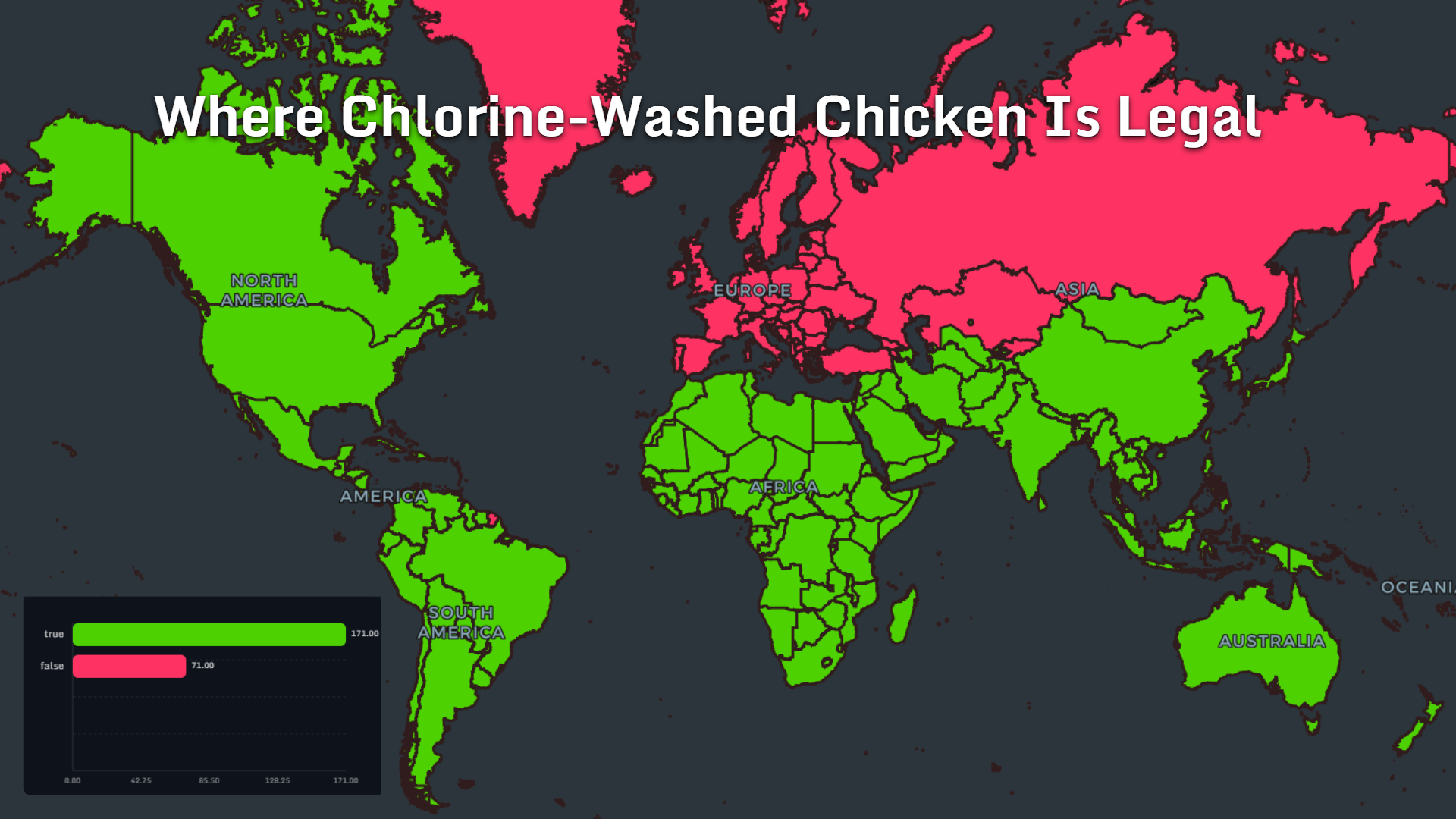
Few food-processing methods have become as politically symbolic as chlorine-washed chicken.
The map divides countries into a simple legal comparison:
- Allowed: 171
- Not allowed: 71
Europe forms one of the clearest opposing blocs on the map.
The result is a reminder that food-safety systems can pursue the same goal using very different approaches.
One jurisdiction may focus more heavily on interventions during processing, while another regulates practices earlier in the production chain.
To consumers, however, the difference often gets reduced to one dramatic phrase: “chlorinated chicken.”
How Sweet Is Fanta in Your Country?
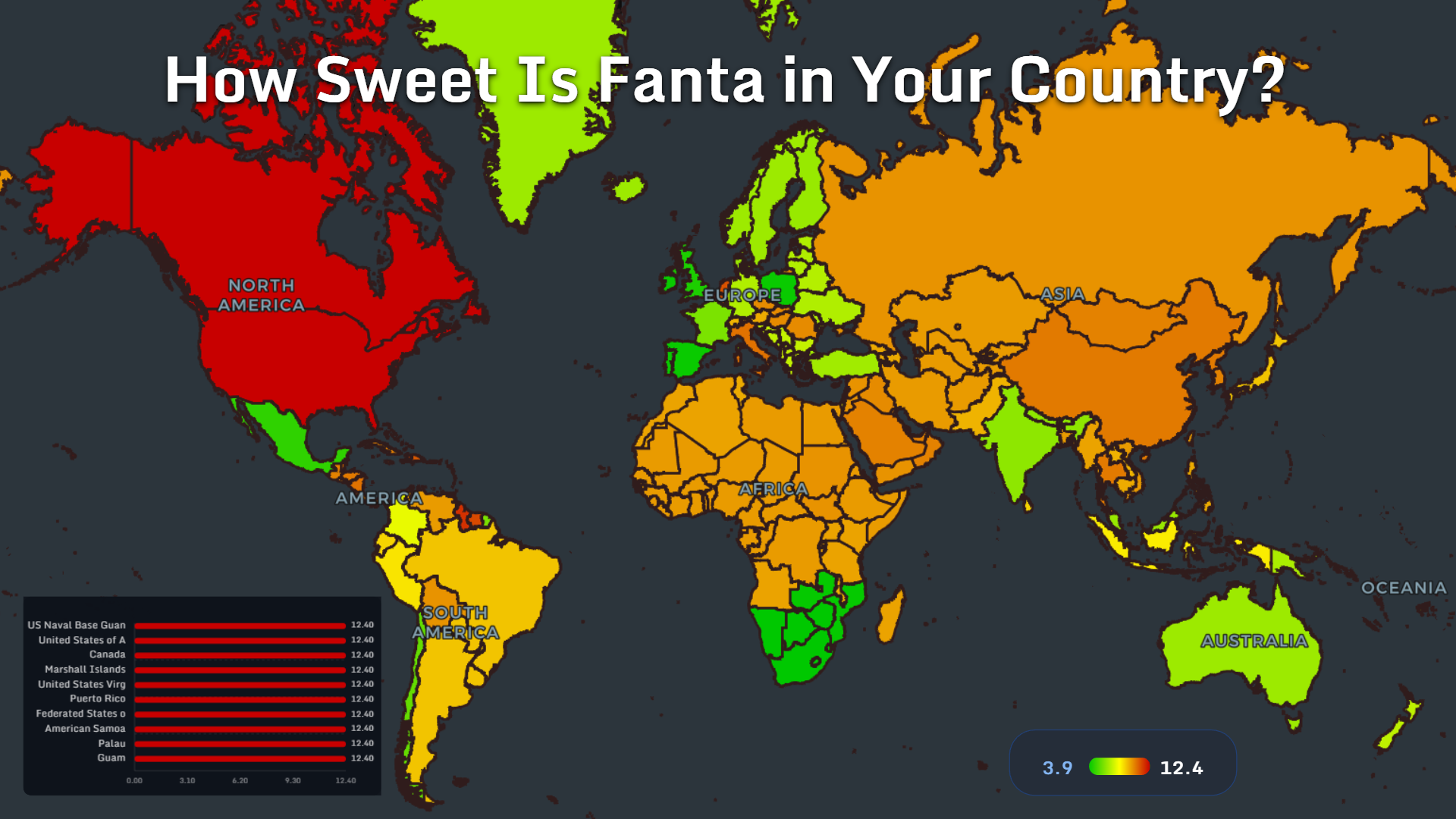
Perhaps the most immediately relatable map in the collection is not about legality at all.
It is about sugar.
The map shows substantial differences in the sweetness of Fanta between countries, with values ranging from roughly 3.9 to 12.4 on the scale used in the dataset.
At the upper end, several U.S.-associated markets are shown around 12.4, including:
- United States
- Canada
- Puerto Rico
- Guam
- American Samoa
- Palau
- Marshall Islands
- Federated States of Micronesia
European markets tend to appear greener on the map, while North America and parts of Asia trend toward warmer colors.
The important point is not simply that one country “likes sweeter drinks.”
Global food brands frequently adapt recipes to local regulations, taxes, sweetener availability, consumer preferences and reformulation strategies.
The logo may be the same.
The bottle is not necessarily the same product.
Food Dyes: One Ingredient, Many Legal Systems
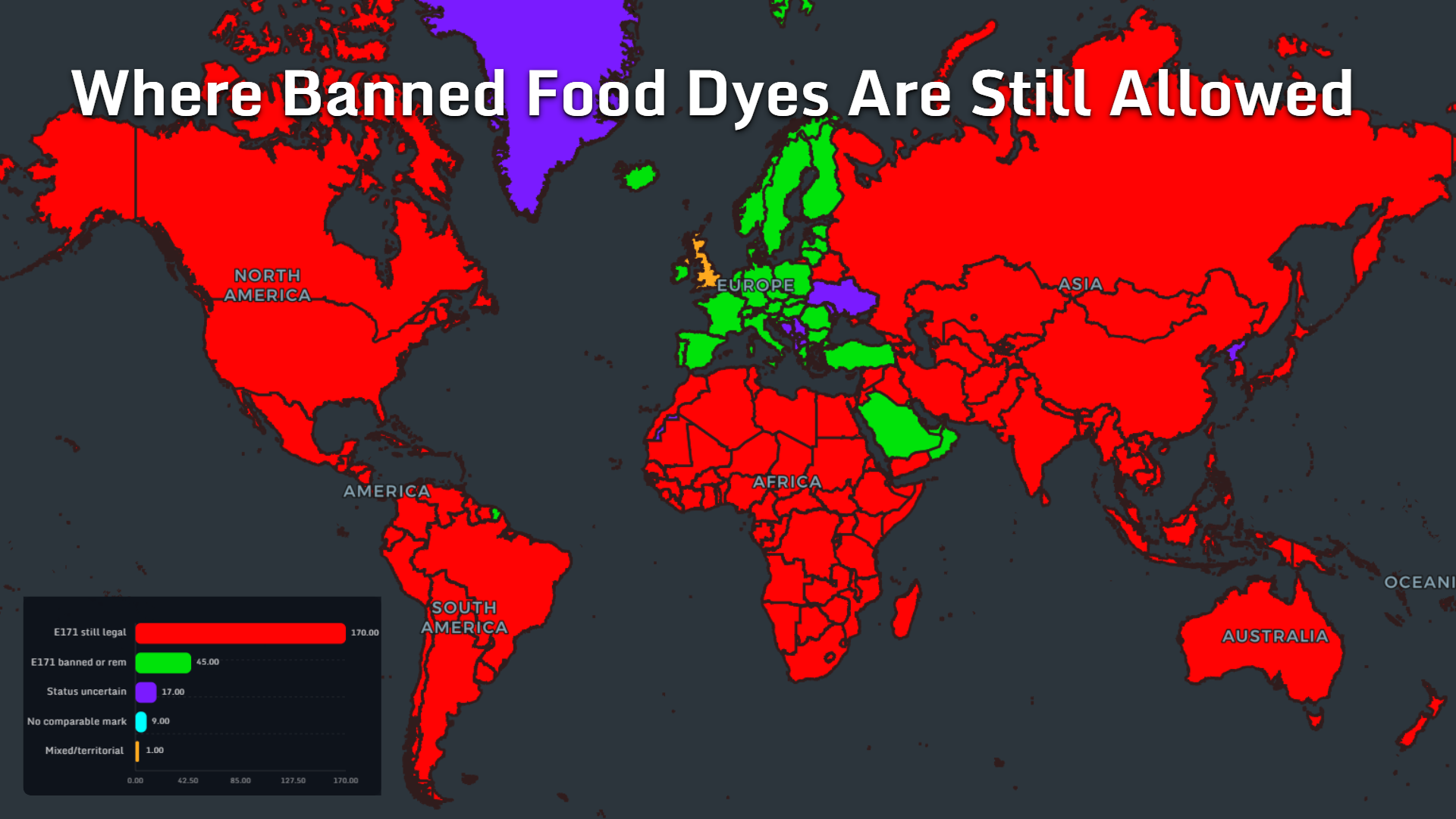
Synthetic food coloring creates another dramatic regulatory divide.
In this map, the dataset tracks E171 status across jurisdictions:
- Still legal: 170
- Banned or removed: 45
- Status uncertain: 17
- No comparable market: 9
- Mixed / territorial: 1
Most of the world remains in the “still legal” category, while Europe contains a large concentration of jurisdictions where the additive has been banned or removed.
This is one reason discussions about “banned ingredients” need geographic context.
An additive can disappear from supermarket shelves across an entire region while remaining common elsewhere.
There is no universal moment when the world collectively decides that an ingredient is acceptable or unacceptable.
Hormone-Treated Beef: North America Stands Apart
.png)
Hormone-treated beef produces one of the strongest regulatory contrasts in this collection.
The map divides jurisdictions into four broad groups:
- No verified national approval: 156
- Not approved or prohibited: 72
- Approved for growth use: 11
- Legal but tightly controlled: 3
Much of Europe appears in the prohibited category.
Across Africa and parts of Asia, the dominant classification is not necessarily an explicit ban but rather the absence of verified national approval in this comparison.
This distinction matters.
A country being shown as having no verified approval is not the same thing as an explicit statutory prohibition.
Maps can make regulatory differences easy to see, but categories still matter.
Kinder Surprise: Almost Everywhere — Except a Few Markets
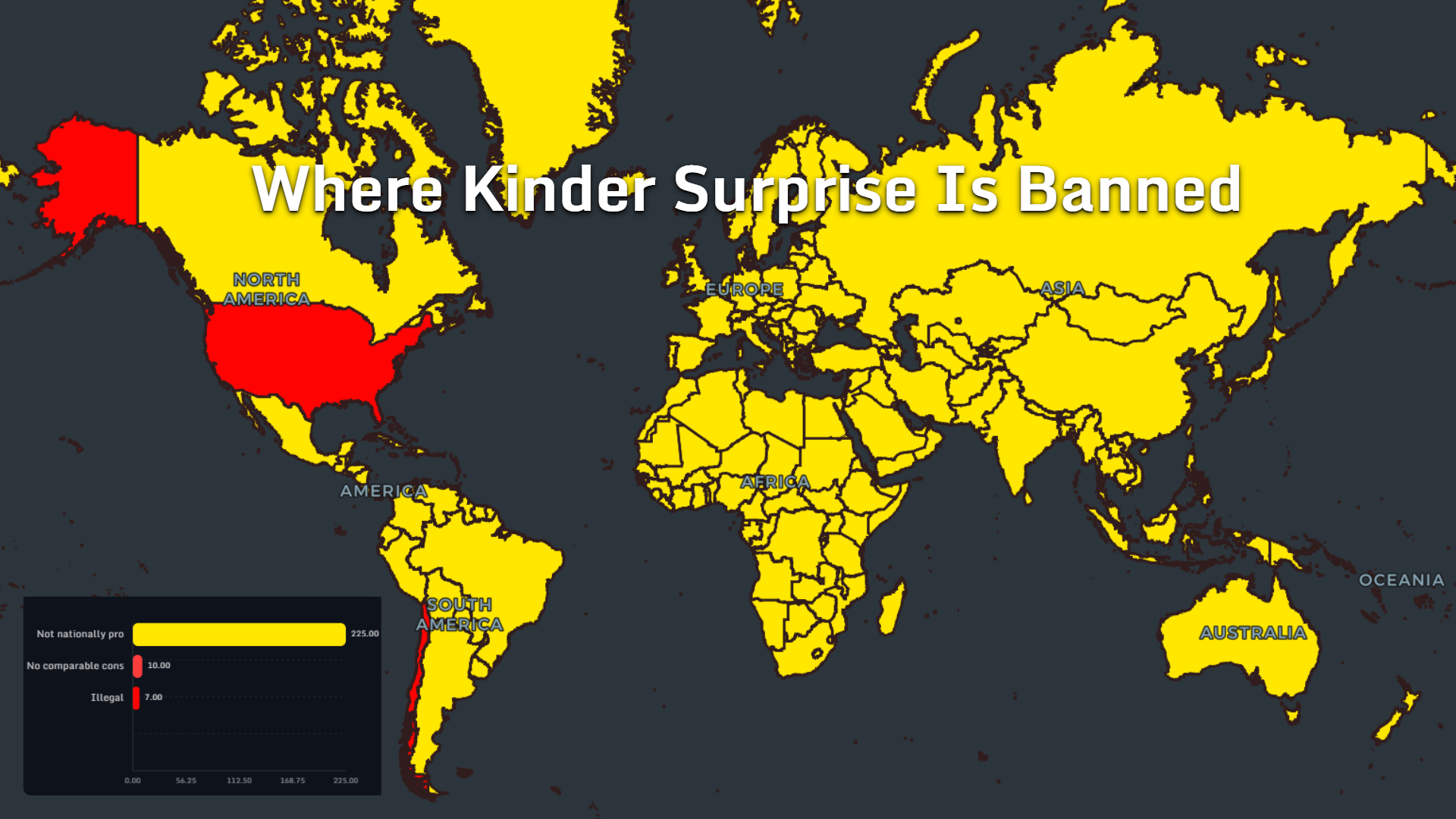
Compared with the other maps, Kinder Surprise produces an almost comically simple picture.
Most of the world falls into the category:
Not nationally prohibited: 225Only 7 jurisdictions are marked as illegal, with another 10 lacking comparable consumer-market status in the dataset.
The United States is the most visually obvious exception.
That makes the map memorable because the product itself is so ordinary elsewhere.
A chocolate egg with a toy inside can sit beside candy bars in one country and face entirely different legal treatment in another.
It is a perfect example of how regulations written around general product-safety principles can produce surprisingly specific cultural quirks.
Raw Milk Cheese: Mostly Permitted, but Often With Conditions
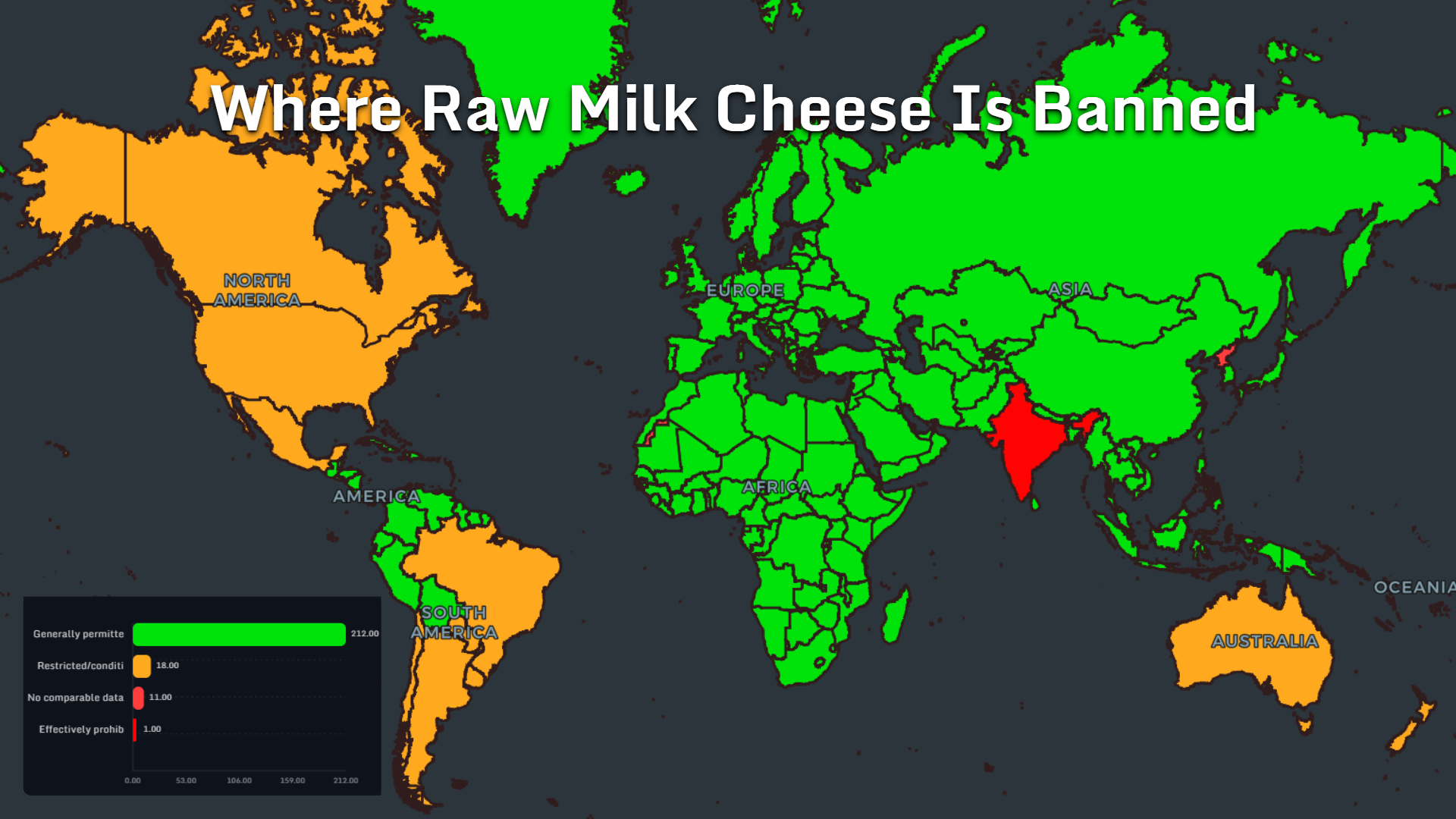
Raw milk cheese produces a more nuanced regulatory landscape.
The map categorizes jurisdictions as:
- Generally permitted: 212
- Restricted / conditional: 18
- No comparable data: 11
- Effectively prohibited: 1
The more interesting distinction is between countries where raw milk cheese is broadly available and markets where production or sale depends on aging rules, hygiene standards, labeling requirements or other conditions.
North America and Australia stand out as more restrictive than much of Europe.
That contrast reflects one of the oldest tensions in food regulation: balancing microbial safety against traditional production methods.
For cheesemakers, the difference can determine which centuries-old recipes survive commercially.
Sugary Drink Taxes Have Become a Global Policy Tool
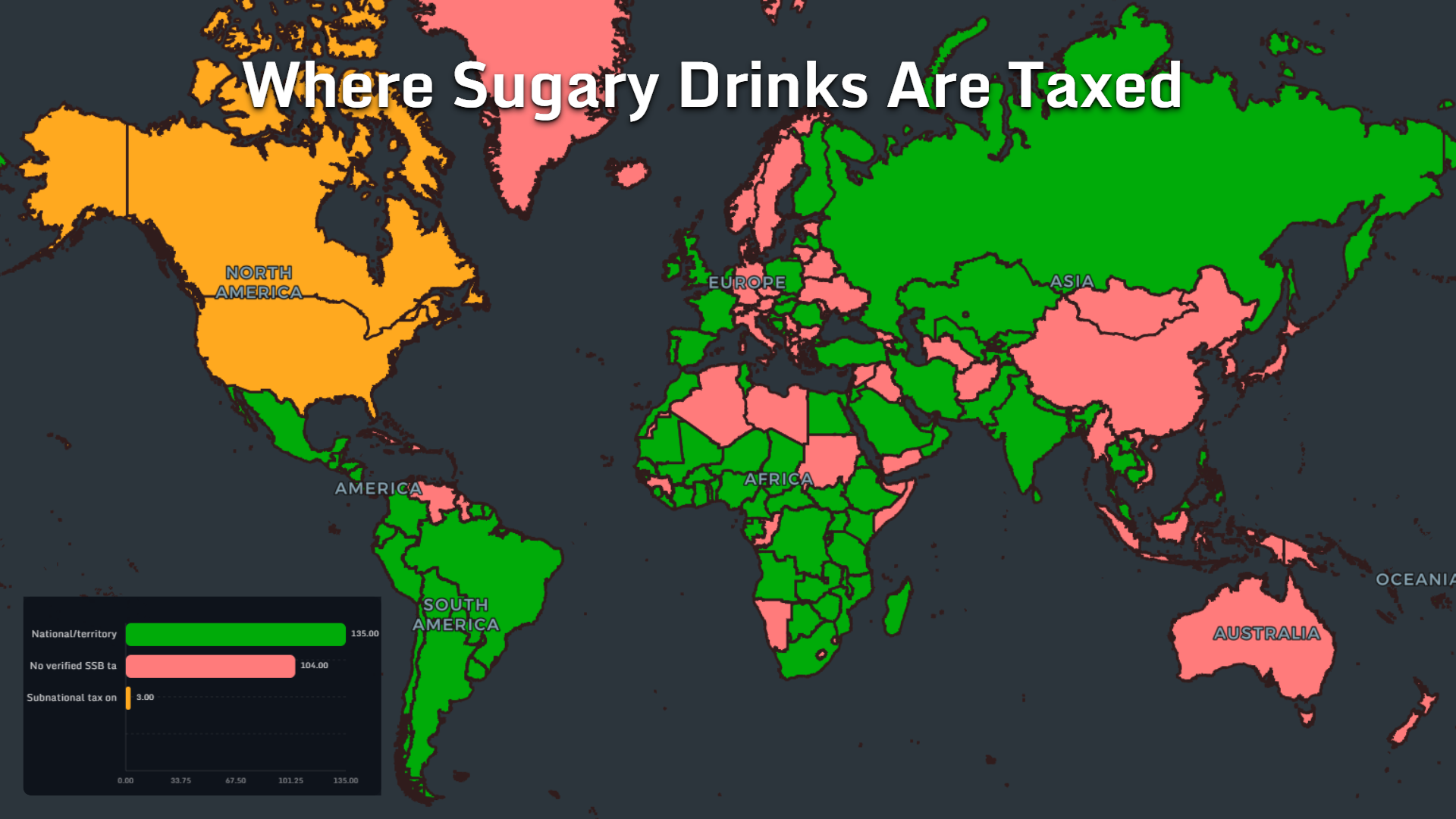
The sugary-drink map shifts the question from “Is this product allowed?” to “Should consuming it cost more?”
The dataset shows:
- National / territorial tax: 135
- No verified sugar-sweetened beverage tax: 104
- Subnational tax only: 3
But they are far from universal.
The United States is particularly interesting because the map reflects a more fragmented policy landscape: rather than one nationwide system, taxation can depend heavily on state or local rules.
That makes sugary drinks a good illustration of regulation operating at multiple geographic levels.
Two consumers in the same country may face different policies depending on the city where they buy the drink.
Even Bottled Water Can Be Taxed Differently
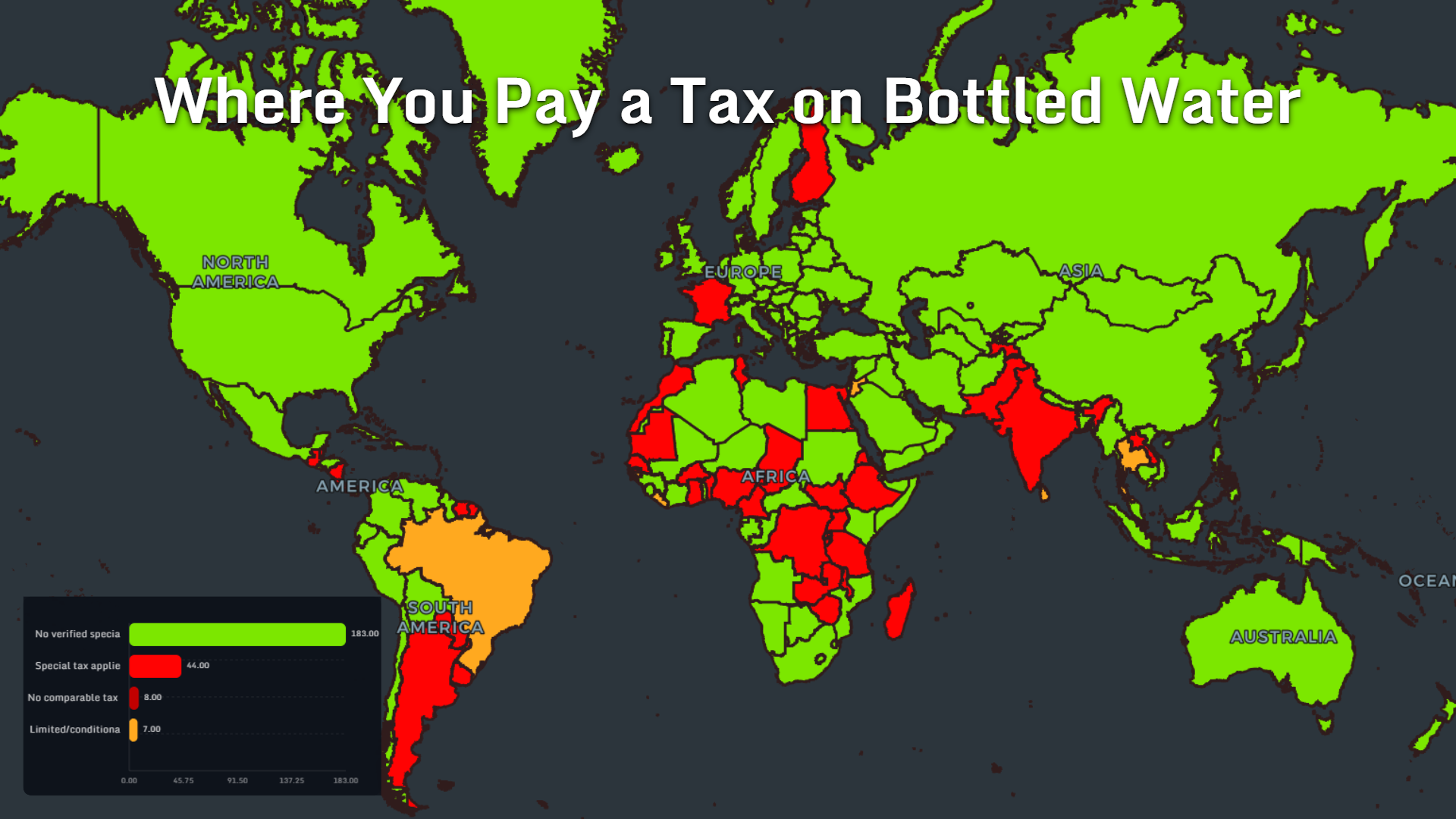
Bottled water might seem like the least controversial product in this article.
The map suggests otherwise.
The dataset groups countries into:
- No verified special tax: 183
- Special tax applies: 44
- No comparable tax data: 8
- Limited / conditional: 7
These policies may be motivated by very different objectives: revenue collection, packaging reduction, environmental policy or broader consumption taxes.
That makes this map different from the food-safety comparisons above.
The product itself is not necessarily considered unsafe.
The regulation may instead target how it is packaged, sold or consumed.
There Is No Universal Definition of “Normal Food”
Viewed together, these maps reveal something more interesting than a list of bans.
They show how differently governments think about food.
One country may tolerate an additive but tax sugar aggressively.
Another may prohibit a processing technique while broadly allowing raw milk cheese.
A third may permit both but restrict toys inside confectionery.
Even multinational products change from market to market.
So when someone online says:
> “This ingredient is banned everywhere else.”
or
> “Everyone eats this except us.”
the reality is usually more complicated.
Food regulation is a mosaic of risk tolerance, scientific interpretation, agricultural policy, trade rules, public-health priorities and cultural history.
Borders Change Recipes
The most fascinating part of these maps is how invisible these differences normally are.
Walk into a supermarket and the packaging looks familiar.
Coca-Cola is Coca-Cola.
Fanta is Fanta.
Cheese is cheese.
Chicken is chicken.
But cross a border and the ingredients, processing rules, labeling standards and taxes can all change.
The supermarket shelf is therefore a surprisingly accurate map of government policy.
With MAPTHOS, those differences become visible at planetary scale — turning everyday groceries into a story about law, culture and geography.
👉 Explore more at app.mapthos.org
See the world. Map better. Dream big. 🌍✨