
🌐 Mapping Online Censorship in Europe & the UK — 2025
The internet was once imagined as a borderless space. In 2025, it looks increasingly like a patchwork of rules, pressures, and red lines.
Using MAPTHOS, we visualized how online censorship manifests across Europe, how it compares globally, and why the United Kingdom stands out as a particularly data-rich case study of digital enforcement.
Europe: A Fragmented Digital Landscape
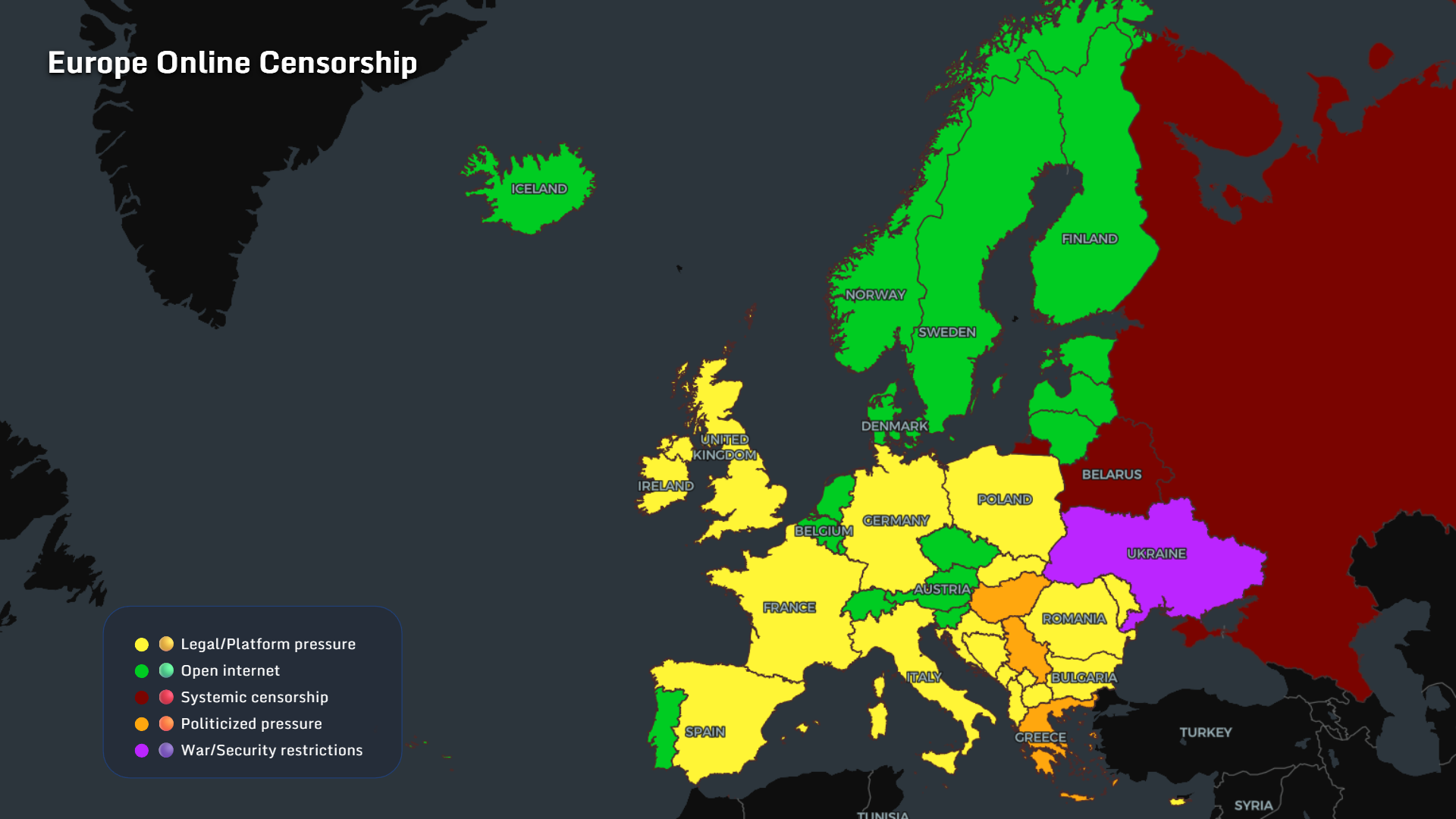
Europe does not censor the internet uniformly. Instead, it applies different mechanisms depending on political culture, legal tradition, and security context.
- Green (Open Internet): Nordic countries remain among the most open, with minimal intervention and strong speech protections.
- Yellow (Legal / Platform Pressure): Western Europe relies heavily on platform moderation, legal takedowns, and regulatory compliance.
- Orange (Politicized Pressure): Parts of Southern and Eastern Europe show selective enforcement, often around political speech.
- Red (Systemic Censorship): Russia and Belarus operate tightly controlled digital environments.
- Purple (War / Security Restrictions): Ukraine reflects temporary but intense controls driven by wartime realities.
Europe in Global Context
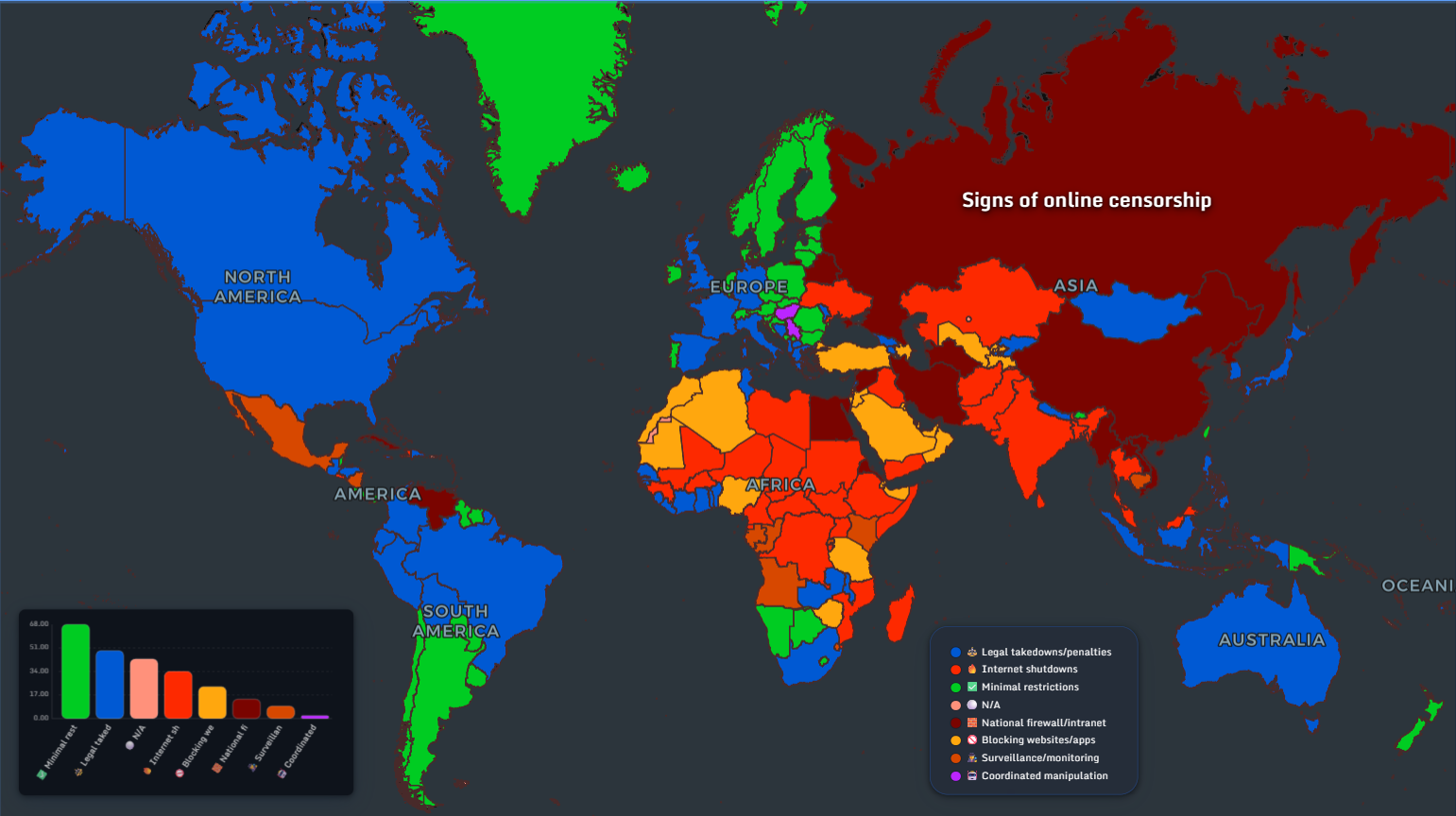
When Europe is placed on a global map, a paradox emerges.
Compared to Asia, Africa, or parts of the Middle East, Europe still appears relatively open. Yet Europe is also one of the most legally active regions in terms of:
- platform takedowns
- coordinated moderation
- regulatory surveillance
- compliance-driven content removal
The UK: Measuring Digital Enforcement
The UK offers unusually transparent data on online speech enforcement.
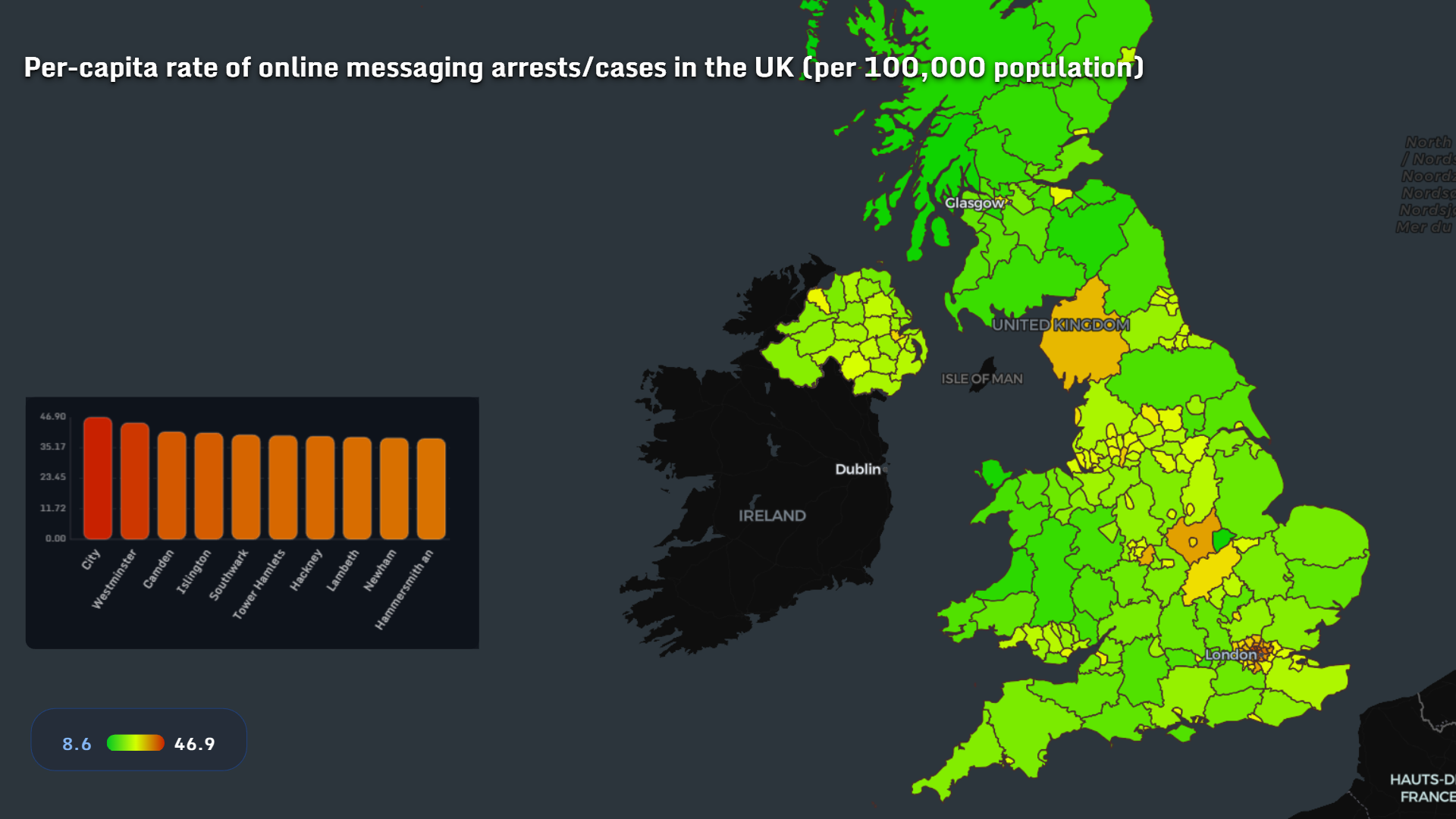
This map shows per-capita arrests and cases related to online messaging (per 100,000 people). Several patterns stand out:
- Urban areas show consistently higher rates.
- Enforcement is not evenly distributed across regions.
- Digital speech policing has become normalized as part of everyday law enforcement.
Which Platforms Trigger Cases?
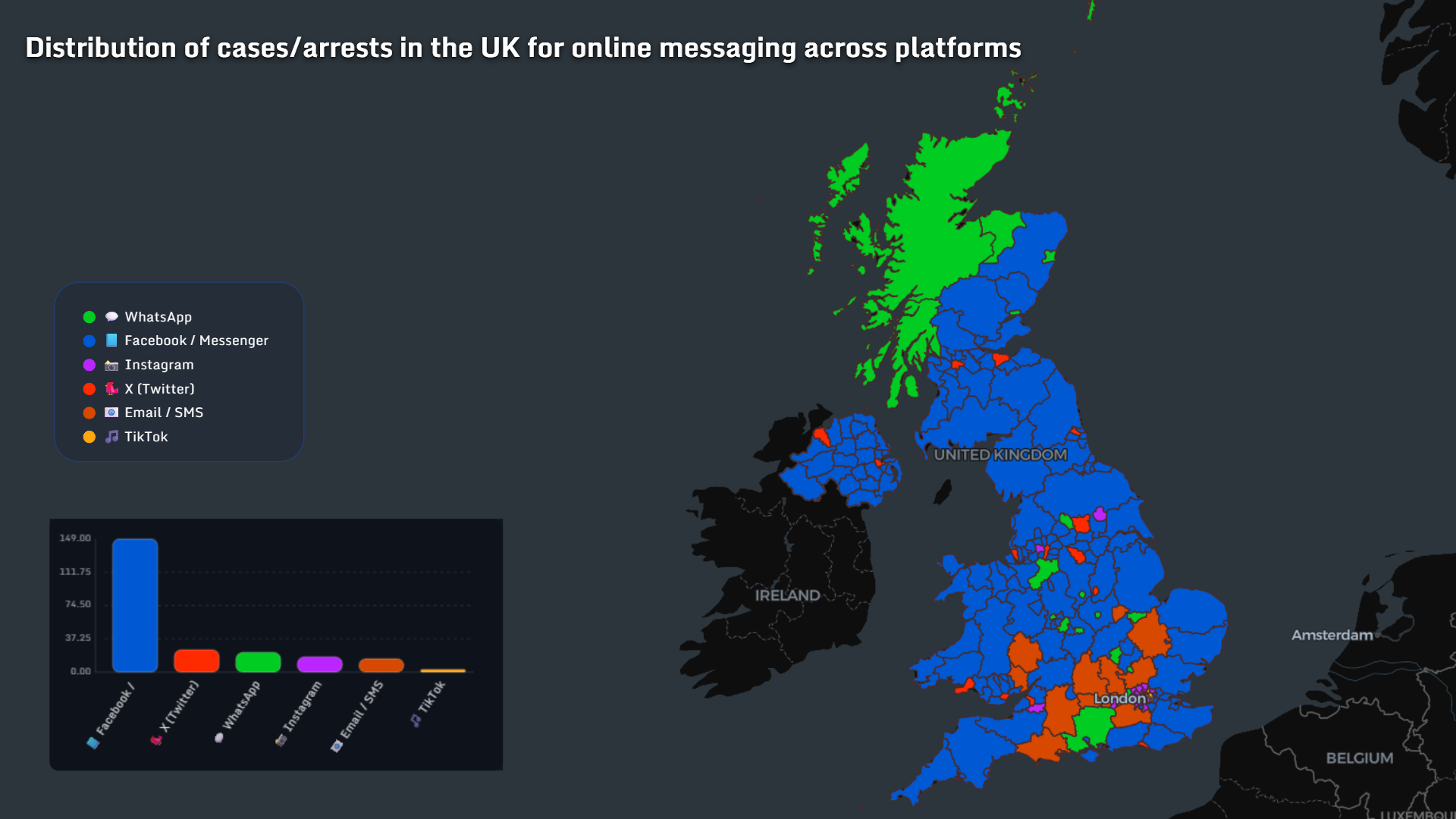
Not all platforms are treated equally.
- Facebook / Messenger dominate case counts.
- X (Twitter) and Instagram follow at a distance.
- WhatsApp appears surprisingly often, despite encryption.
- Email / SMS remain relevant.
- TikTok contributes a comparatively small share.
What Are People Charged For?
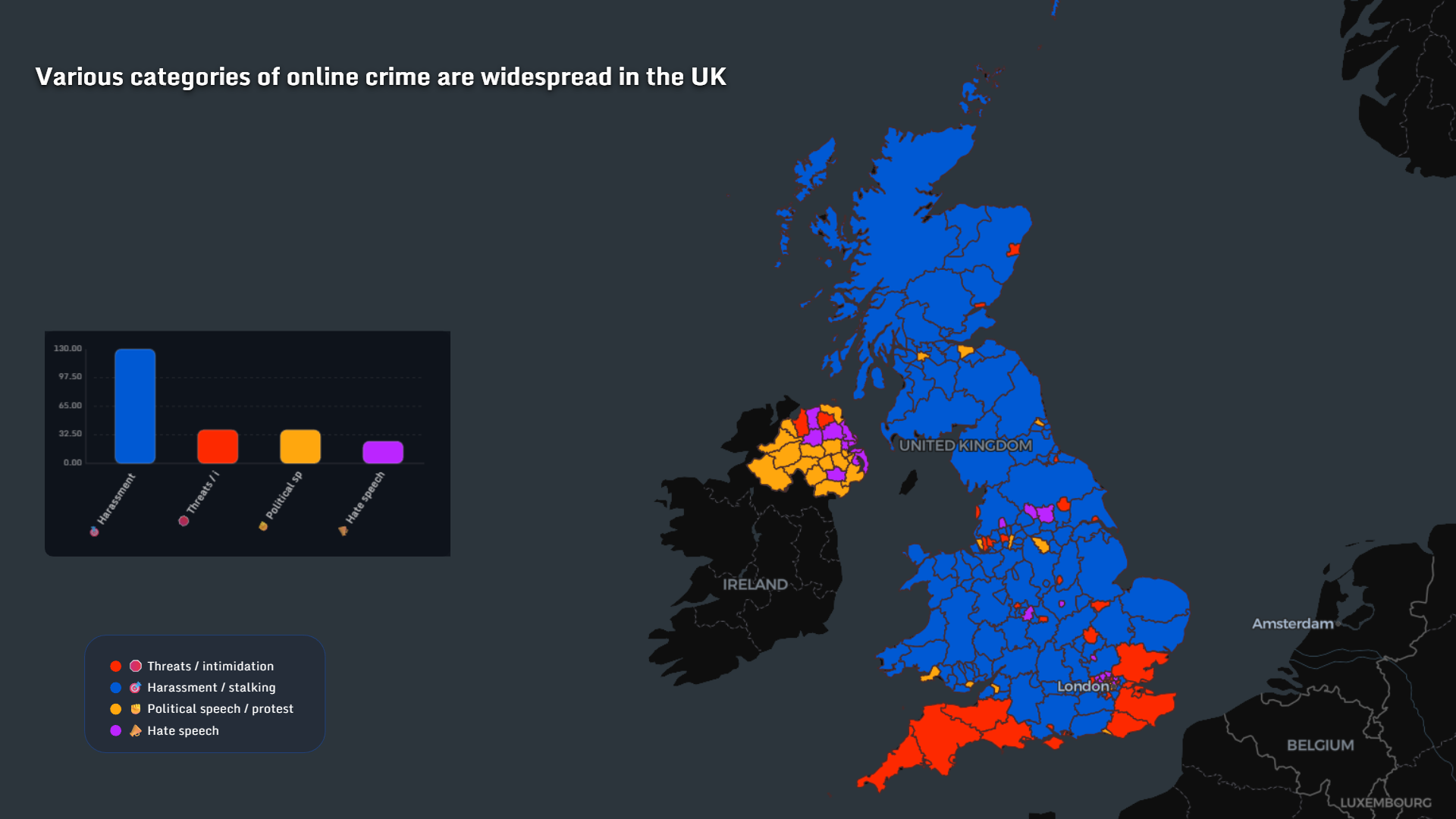
The majority of cases fall into a few broad categories:
- Harassment and stalking dominate.
- Threats and intimidation follow closely.
- Political speech and protest-related cases are geographically concentrated.
- Hate speech appears less frequent, but highly localized.
Publishing vs. Speaking Online
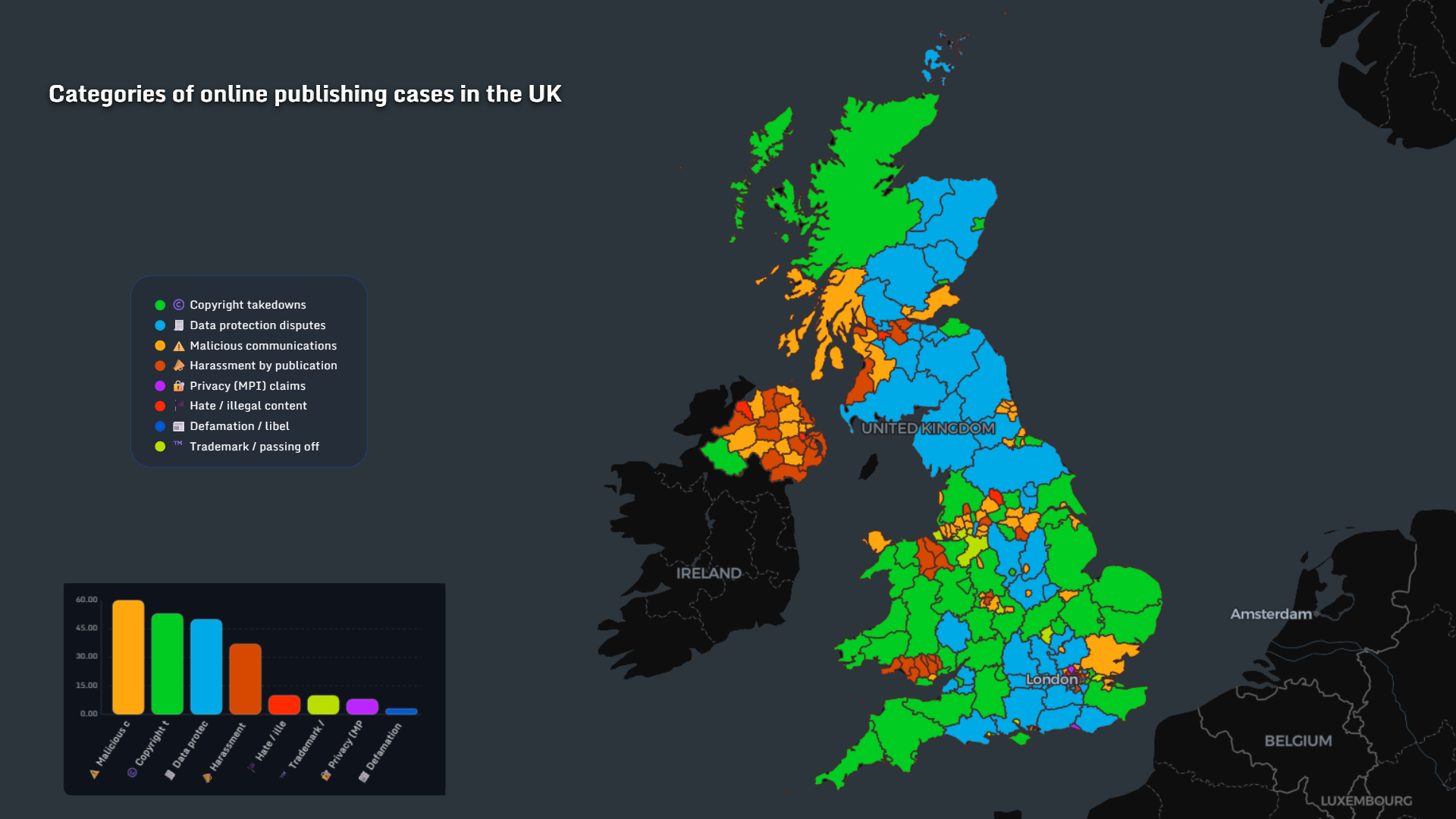
A final distinction matters: publishing versus messaging.
Publishing-related cases cluster around:
- copyright takedowns
- data protection disputes
- defamation and libel
- privacy claims
A Quiet Shift in the Nature of Control
Europe’s digital future is not one of mass shutdowns or visible firewalls.
Instead, it is shaped by:
- laws instead of bans
- compliance instead of coercion
- moderation instead of silence
Maps make these invisible structures legible.
👉 Explore more at app.mapthos.org
See the world. Map better. Dream big. 🌍✨