
🤖 The Future of Work in 2026: A World Unevenly Prepared
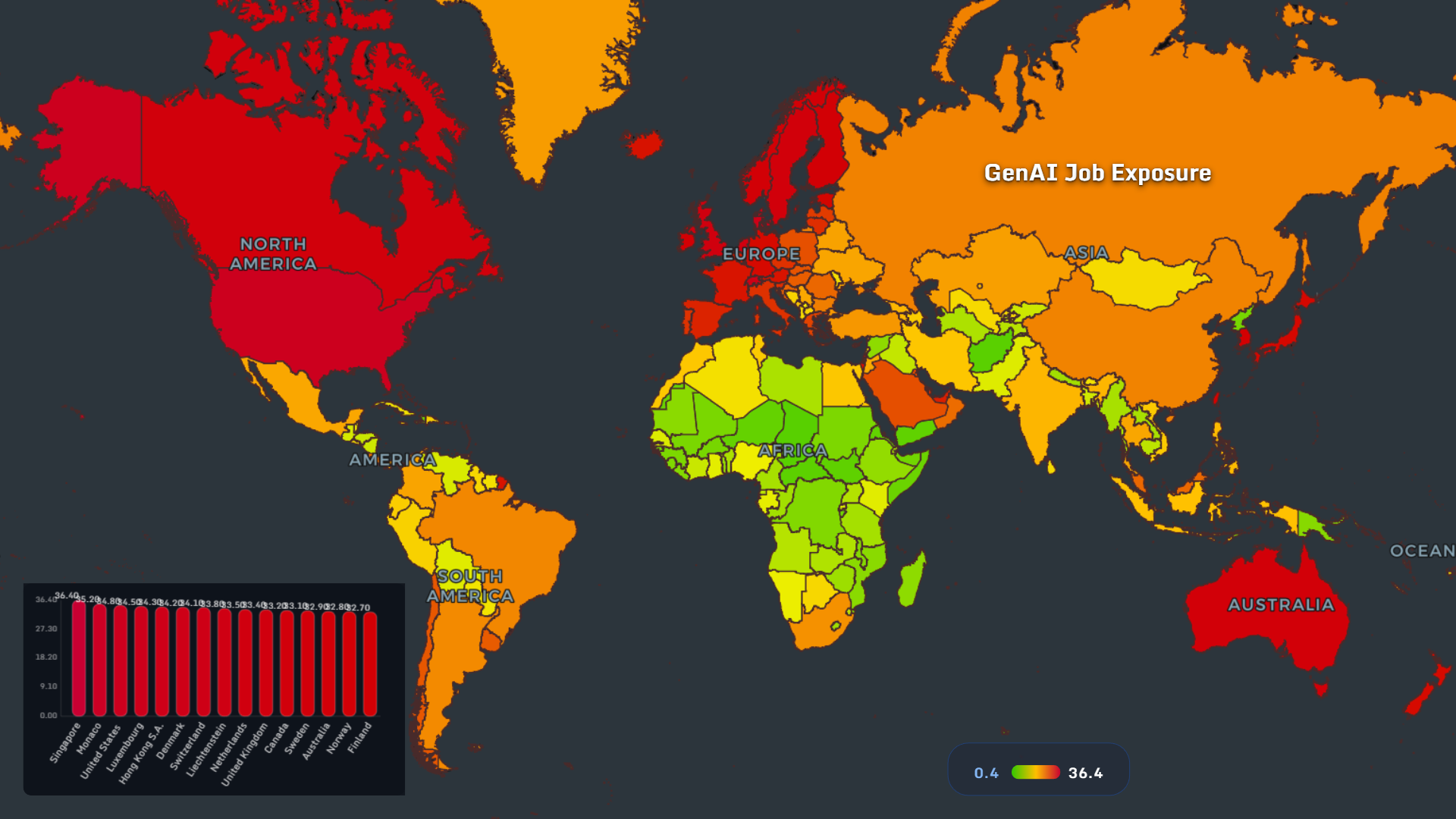
The future of work is not arriving evenly.
Some countries are actively building AI-native economies. Others are being reshaped by automation without control. And many are still catching up to the previous wave of globalization.
What emerges is not a single transition — but a fragmented system of parallel futures.
⚠️ GenAI Job Exposure: Where Disruption Hits First
The GenAI job exposure map 2026 shows a counterintuitive pattern:
- North America, Western Europe, and Australia lead in exposure
- Service-heavy economies are the most vulnerable
- Lower-income regions remain less exposed — for now
🧠 AI Preparedness Index by Country
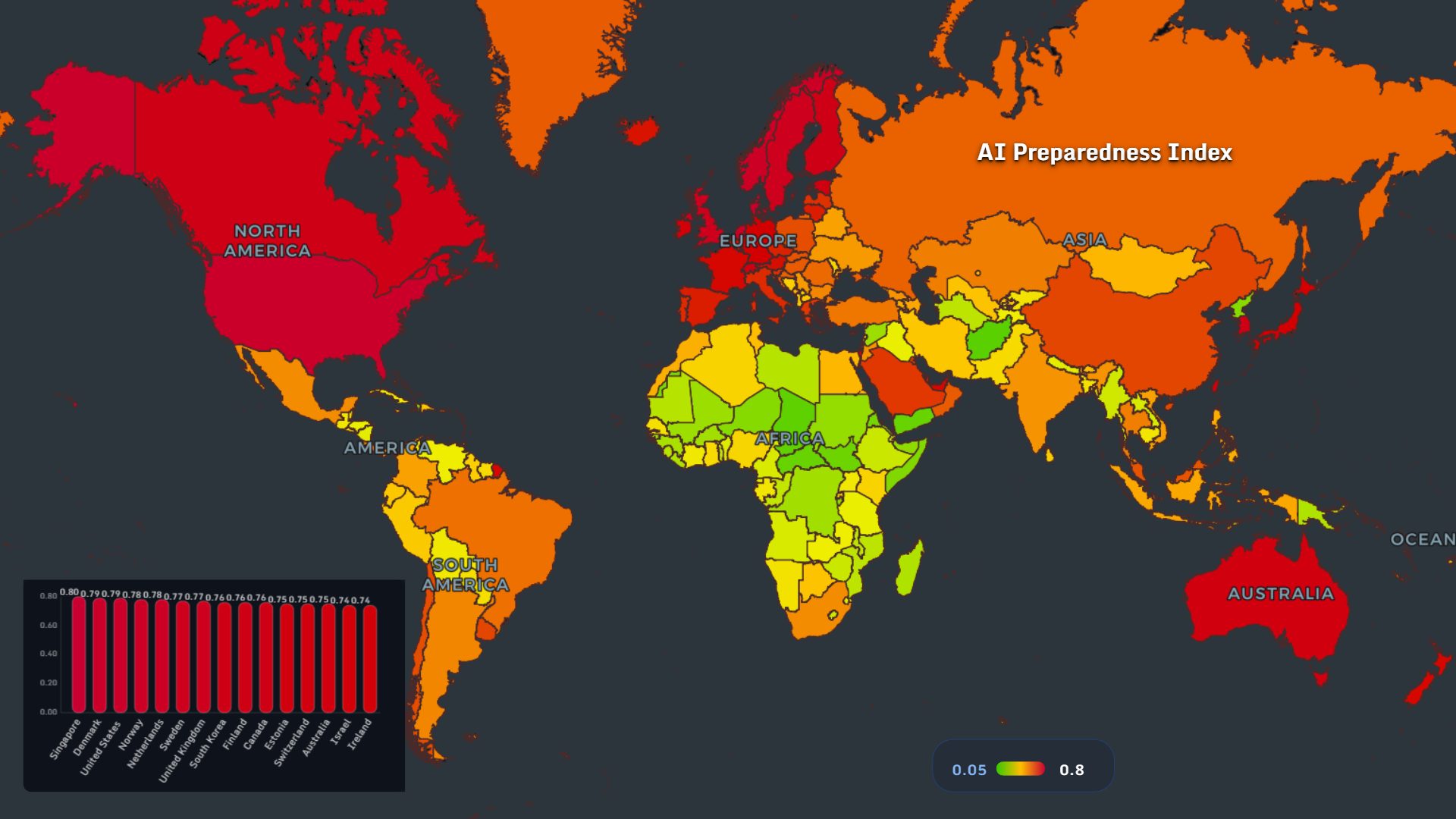
Exposure without preparedness is risk.
- Northern Europe, the US, and advanced Asia lead globally
- Institutional strength and education drive readiness
- Large parts of Africa and South Asia lag behind
🎓 Higher Education Wage Premium
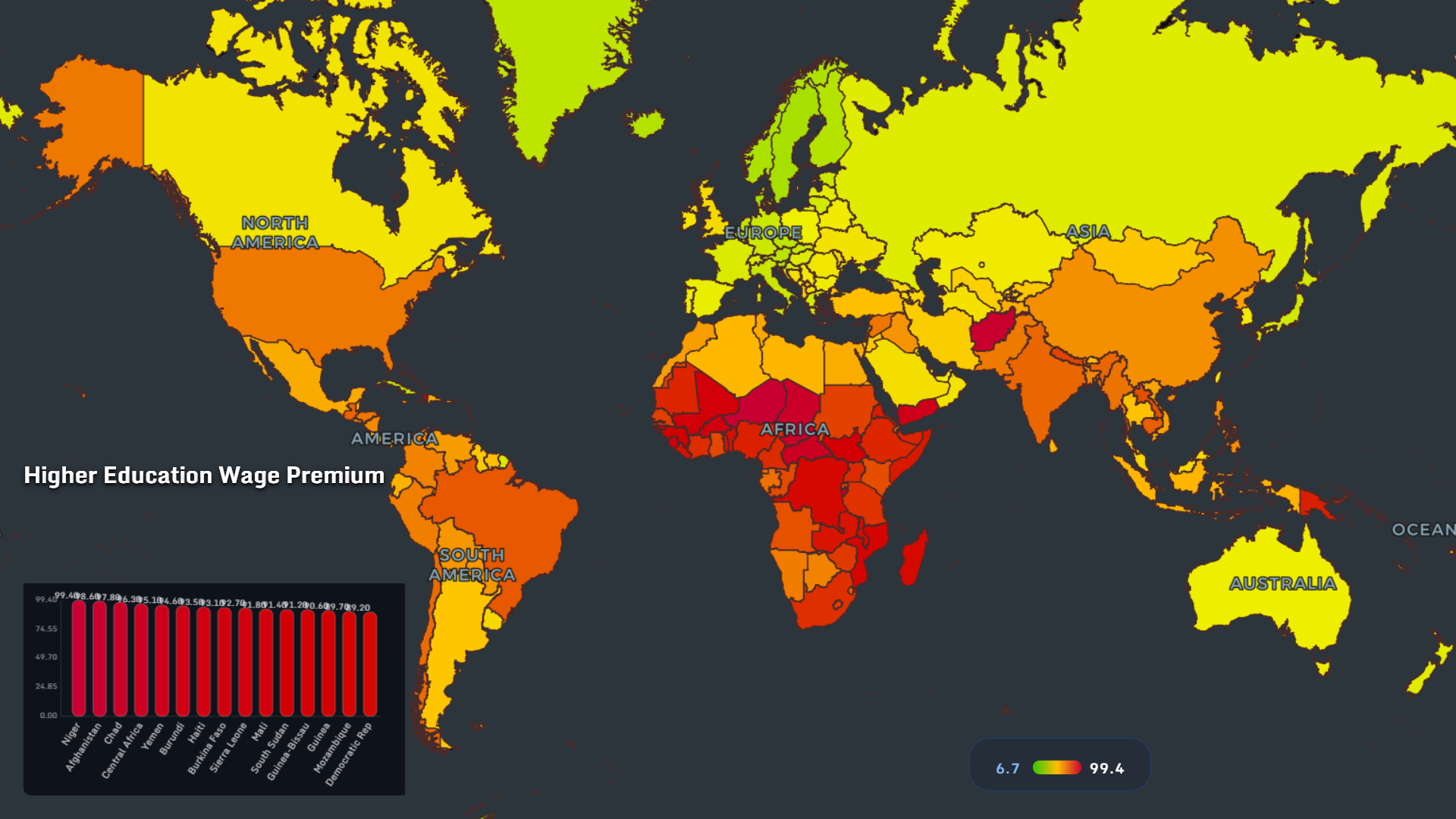
Education still defines access to opportunity — but unevenly.
- Extremely high wage premiums across Africa
- More stabilized returns in developed economies
- Education remains a key economic filter
⏳ Gen Beta Longevity Map
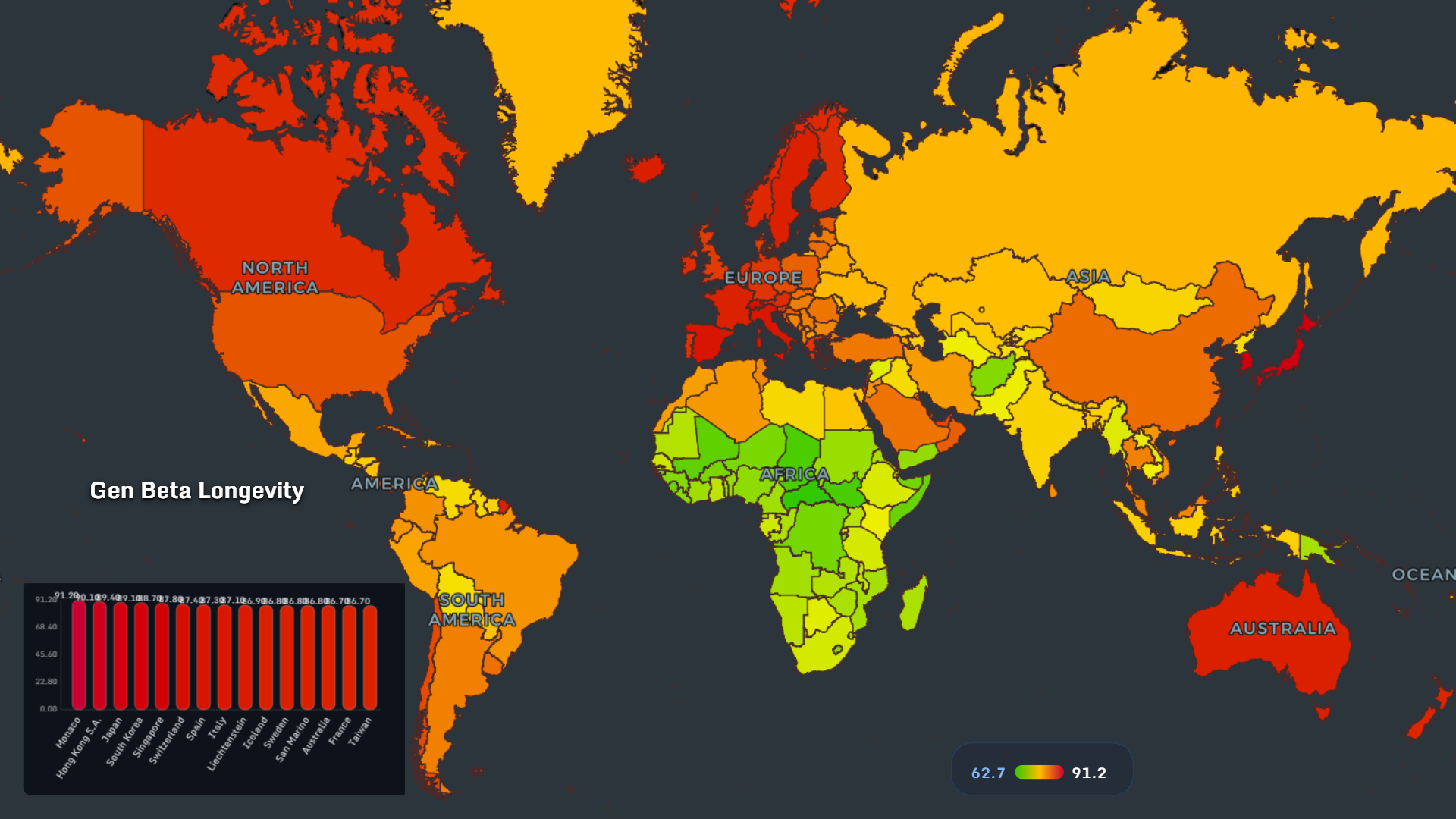
The next generation will live longer — but not equally.
- Developed economies dominate longevity
- Healthcare systems drive the gap
- Longer life = longer working cycles
📚 Lifelong Learning Participation
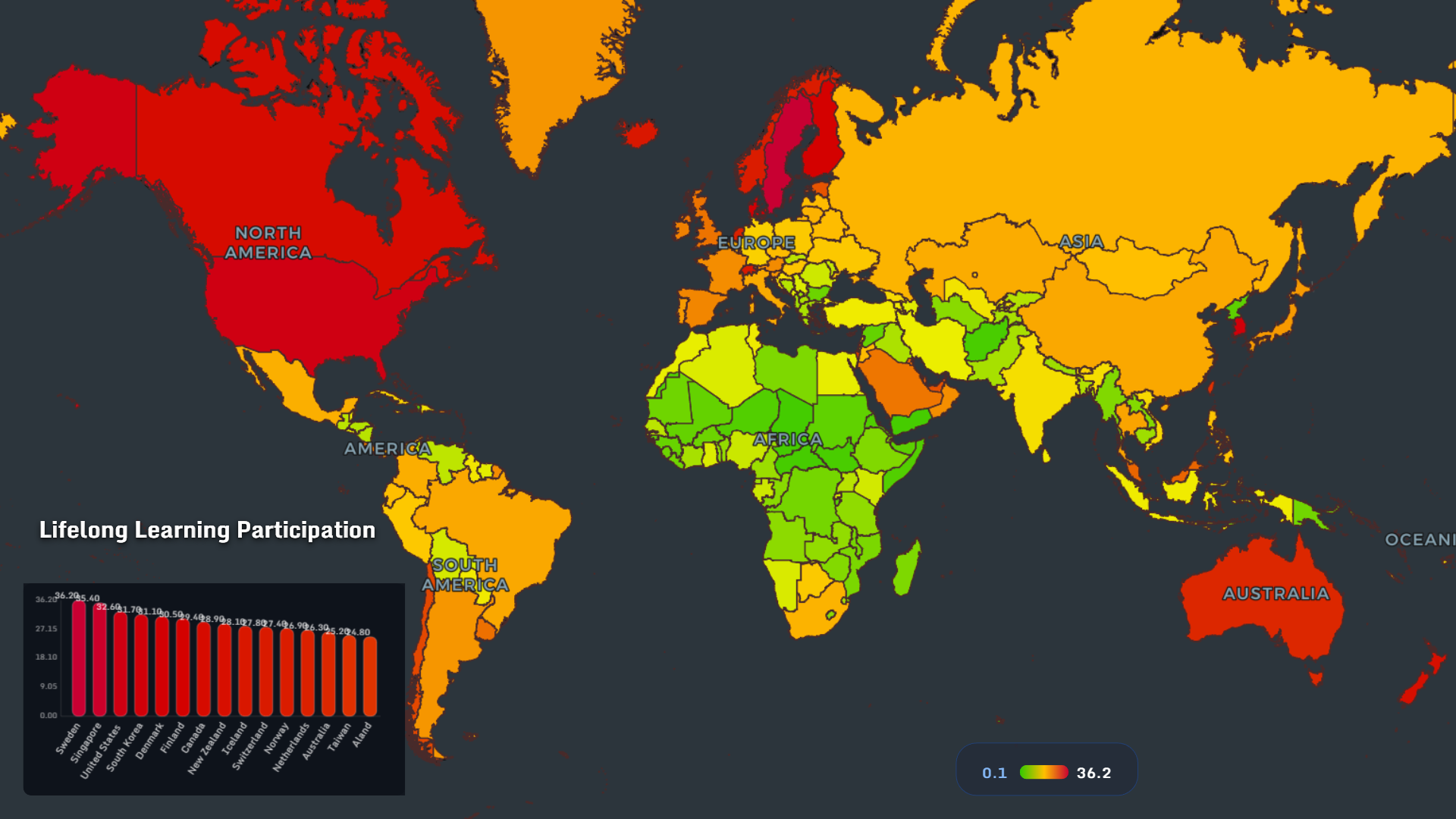
The lifelong learning map 2026 shows who is adapting.
- Nordic countries lead globally
- Structured reskilling ecosystems matter
- Most countries lack continuous learning systems
🧓 Old-Age Dependency Pressure
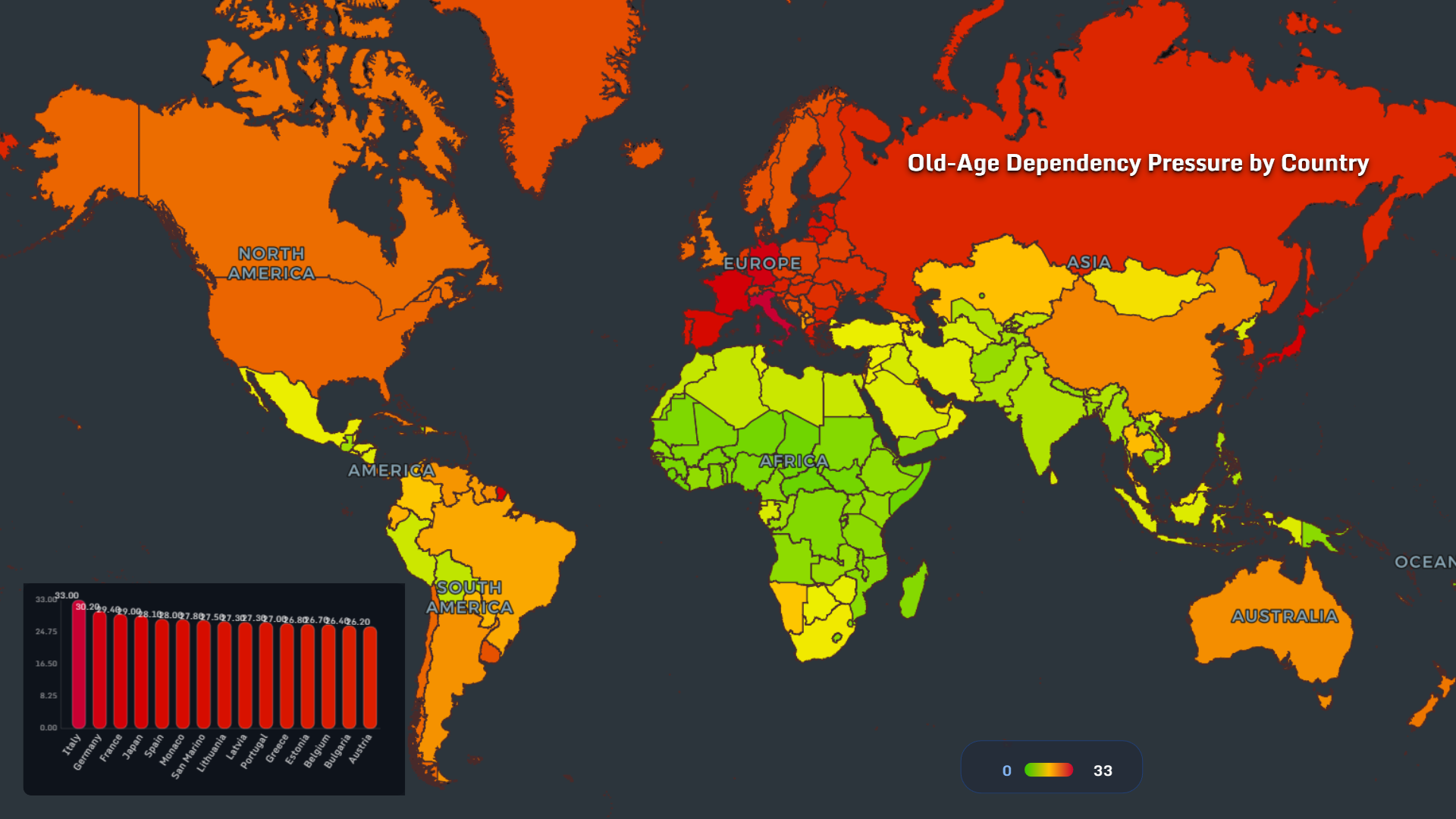
Aging populations create structural tension.
- Europe and Japan face the highest pressure
- Younger regions maintain demographic advantage
- Automation may offset labor shortages — partially
🏡 Remote Work Adoption by Country
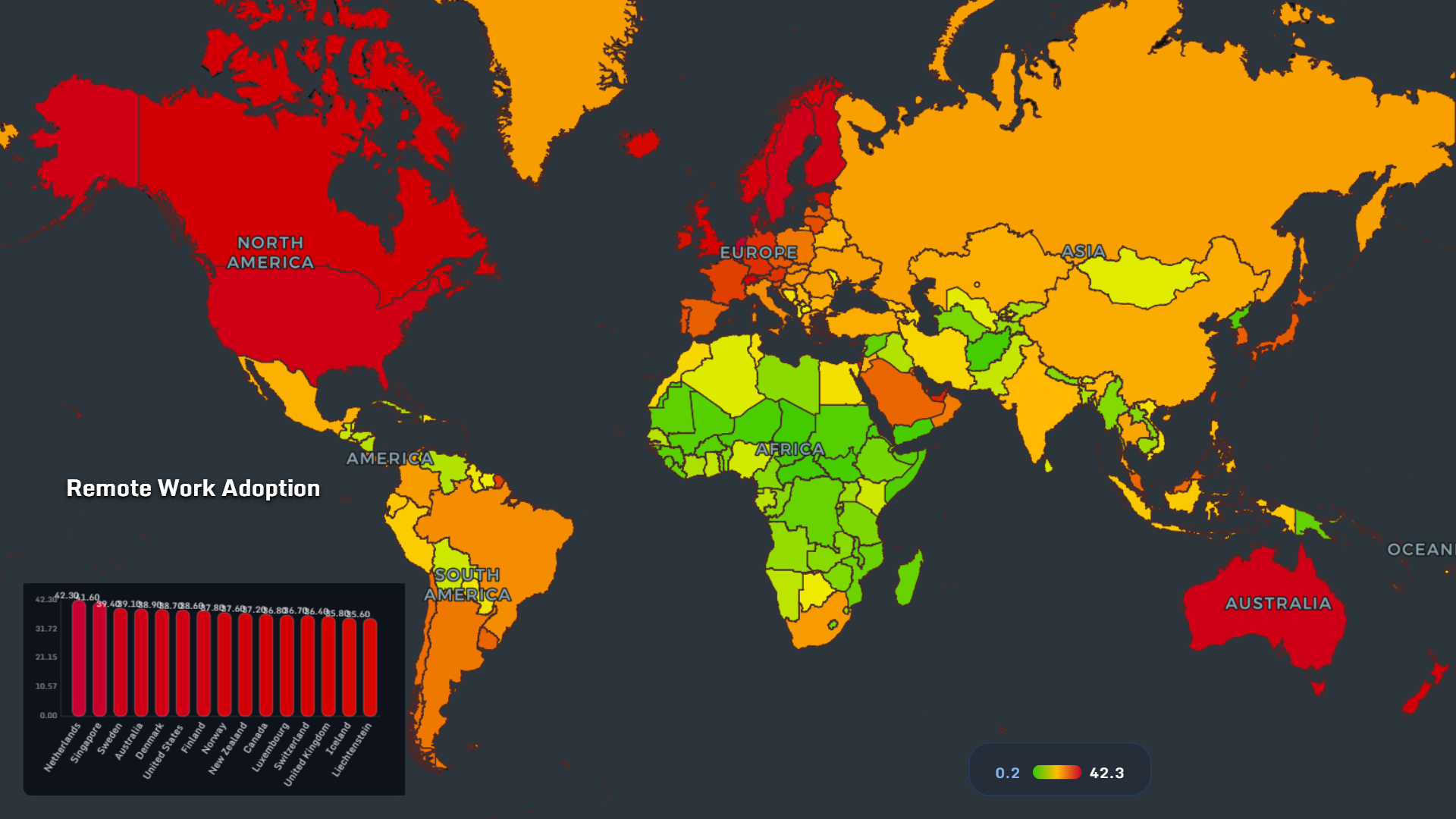
Remote work is a privilege of infrastructure.
- Strong adoption in Western economies
- Limited presence in labor-intensive regions
- Digital jobs reshape geography
⚡ Skill Disruption Risk Map
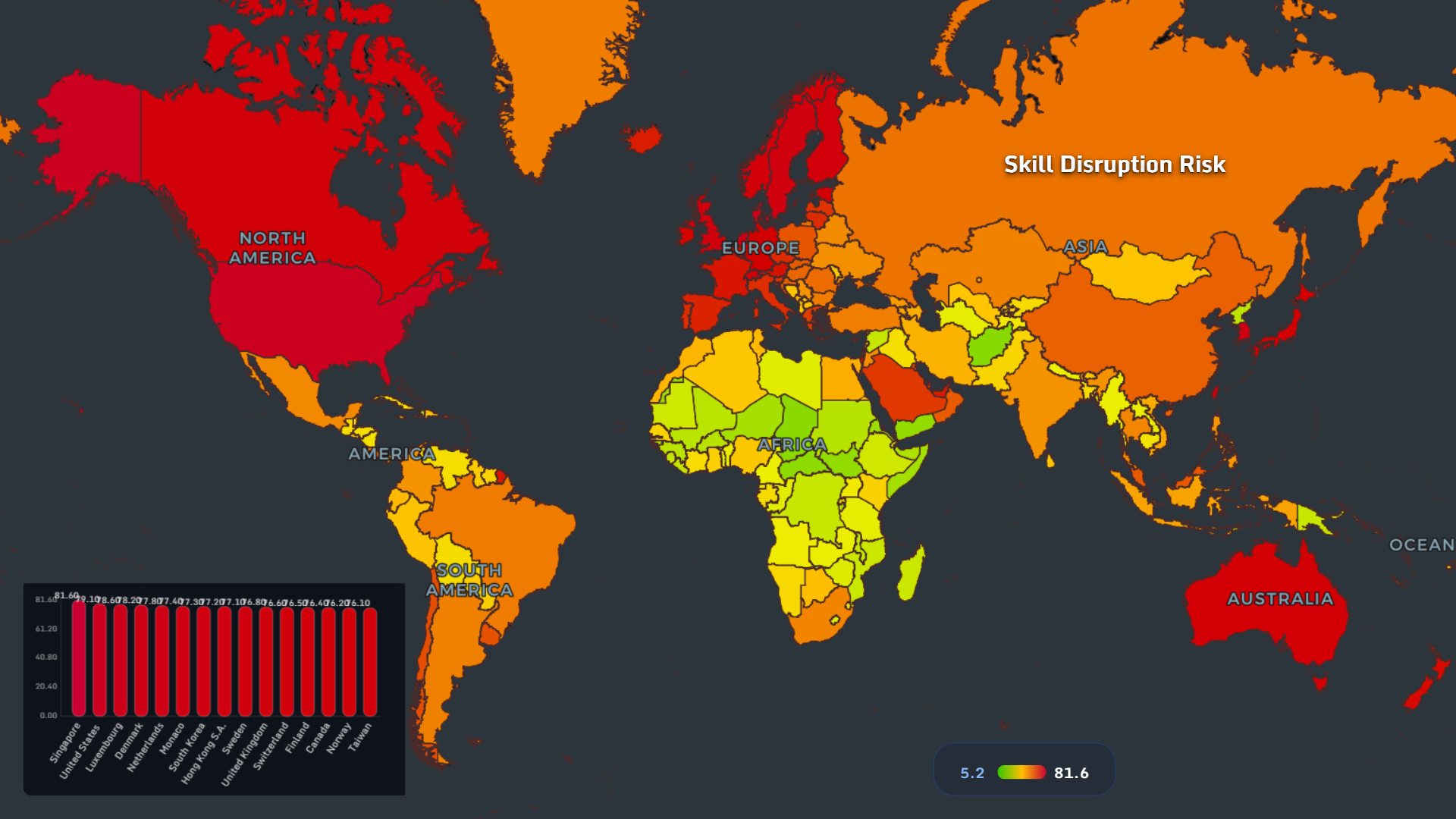
The skill disruption risk map highlights systemic pressure.
- Advanced economies face highest disruption risk
- Rapid automation cycles shorten skill lifespan
- Continuous retraining becomes baseline
🎓 Tertiary Education Attainment
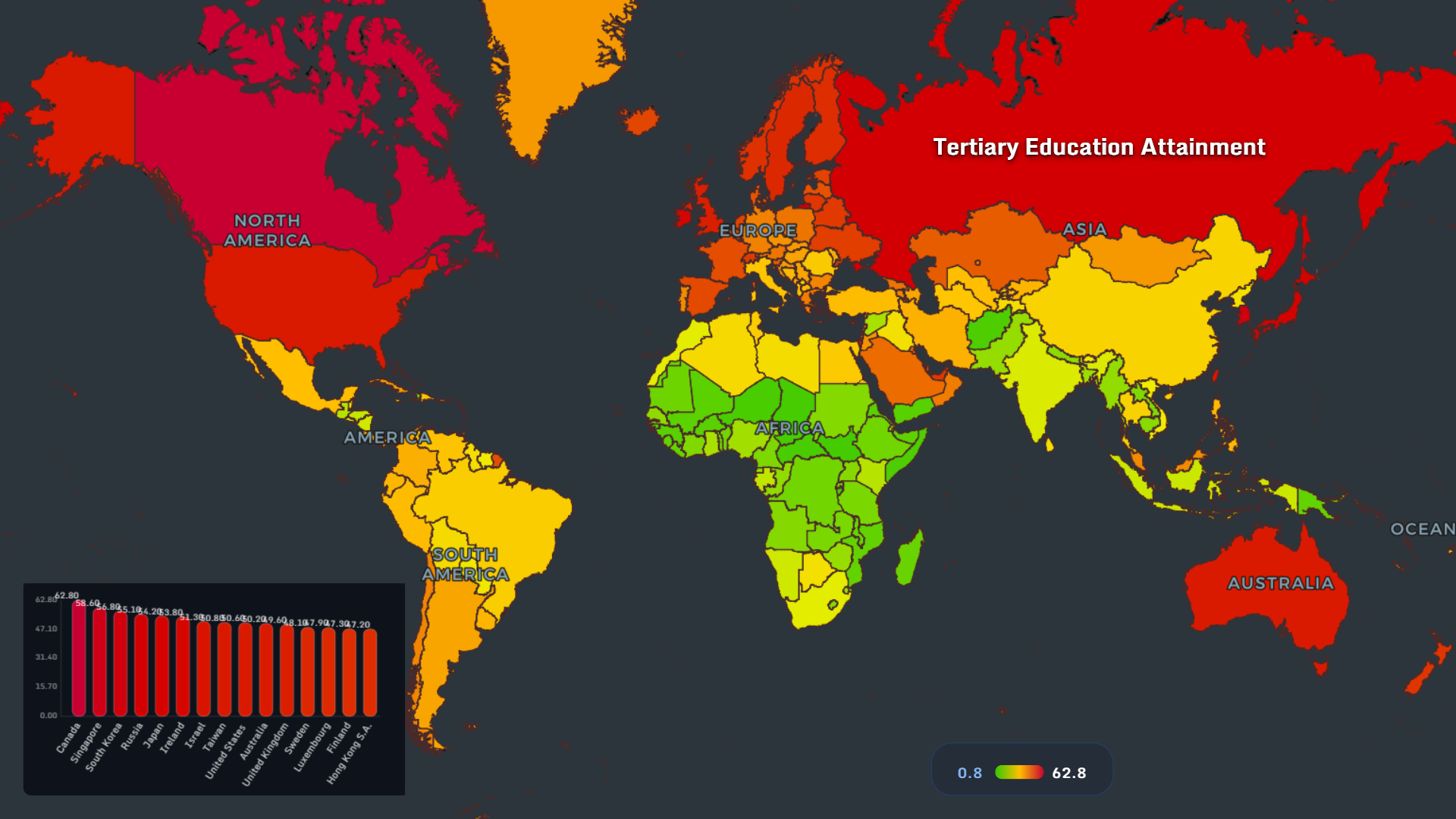
Higher education remains foundational.
- Strong concentration in developed economies
- Correlates with AI readiness
- But no longer guarantees security
🚫 Youth NEET Rate by Country
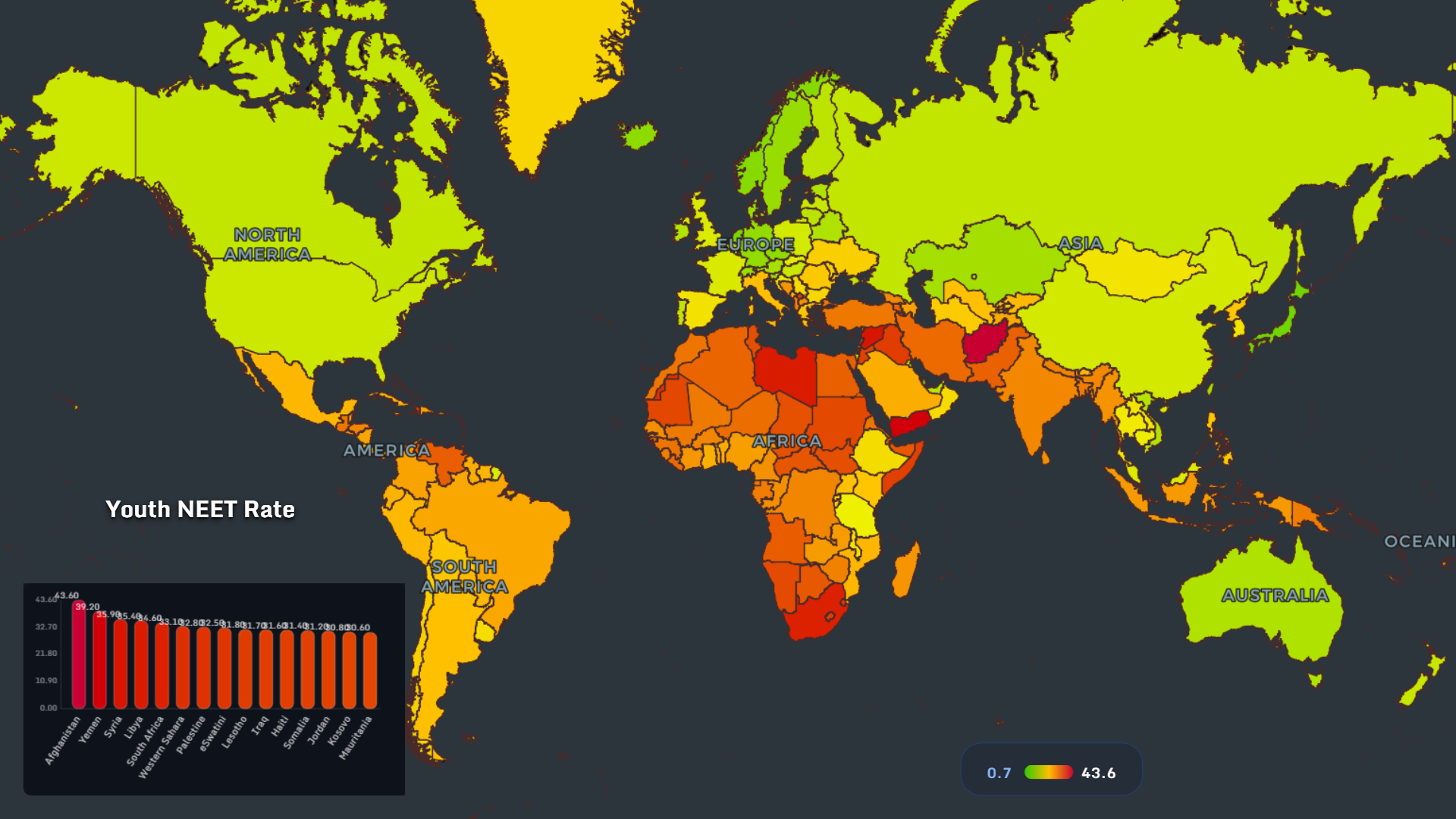
The youth NEET rate map reveals hidden systemic risks.
- High levels across parts of Africa and the Middle East
- Structural unemployment threatens long-term stability
- AI may amplify inequality if access remains limited
🧠 Final Insight
AI does not create inequality — it amplifies it.
Countries that:
- invest in education
- build adaptive systems
- embrace continuous learning
Others risk falling into structural lag.
The future of work is not about AI alone. It is about readiness to evolve with it.
👉 Explore more at app.mapthos.org
See the world. Map better. Dream big. 🌍✨